
Paris & the Boulevards Collection: Claude Monet Oil Painting Reproductions
Monet painted Paris directly in a handful of works, most notably Boulevard des Capucines from 1873, viewed from a high window down onto a crowded street rendered as dabs of dark color rather than individual figures, a composition that unsettled some early viewers who expected legible detail. Earlier still, in 1867, he painted a small group of Paris cityscapes from a high window at the Louvre, including a view across to Saint-Germain l’Auxerrois, made before he settled into the riverside towns that dominate his later work. These paintings are among Monet’s few genuinely urban subjects, concerned with crowds, traffic, and the geometry of boulevards and rooftops rather than water or garden. It is a rarer, city-facing Monet rather than his landscapes, and on a wall these paintings bring an animated, structured energy into a room, architecture and movement rather than the stillness of his river and garden scenes.
Showing 1–16 of 26 results
-
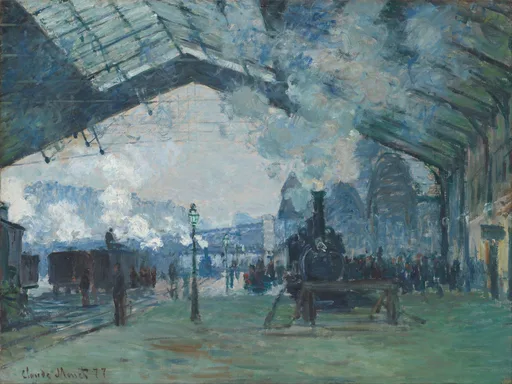
Arrival of the Normandy Train, Gare Saint-Lazare
From $109 -
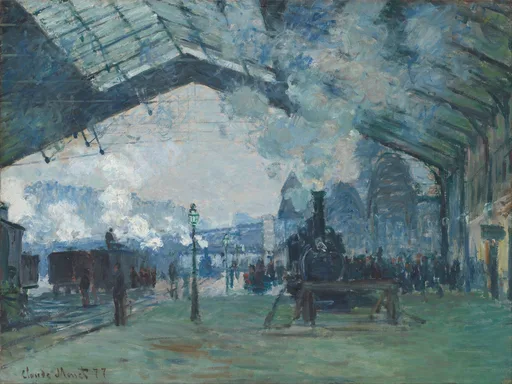
Arrival of the Normandy Train, Gare Saint-Lazare
From $109 -
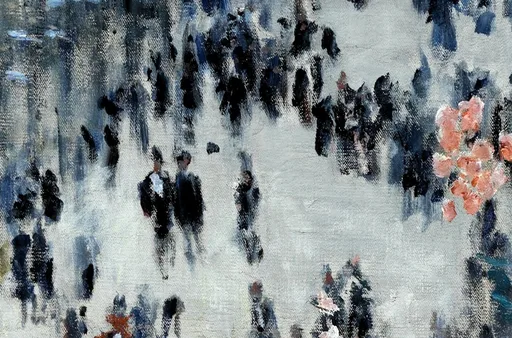
Boulevard des Capucines
From $109 -
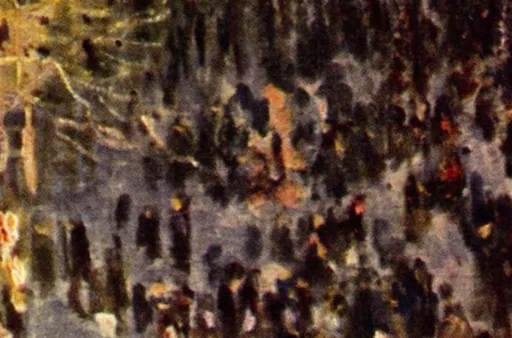
Carnival on the Boulevard des Capucines
From $109 -
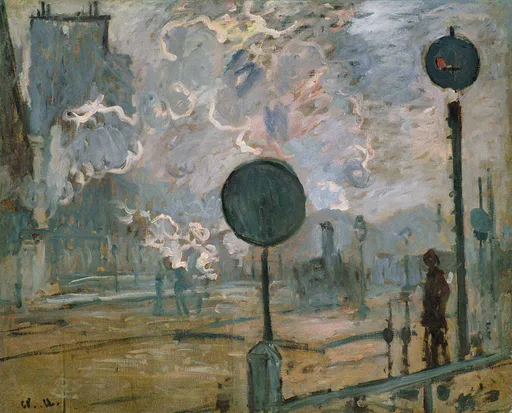
Exterior of Gare Saint-Lazare, The Signal
From $109 -
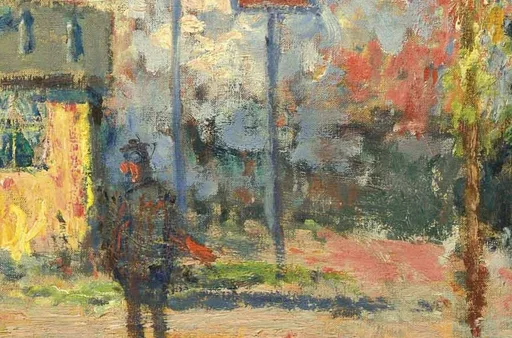
Exterior of Saint-Lazare station, sun effect
From $109 -
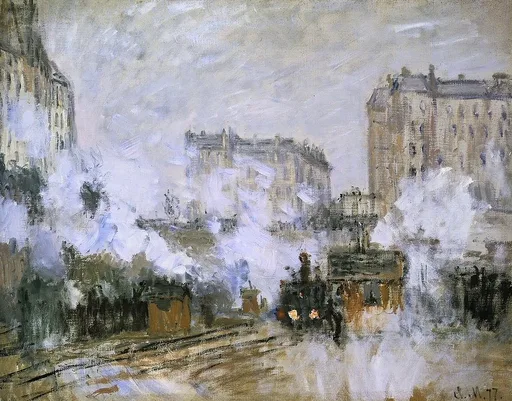
Exterior of Saint-Lazare train station, arrival of a train
From $109 -
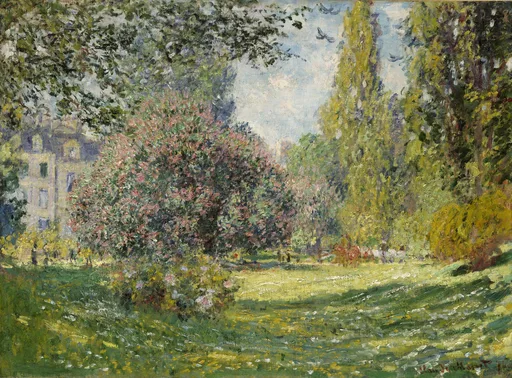
Landscape: The Parc Monceau
From $109 -
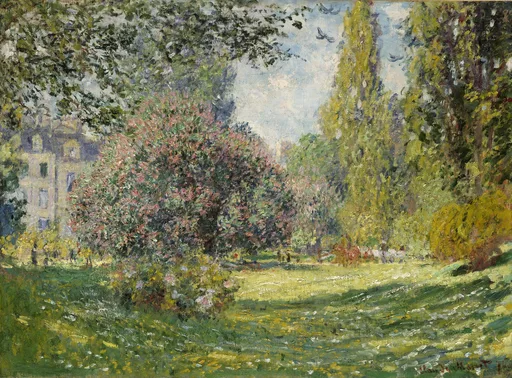
Landscape: The Parc Monceau
From $109 -
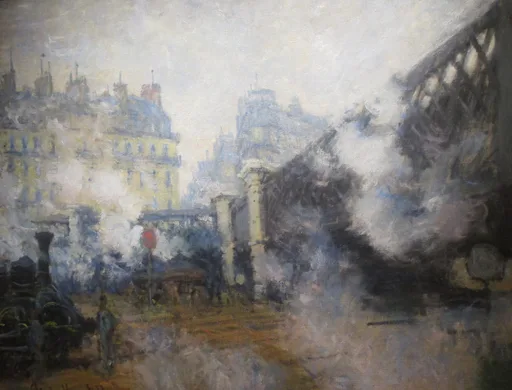
Pont de l’Europe, gare Saint-Lazare
From $109 -
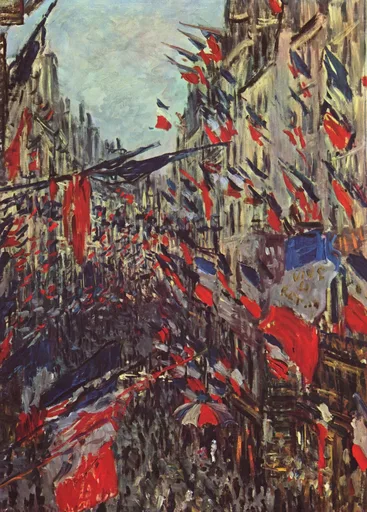
Rue Saint-Denis with Flags
From $109 -
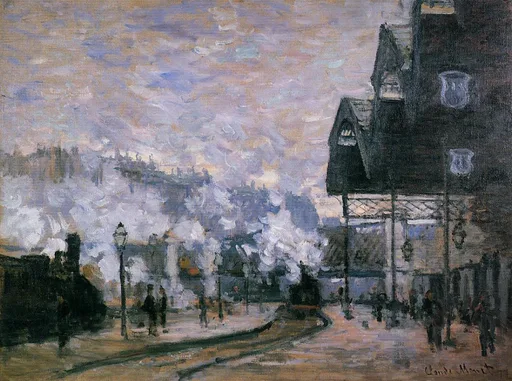
Saint-Lazare Station, the Western Region Goods Sheds
From $109 -
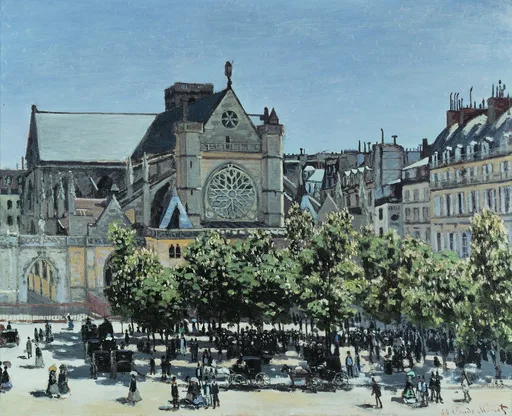
St. Germain l’Auxerrois
From $109 -
The Gare Saint-Lazare
From $109 -
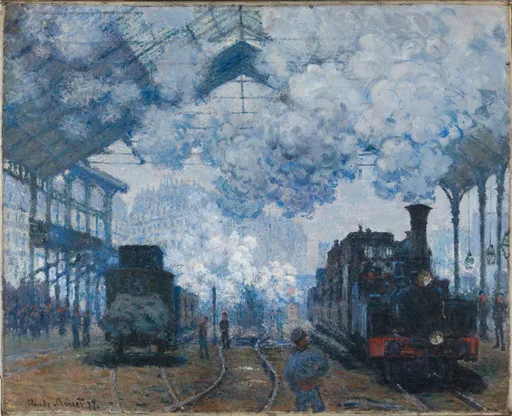
The Gare Saint-Lazare: Arrival of a Train
From $109 -
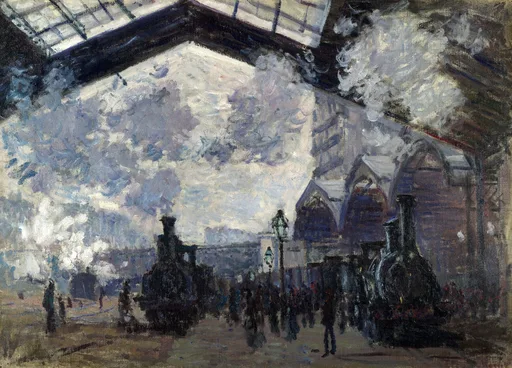
The Gare St-Lazare
From $109
Twenty-eight canvases of the modern city. Railway sheds, crowded boulevards seen from above, the quays and bridges of the Seine, and the parks. This is Monet at his most urban and most contemporary, painting a Paris that had only recently been rebuilt and was still, to his generation, startlingly new.
Gare Saint-Lazare and the city seen from above
In January 1877 Monet obtained permission to work inside the Gare Saint-Lazare and produced a group of twelve canvases in a matter of weeks; several were shown at the third Impressionist exhibition that April. The subject was the station itself: the glazed iron train shed, the locomotives, and above all the steam, which billows up and fills the space so that the girders and the buildings beyond are seen through it. It is a series in embryo, more than a decade before the grainstacks, and it treats smoke exactly as he would later treat fog and light.
The street paintings take a different tack. The Boulevard des Capucines of 1873-74, shown at the first Impressionist exhibition in 1874, looks down from an upper window onto a crowd rendered as small dark flecks, a device a hostile critic mocked and which now looks like an accurate description of how a crowd is actually seen. Alongside these sit the quays, the Pont Neuf, the Tuileries and the parks; the city as weather and movement rather than as monument.
Hand-painted oil reproductions, made to order
Every work in this collection is available two ways. As a hand-painted oil reproduction, brushed in real oils on artist-grade cotton canvas by a senior studio painter, never printed; or as a lower-priced archival canvas print. You choose the size and the orientation, and finish it rolled, stretched on a bar, or set into a thin or thick frame. Each piece is made to order and hand inspected before it leaves us, with free worldwide shipping and 30-day returns.
Frequently asked questions
Where do the Paris paintings hang best?
They suit rooms with a modern or urban character; an office, a study, a dining room, a hallway in an apartment. The Gare Saint-Lazare canvases in particular have a grey and blue architectural palette that sits well against plain walls and dark joinery.
Which should I choose, a station or a boulevard?
The station interiors are dramatic, largely monochrome and read strongly from a distance; the boulevards are busier, warmer and reward close viewing. If the wall is seen mainly from across a room, take a station.
Is the hand-painted version noticeably different?
It is. Steam, smoke and crowds in these works are made from countless small separate touches, and reproducing them in real oils on canvas gives a depth that photographic printing flattens. The archival canvas print is nonetheless a strong, lower-priced option for smaller formats.
What sizes and finishes suit them?
Landscape formats at medium to large size for the boulevards and quays; the station canvases work in either orientation depending on the specific view. A thin dark frame suits the urban palette; a thick frame gives a more traditional, gallery-like presentation.