
Water Lilies & Nympheas Collection: Claude Monet Oil Painting Reproductions
Monet began painting the water lily pond in his garden at Giverny in the late 1890s and kept returning to it until his death in 1926, producing around 250 canvases that make up the largest single project of his career. He had the pond dug and planted himself, importing lily varieties and building the Japanese-style footbridge that appears in earlier works, then gradually let the water itself become the whole subject: no horizon, no bank, just lilies, sky, and clouds folded into the surface. As his eyesight failed from cataracts in his last years, the brushwork loosened further, pushing some late canvases to the edge of abstraction decades before that became a movement in its own right. On a wall, these paintings work less like a window onto a garden and more like an atmosphere, calm and unbroken, best kept to a room where the eye is meant to settle rather than travel. What draws someone to this collection is usually that late, almost weightless Monet: color and reflection more than a recognizable place.
Showing 1–16 of 136 results
-
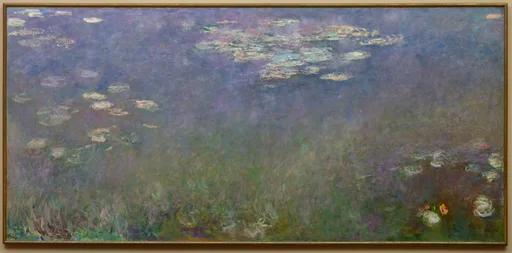
Agapanthes
From $109 -
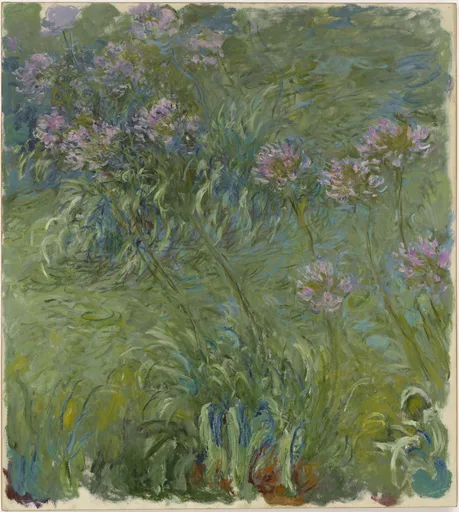
Agapanthus
From $109 -
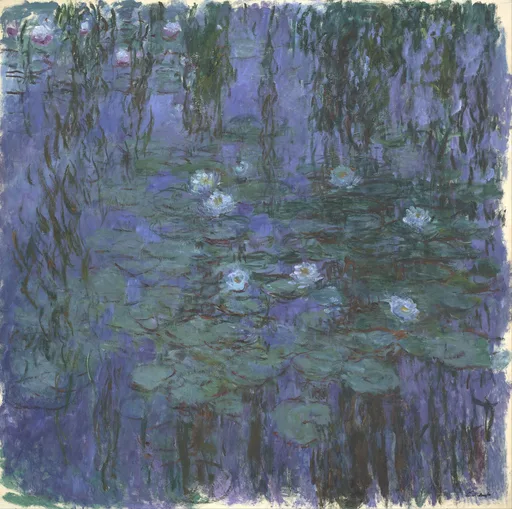
Blue Water Lilies
From $109 -
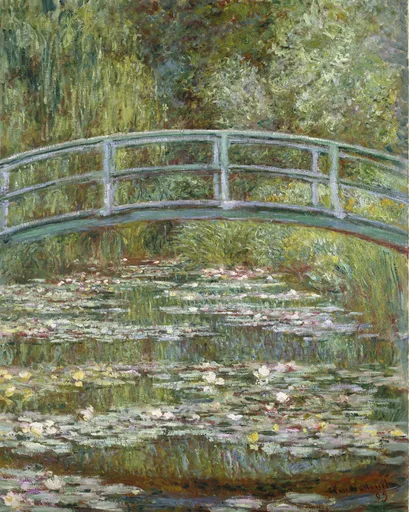
Bridge over a Pond of Water Lilies
From $109 -
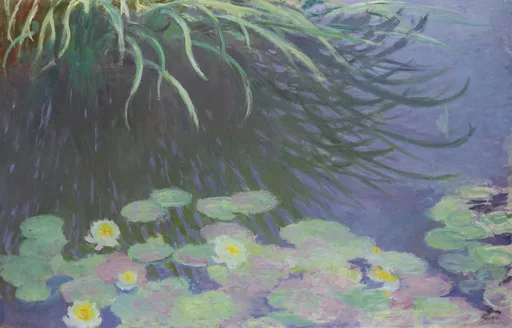
CLAUDE MONET 1840 – 1926 NYMPHÉAS AVEC REFLETS DE HAUTES HERBES
From $109 -
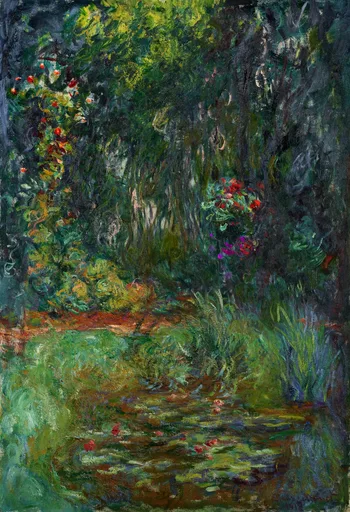
Corner of the Water-Lily Pond
From $109 -
Monet Ninfee (Colonia)
From $109 -
Nympheas
From $109 -
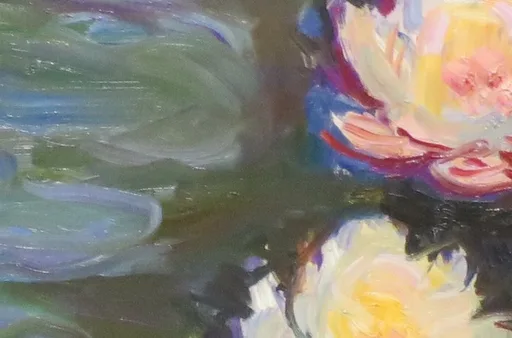
Nympheas
From $109 -
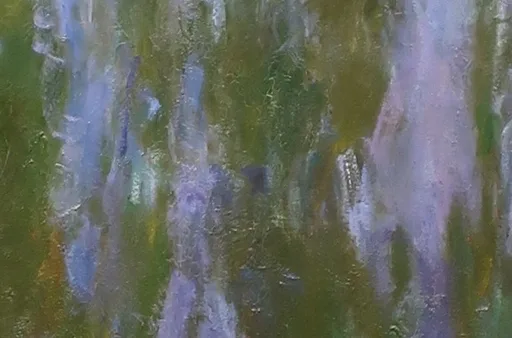
Nympheas
From $109 -
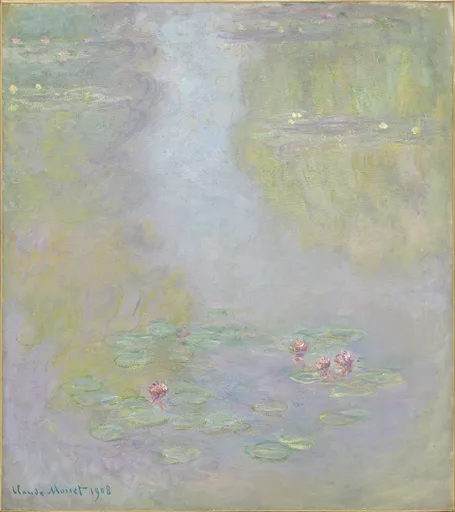
Nymphéas
From $109 -
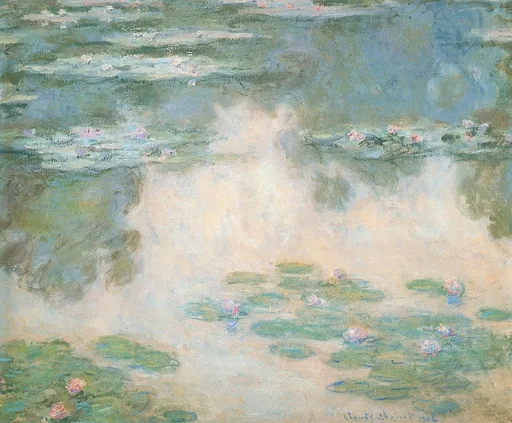
Nymphéas
From $109 -
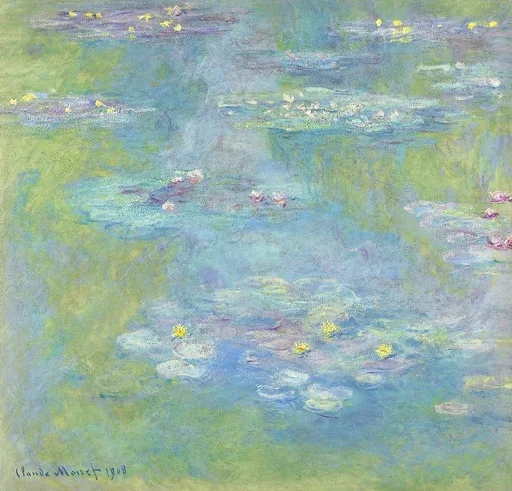
Nymphéas
From $109 -
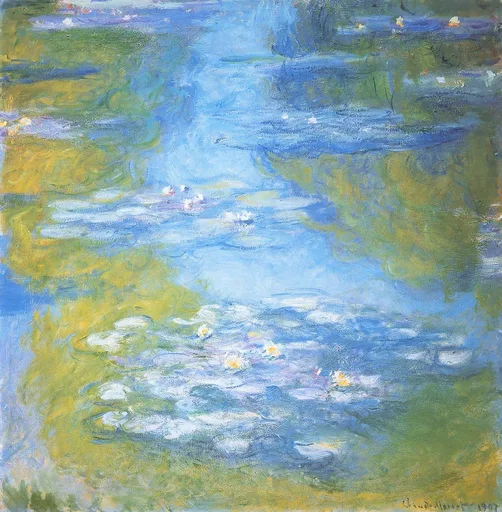
Nymphéas
From $109 -
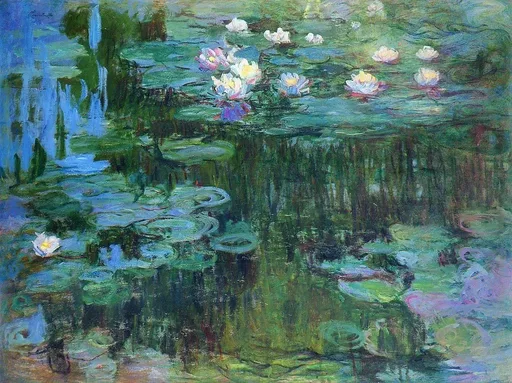
Nymphéas
From $109 -
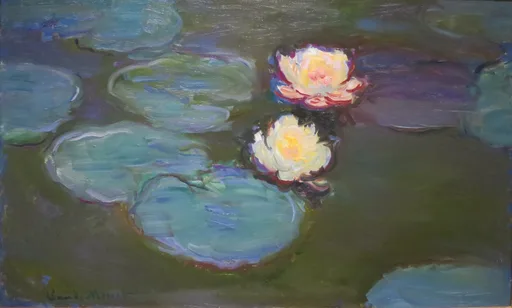
Nympheas
From $109
For the last twenty-seven years of his life Claude Monet painted one subject more often than any other: the surface of the lily pond in his own garden at Giverny. This group gathers ninety-one of those canvases, from the early framed views with a bank and a bridge to the vast late panels in which the water fills everything and no horizon is left.
A pond he built in order to paint it
Monet dug the water garden from 1893, diverting water from the Epte to feed it, and the plan met real resistance from local farmers who worried about their livestock and their crops downstream. The first lily canvases followed in the late 1890s. In the group of 1899 and 1900 the pond is still described as a place: you see the far bank, the willows, the arch of the footbridge holding the composition together like a proscenium.
From about 1903 he cut all of that away. The bank goes, the sky goes, and what remains is water carrying reflections of cloud and willow with the lily pads floating across them, so that the viewer looks down and up at once. The idea grew into the large decorations he worked on through the years around the First World War in a studio built to take canvases of that size; he gave them to the French state, and they were installed at the Orangerie in 1927, a few months after his death. Cataracts, which troubled him from around 1912 and were operated on in 1923, pushed the palette of some late canvases towards heavy reds and golds.
Hand-painted oil reproductions, made to order
Every work here can be commissioned as a hand-painted oil reproduction, brushed in real oils on artist-grade cotton canvas by a senior studio painter and never printed, or ordered as a lower-priced archival canvas print. You choose the size and the orientation, then the finish: rolled in a tube, stretched and ready to hang, or set in a thin or a thick frame. Each piece is made to order and hand inspected before it leaves us, with free worldwide shipping and a 30-day return guarantee. Our guide to how the oils are painted explains the difference in person.
Which room this collection suits
The palette is cool: green, violet, cloud-white, with small hot accents in the flowers. That makes these canvases forgiving in a north-facing or low-light room, where warmer pictures can look muddy. They read best against soft off-white, warm grey or a muted clay wall rather than brilliant white, which competes with the reflected light in the water. Give them distance. The late horizonless compositions in particular need a couple of metres of viewing space to resolve, so a long living-room wall, a wide bedhead wall or a landing you approach from the far end will serve them better than a narrow alcove.
Frequently asked questions
What is the difference between the early and the late water lilies?
The early canvases, roughly 1897 to 1902, keep a recognisable setting: bank, willows, often the footbridge. From about 1903 onwards Monet removed the surroundings and painted the water alone, and the largest late panels abandon the horizon completely. If you want a picture that reads clearly as a garden, choose an early one; if you want something closer to pure colour, choose a late one.
Should I choose the hand-painted oil or the canvas print?
The oil reproduction is an actual painting: real oil paint, raised brushwork, slight variation from the original by the nature of the hand. It rewards close viewing and reads as an object in the room. The archival canvas print is flat and faithful, costs considerably less, and is the sensible choice for very large formats or for a room where you simply want the image.
What size works for a water lily painting?
Bigger than most people first think. Monet's own late panels are enormous, and the compositions are built on immersion. Over a sofa, aim for a canvas about two thirds the width of the furniture below it; as a single statement on an open wall, 100cm wide is a practical minimum.
Do these work in a bathroom or a bedroom?
Bedrooms, yes; the subject is quiet and there is no strong focal point to hold your attention awake. In a bathroom, choose a canvas print rather than an oil, keep it away from direct spray, and ventilate well.