
Venice Collection: Claude Monet Oil Painting Reproductions
Monet visited Venice only once, for about ten weeks in the autumn of 1908, but the trip produced roughly 37 canvases covering the Doge’s Palace, the Grand Canal, San Giorgio Maggiore, and the Salute church, painted from gondolas and from the edges of the canals in the city’s particular reflected, humid light. He worked from the same viewpoints repeatedly, as in his other series, but the water here does more of the work than in his French river paintings: buildings seem to float on their own reflections, and stone facades blur into the canal beneath them. The Venice paintings were exhibited in 1912 to considerable acclaim, among the last major exhibitions of new work before failing eyesight slowed him. It is Monet outside France entirely, working in a city built on water rather than beside a river, which is usually the pull. In a room, these paintings read as glow and reflection, warm stone dissolving into water, closer to Venice’s own light than to Normandy’s.
Showing 1–16 of 26 results
-
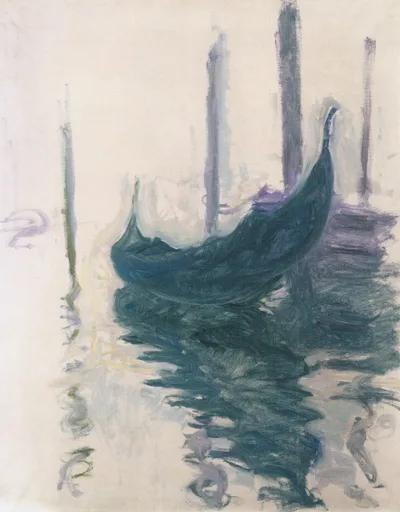
Gondola in Venice
From $109 -
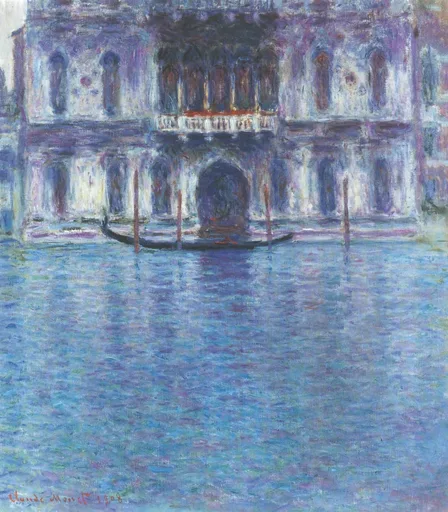
Palazzo Contarini
From $109 -
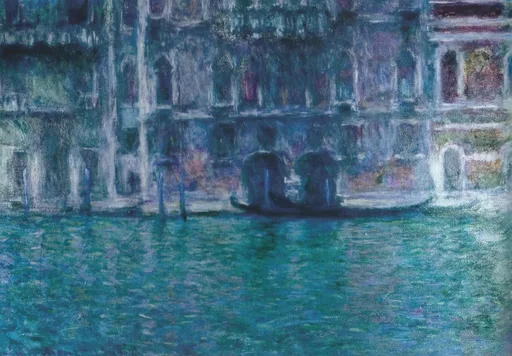
Palazzo Da Mula Morosini
From $109 -
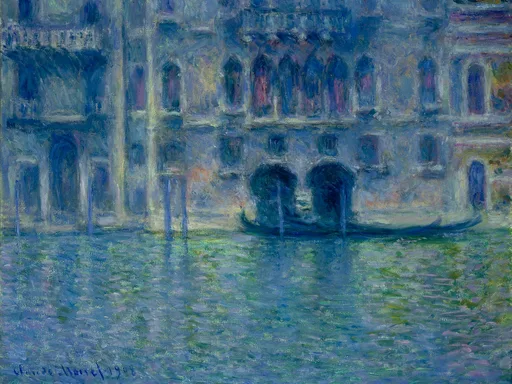
Palazzo da Mula, Venice
From $109 -
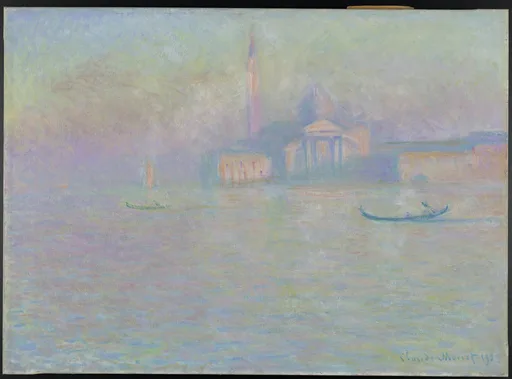
San Giorgio Maggiore
From $109 -
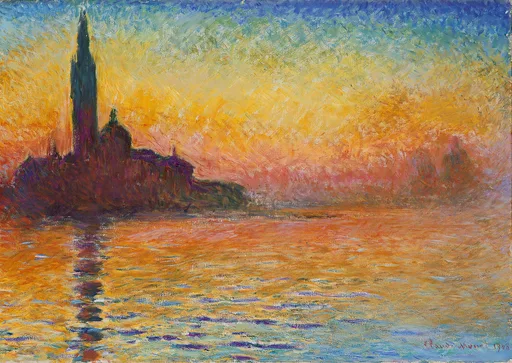
San Giorgio Maggiore at Dusk
From $109 -
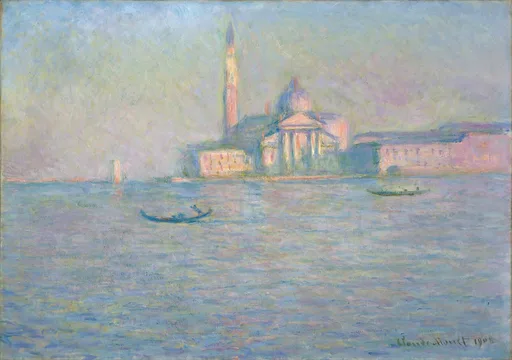
The Church of San Giorgio Maggiore, Venice
From $109 -
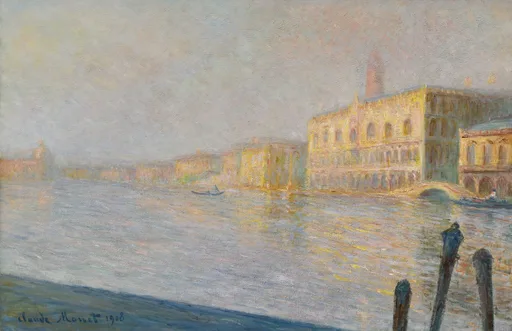
The Doge’s Palace
From $109 -
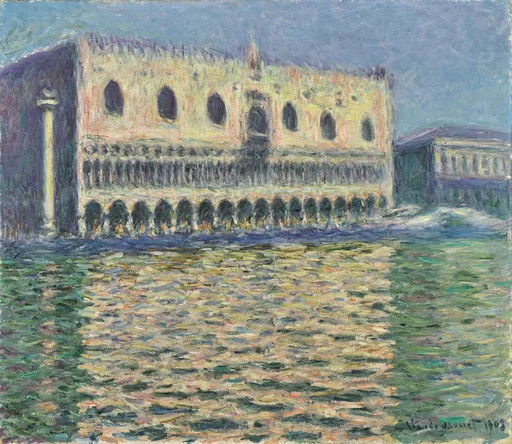
The Doge’s Palace
From $109 -
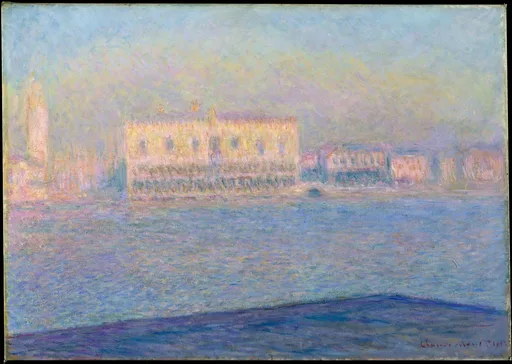
The Doge’s Palace Seen from San Giorgio Maggiore
From $109 -
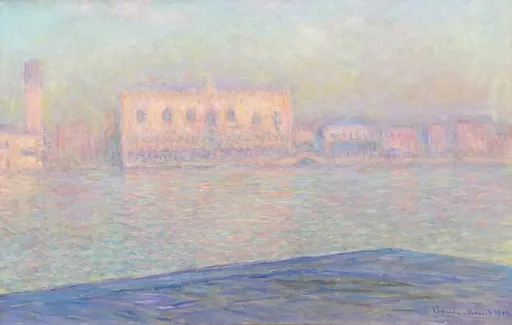
The Doge’s Palace Seen from San Giorgio Maggiore
From $109 -
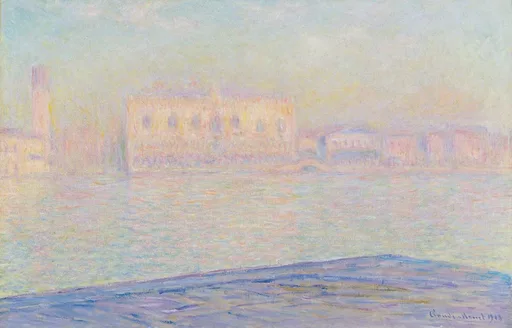
The Doge’s Palace Seen from San Giorgio Maggiore
From $109 -
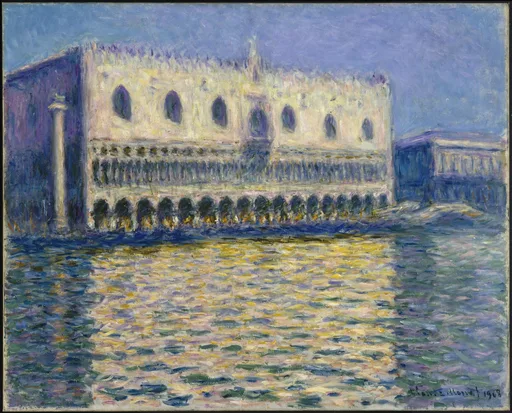
The Doges Palace (Le Palais ducal)
From $109 -
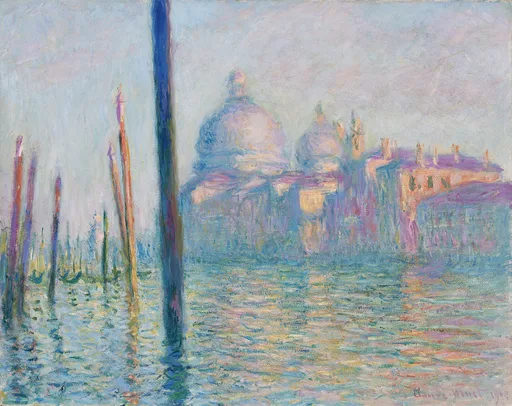
The Grand Canal
From $109 -
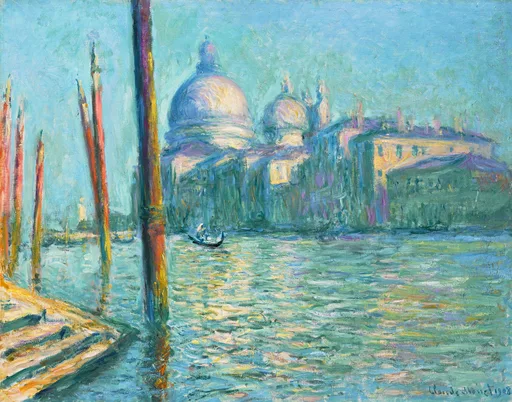
The Grand Canal and Santa Maria della Salute
From $109 -
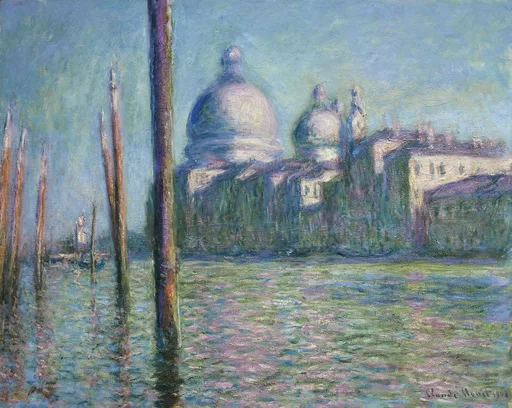
The Grand Canal, Venice
From $109
Monet visited Venice once, in the autumn of 1908, with his second wife Alice, and it produced one of the most beautiful late episodes in his work. These fifteen canvases show palace fronts rising straight out of the water, San Giorgio Maggiore across the basin, moored gondolas and the particular pink and turquoise light of the lagoon in October.
A single autumn, and years of finishing
He arrived reluctant, convinced the city was too well painted already, and was quickly won over. The routine was strict: a fixed motif at a fixed hour each day, from a gondola or a landing stage, moving from one canvas to the next as the light turned. The subjects are simple and frontal, a palace facade like the Palazzo da Mula seen flat against the water, the dome and campanile of San Giorgio at sunset, the mooring poles casting their reflections.
What makes the Venice group unusual is how it was completed. Monet brought the canvases home unfinished and worked on them at Giverny over the following years, without the city in front of him. Alice died in 1911, and the paintings became bound up with that loss. The colour is at its most artificial and confident here: violet shadows on stone, orange water, an architecture of pure reflection.
Hand-painted oil reproductions, made to order
Every Venice subject can be commissioned as a hand-painted oil reproduction, brushed in real oils on artist-grade cotton canvas by a senior studio painter rather than printed, or supplied as a lower-priced archival canvas print. You choose the size and the orientation, then the finish: rolled, stretched over a bar, or framed in a thin or a thick moulding. All work is made to order and hand inspected, with free worldwide shipping and a 30-day return guarantee.
Which room this collection suits
Warm and jewel-like: rose, apricot, violet and turquoise, usually with a strong architectural shape anchoring the middle of the canvas. That combination flatters warm interiors, so think dining rooms, drawing rooms, panelled studies and hallways with lamplight rather than bright modern kitchens. They sit beautifully against cream, warm stone, deep red or olive. Because each composition has a clear centre, they work well as a single picture over a fireplace or a chest, and they are among the few Monet subjects that look right in a decorative gilt-effect thick frame rather than a plain one.
Frequently asked questions
How long did Monet spend in Venice?
A little over two months, in the autumn of 1908, travelling with his wife Alice. It was his only painting campaign in the city.
Which Venetian subjects are included?
Palace facades on the Grand Canal, views across the basin to San Giorgio Maggiore, the Doge's Palace, gondolas and mooring poles, and open lagoon studies at dusk.
What frame suits a Venice canvas?
A thick frame usually wins here; the subject is architectural and formal and can carry a substantial moulding. A thin frame or an unframed stretched canvas gives a lighter, more contemporary result.
Is the hand-painted oil the better choice?
For these, the oil brings out the broken colour on the water, which is where all the life of the picture is; details of how each one is painted are on our reproductions page. The archival canvas print remains a strong, lower-priced option, especially at large sizes.