
Fields, Poppies & Meadows Collection: Claude Monet Oil Painting Reproductions
Monet painted open fields and meadows around every town he lived in, and the best known of these, Poppy Field near Argenteuil from 1873, shows his wife Camille and young son Jean walking through red poppies scattered across a green hillside under a wide summer sky, a composition he returned to with variations for years afterward. This collection gathers that broader body of meadow and field paintings, poppies, wildflowers, tall grass, and cultivated land around Giverny and Vetheuil, usually painted in high summer light with loose, dabbed brushwork suited to describing masses of small color rather than individual blooms. Unlike his more structured garden paintings, these fields are unplanted and open, closer to countryside than cultivation, and often include the wide sky that a formal garden view would crop out. It is an open, summery Monet, bright and unstructured, which is usually the appeal. These paintings suit a room that wants warmth and open space, a wide field rather than an enclosed view.
Showing all 16 results
-
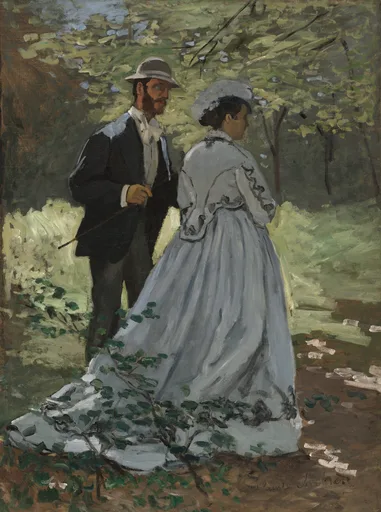
Bazille and Camille (Study for “Déjeuner sur l’Herbe”)
From $109 -
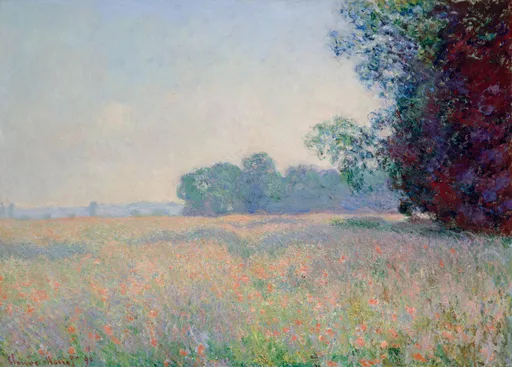
Champ d’avoine (Oat Field)
From $109 -
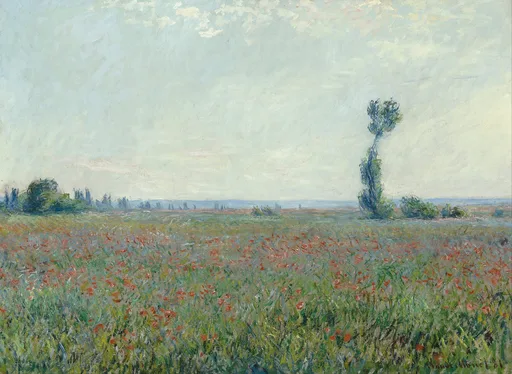
Champ de coquelicots
From $109 -
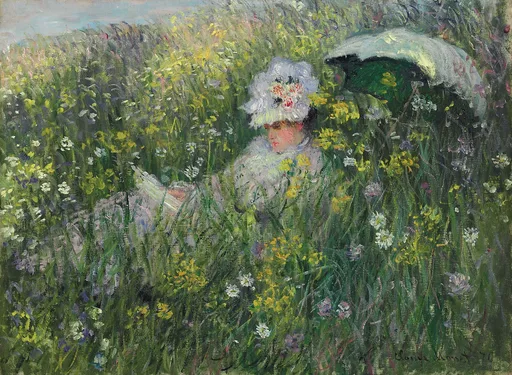
Dans-la-prairie-by-Claude-001
From $109 -
Luncheon on the Grass
From $109 -
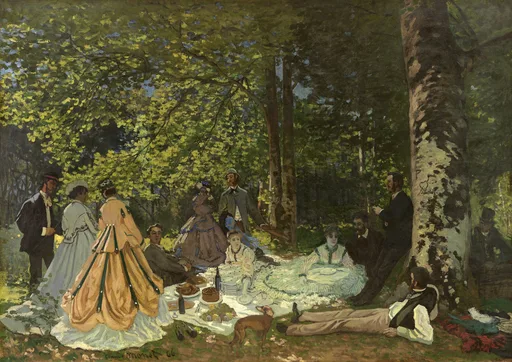
Luncheon on the Grass
From $109 -
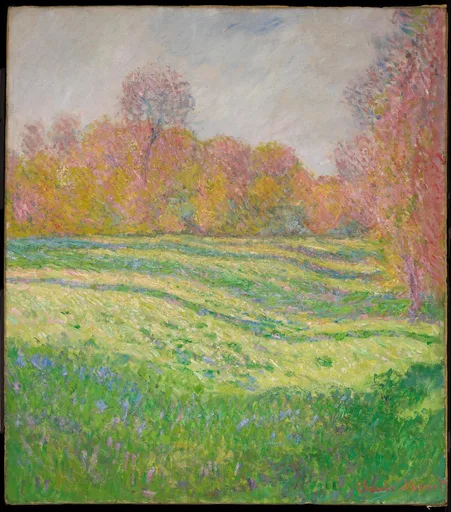
Meadow at Giverny
From $109 -
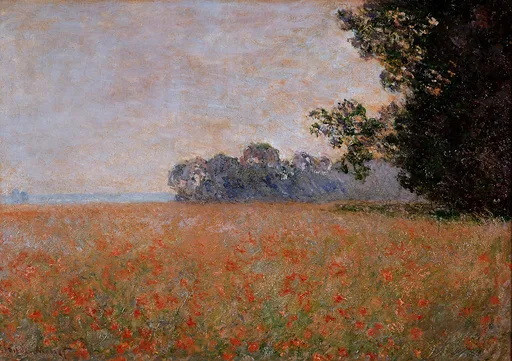
Oat Field with Poppies
From $109 -
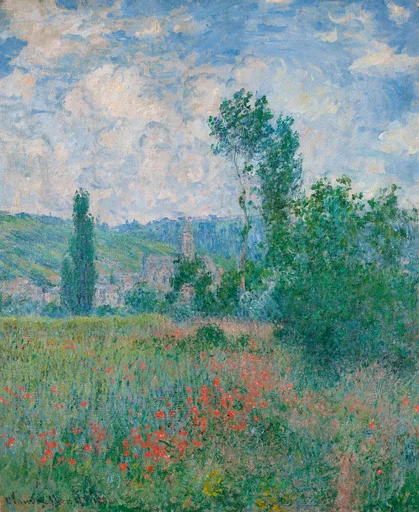
Poppy Field
From $109 -
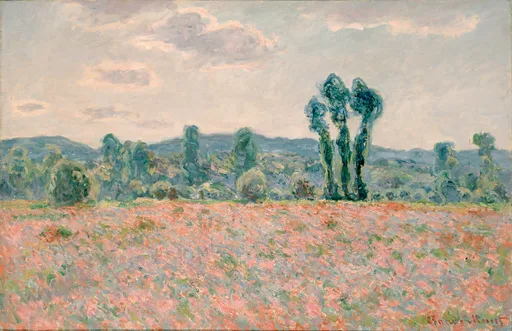
Poppy Field
From $109 -
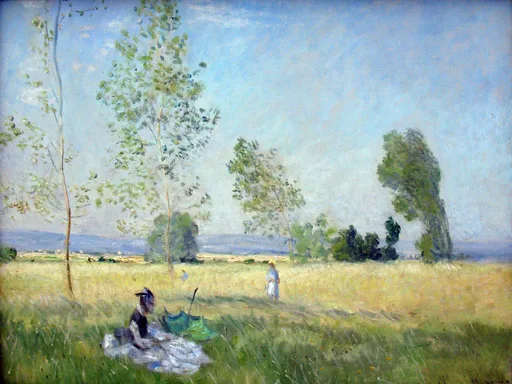
Summer
From $109 -
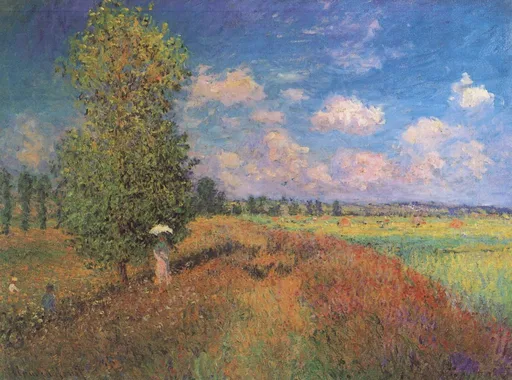
Summer – Poppy Field
From $109 -
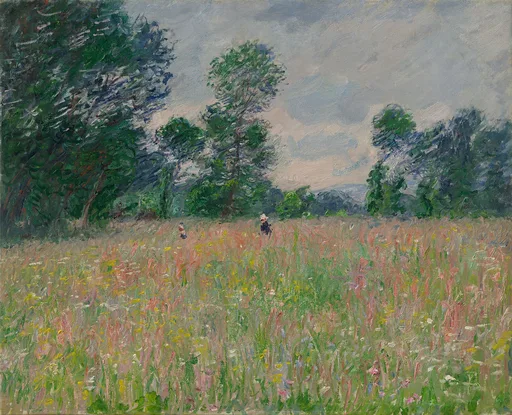
The Flowered Meadow
From $109 -
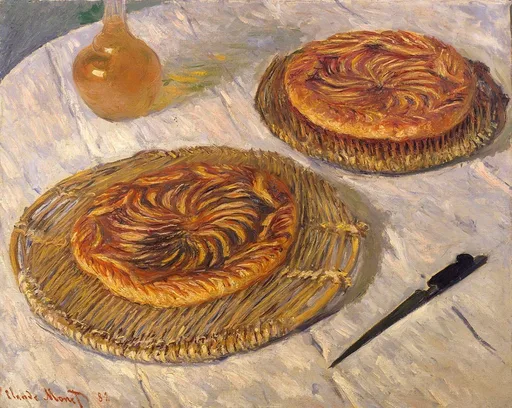
The Galettes
From $109 -
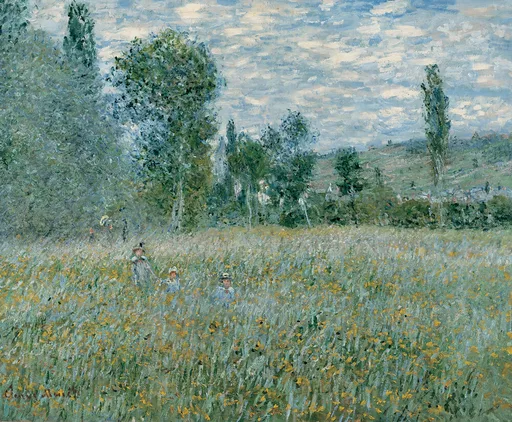
The Meadow
From $109 -
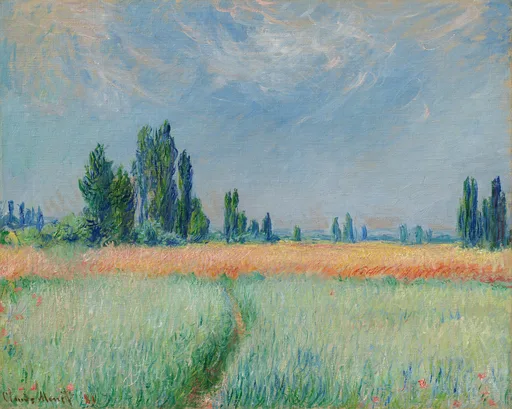
Wheatfield
From $109
Open ground, tall grass, and a scatter of red that reads from across a room. The field pictures are among the most immediately likeable things Monet painted, and they are the ones people most often mean when they say they want a Monet on the wall.
A subject he kept returning to for fifty years
Monet painted fields from the Argenteuil years of the 1870s through to the Giverny meadows of the 1890s. The appeal was practical as much as poetic: a field gives you a low horizon, an enormous sky, and a foreground you can build entirely out of colour and movement. There is no architecture to get right, nothing to draw carefully, only weather and season and the speed of the brush.
Look at how the poppies are handled. They are not drawn flowers. They are short loaded strokes of red laid over green, larger at the front and smaller towards the back, and that difference in size is doing all the work of distance. Stand close and it is paint. Step back and the field opens up. It is the clearest demonstration in his whole output of what Impressionism was actually for.
Hand-painted oil reproductions, made to order
Every work in this collection is available as a hand-painted oil reproduction, brushed in real oils on artist-grade cotton canvas by a senior studio painter and never printed, or as a lower-priced archival canvas print. Choose your size and orientation, then finish it rolled, stretched on a wooden chassis, or in a thin or thick frame. Each piece is made to order and hand inspected before it ships, with free worldwide shipping and a 30-day return guarantee.
Which room this collection suits
Field paintings are the safest large-scale choice in the catalogue. The horizon is low, so the picture reads as space rather than as an object, which makes it forgiving above a sofa or a long sideboard where a busier composition would feel crowded. The greens sit well against warm white, clay and soft stone; the reds will fight a strong red or terracotta wall, so give them a quiet ground. Go bigger than instinct suggests. A poppy field at 60cm looks like a postcard; at 120cm it starts behaving like a window.
Frequently asked questions
Which Monet poppy painting is the famous one?
The best known is the 1873 Argenteuil picture with a woman and child walking down through the poppies, now at the Musee d'Orsay. Monet painted the same motif more than once, and the field studies from the Vetheuil and Giverny years are closely related in feeling if less familiar.
Should I choose the hand-painted oil or the canvas print here?
These are the works where hand-painting earns its price most visibly. The poppies are built from raised dabs of colour, and in oil they physically catch side light the way the original does. A print reproduces the image faithfully and flat. If the wall gets raking daylight from a window, choose the oil.
What size works best for a field painting?
Most of these canvases are horizontal and want room to breathe. As a rule, aim for a width around two thirds of the furniture beneath. Our canvas size guide gives measured ranges for each wall type.
Do you keep the original proportions?
Yes. Every reproduction keeps the aspect ratio of the museum original, so nothing is cropped or stretched to fit a standard frame size. Browse the full range in the shop.