
Holland & the Windmills Collection: Claude Monet Oil Painting Reproductions
Monet made two working trips to the Netherlands, one to Zaandam and Amsterdam in 1871 and one to the tulip fields near Sassenheim and Leiden in 1886, and both produced paintings distinct from his French landscapes: windmills along flat canals, low horizons, and in 1886 broad bands of tulip color running to a horizon line under a wide sky. The windmill paintings from 1871 are quieter and more muted, closer in mood to his early river work, while the tulip fields from 1886 are some of the most saturated, almost stripe-like compositions of his career, color used structurally rather than descriptively. It is Monet outside France, working in a landscape defined by water management and flat geometry rather than hills or coastline, which is usually the draw. In a room, these paintings work as a strong, graphic block of color, either the muted grey-green of the canal scenes or the bold horizontal bands of the tulip fields.
Showing 1–16 of 28 results
-
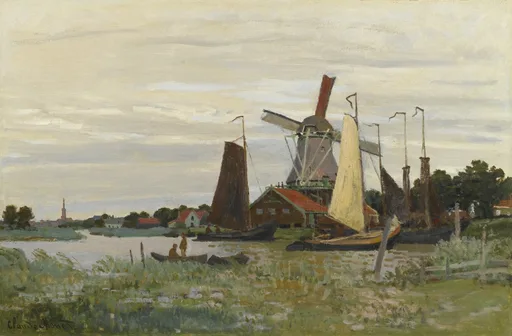
A Windmill in Zaandam
From $109 -
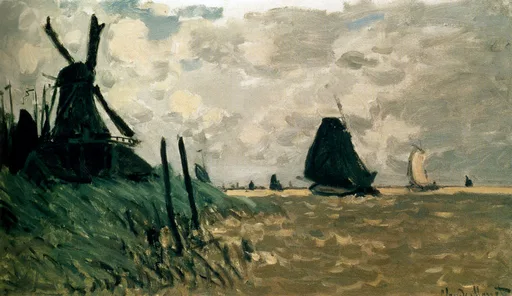
A windmill near Zaandam
From $109 -
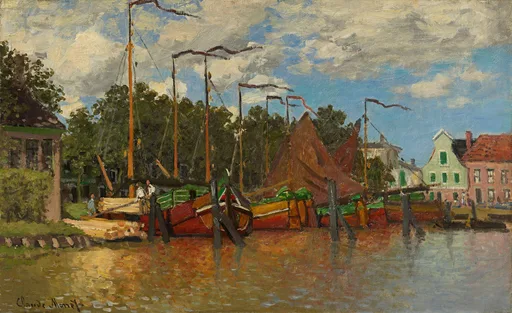
Boats at Zaandam
From $109 -
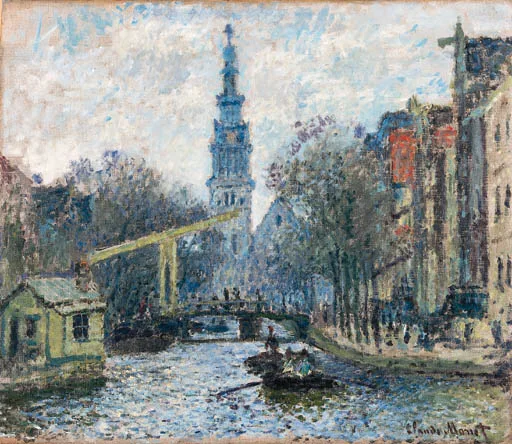
Canal in Amsterdam
From $109 -
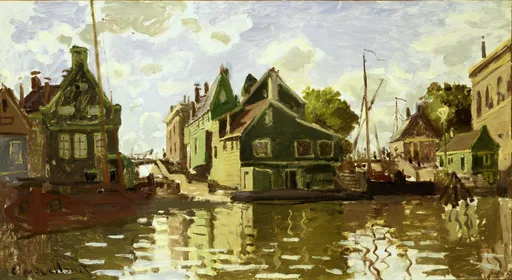
Canal in Zaandam
From $109 -
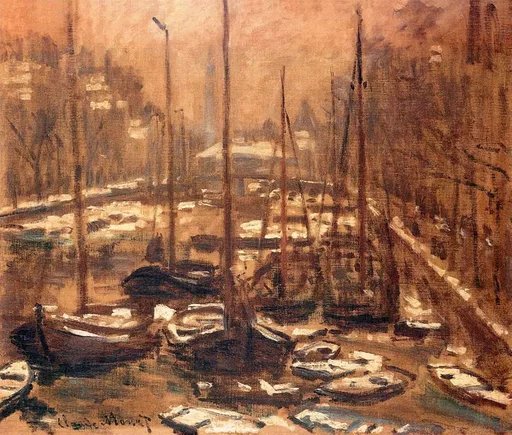
Geldersekade in Amsterdam in winter
From $109 -
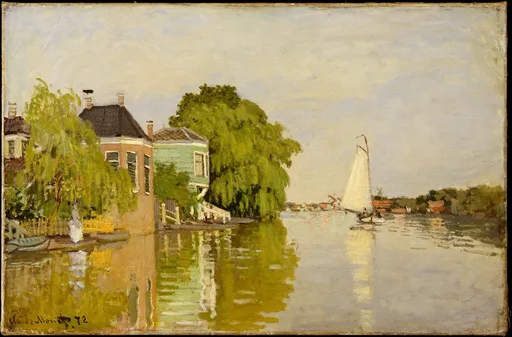
Houses on the Achterzaan
From $109 -
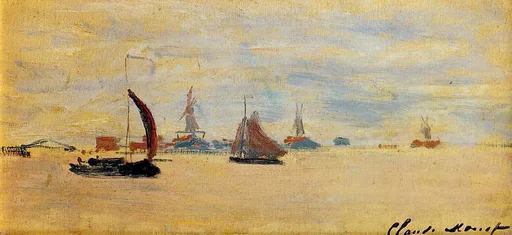
Monet 1871 View of the Voorzaan
From $109 -
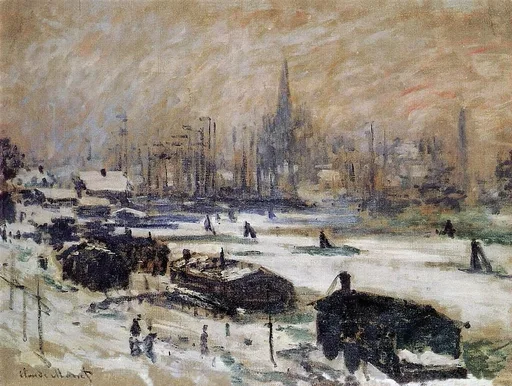
Snow in Amsterdam
From $109 -
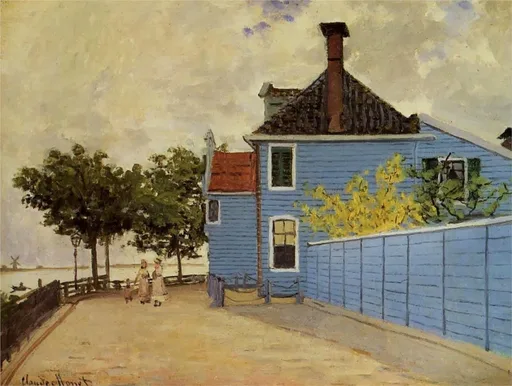
The blue house in Zaandam
From $109 -
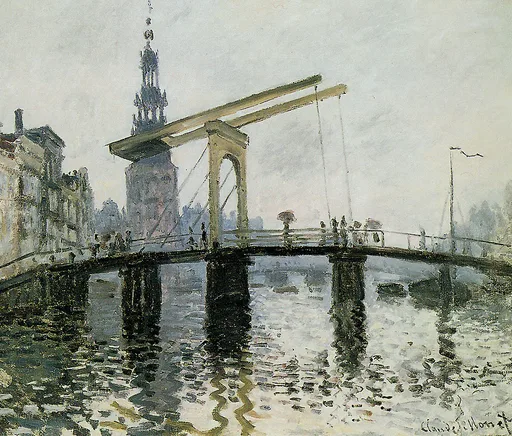
The Drawbridge
From $109 -
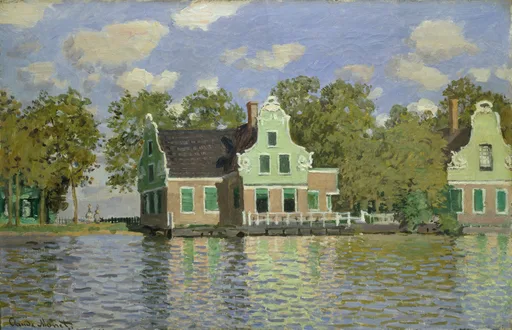
The House on the River Zaan in Zaandam
From $109 -
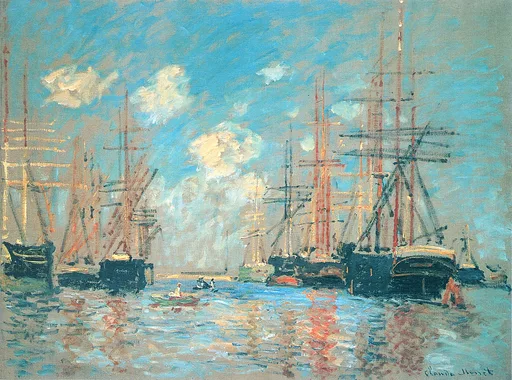
The port of Amsterdam
From $109 -
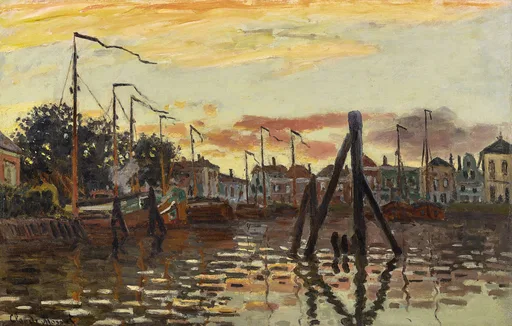
The Port of Zaandam
From $109 -
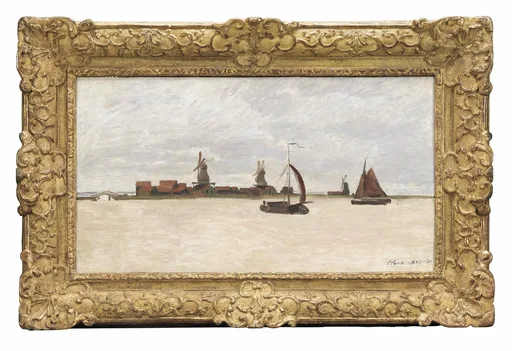
The Voorzaan and Westerhem
From $109 -
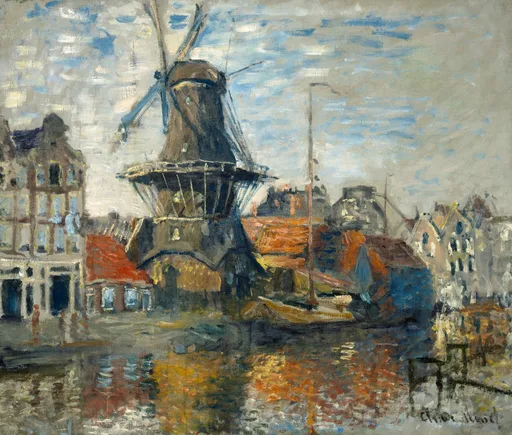
The Windmill on the Onbekende Gracht, Amsterdam
From $109
Twenty-two paintings of the Netherlands: windmills on the skyline, houses standing straight out of the water, canals, boats, and fields of tulips laid out in bands of flat colour. Holland gave Monet the widest skies and the lowest horizons he ever worked with.
Zaandam in 1871, and the returns
Monet left France during the Franco-Prussian war and spent time in London. On the way home in 1871 he stopped at Zaandam, just north of Amsterdam, and stayed several months. The place suited him immediately: a working town on the water, with mills, jetties, green and blue timber houses, and a river that doubled all of it in reflection. He produced a substantial group of canvases there, and it is one of the most productive short campaigns of his early career.
He came back to the Netherlands more than once in the years that followed, painting views in and around Amsterdam and, in the 1880s, the bulb fields in flower, where the tulips lie in hard stripes of red and yellow under an enormous sky. The Dutch pictures are the clearest demonstration of a principle that runs through all his work: put the horizon low, give most of the canvas to sky and water, and let a few vertical accents, a mill, a mast, a church tower, do the rest.
Hand-painted oil reproductions, made to order
Every picture here can be ordered as a hand-painted oil reproduction, brushed in real oils on artist-grade cotton canvas by a senior studio painter and never printed, or as a lower-priced archival canvas print. Choose your size and orientation, then finish rolled, stretched over a bar, or framed in a thin or a thick moulding. Made to order and hand inspected, with free worldwide shipping and a 30-day return guarantee.
Which room this collection suits
Wide, calm and horizontal, these are the natural pictures for a long wall: above a sofa, a bed, a sideboard or a run of low cabinets. The palette is cool, silver-grey, blue-green and soft white, with the tulip fields breaking that with sudden red, so they pair easily with grey, blue-grey and pale timber interiors. Because so much of the canvas is sky, they read as space rather than as a busy image, which makes them a safe choice for rooms that are already full of furniture and pattern.
Frequently asked questions
Why did Monet paint in Holland?
He first stayed at Zaandam in 1871, on his way back to France after the Franco-Prussian war, and found a landscape of mills, water and reflection that suited exactly what he was working on. He returned to Dutch subjects on later visits, including the tulip fields in flower.
Which orientation should I choose?
Landscape orientation, in almost every case. These compositions depend on width and a low horizon; cropped into an upright format they lose the sky, which is the subject.
What is the difference between the two versions you offer?
One is a hand-painted oil reproduction, painted in real oils on cotton canvas by a studio painter, with visible brushwork and a raised surface. The other is an archival canvas print, produced photographically on canvas at a lower price. Both come in the same sizes and finishes, and both are made to order.
Will a cool grey painting feel cold in a room?
Not if the framing is warm. A thin oak or a warm-toned moulding balances the silver palette very effectively; the options are set out in the framing guide.