
Rouen Cathedral Collection: Claude Monet Oil Painting Reproductions
Between 1892 and 1894, Monet rented rooms across from the west facade of Rouen Cathedral and painted the same view more than thirty times, working on several canvases in a single day as he tracked how the stone changed from pale dawn grey to gold at midday to blue and violet in fading light. The project pushed his serial method furthest: the building’s Gothic detail is barely legible in some versions, dissolved into color that records light rather than architecture, while the underlying structure stays exactly the same from canvas to canvas. When a group of these paintings was exhibited together in 1895, critics recognized the series as a single sustained argument about perception rather than a set of separate pictures of a building. That argument made visible is what this collection offers: one solid, unchanging subject read through radically different color and time of day, and on a wall these paintings carry warmth and weight, stone and light rather than open landscape.
Showing 1–16 of 33 results
-
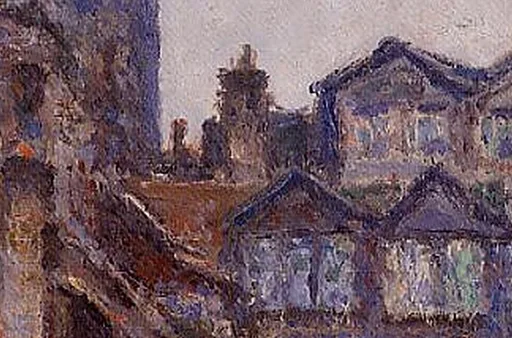
Monet Cour d’Albane temps gris
From $109 -
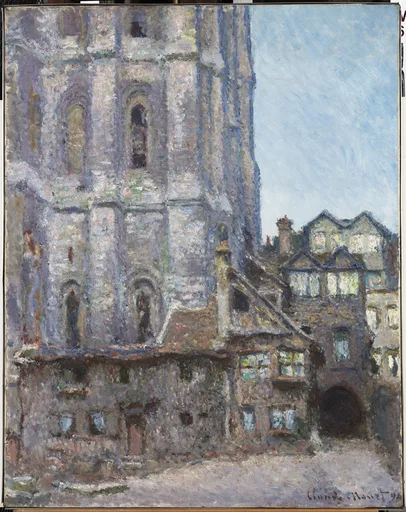
Monet la Cour d’Albane Rouen
From $109 -
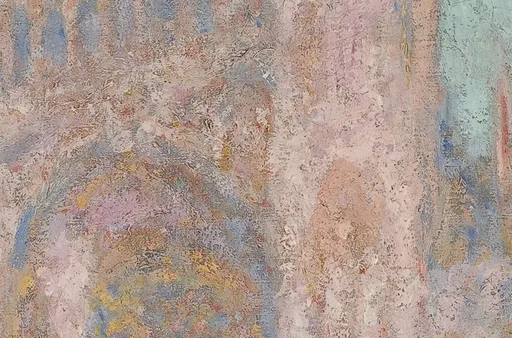
Rouen Cathedral
From $109 -
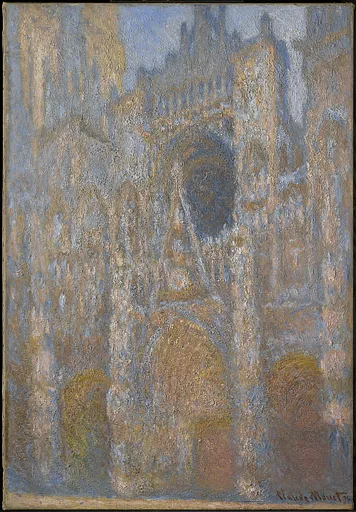
Rouen Cathedral
From $109 -
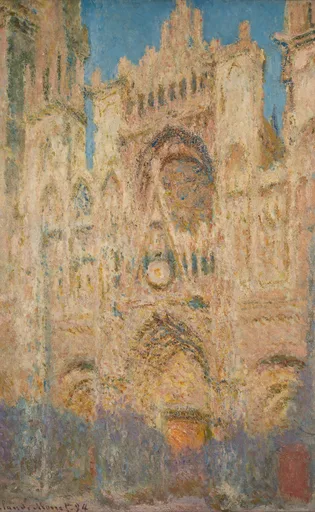
Rouen Cathedral, End of the Day
From $109 -
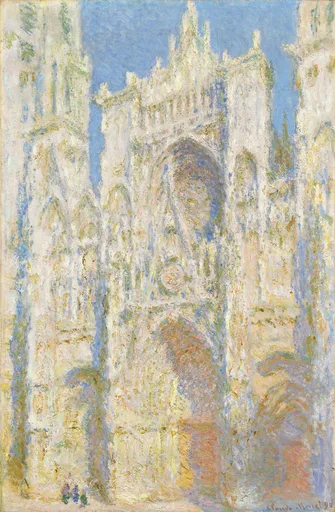
Rouen Cathedral, Façade
From $109 -
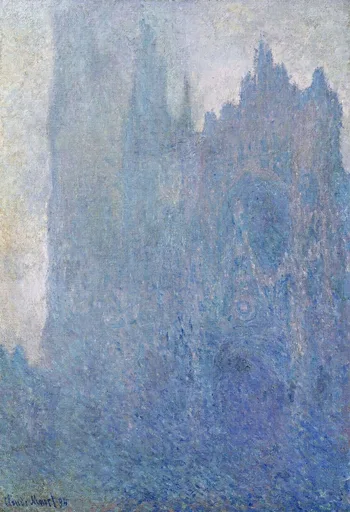
Rouen Cathedral, Fog
From $109 -
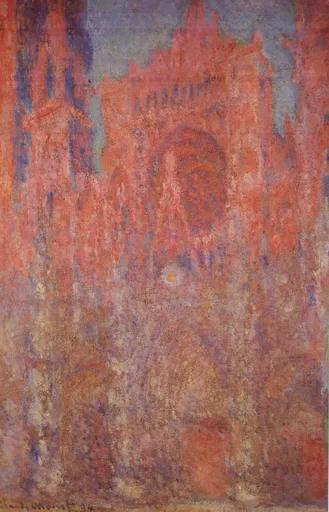
Rouen Cathedral, Portal
From $109 -
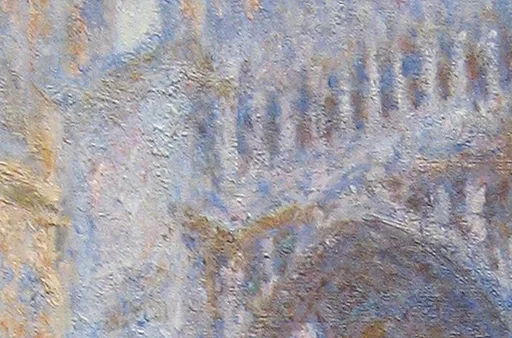
Rouen Cathedral, Portal
From $109 -
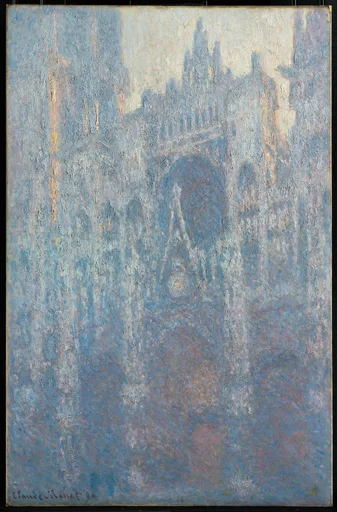
Rouen Cathedral, Portal
From $109 -
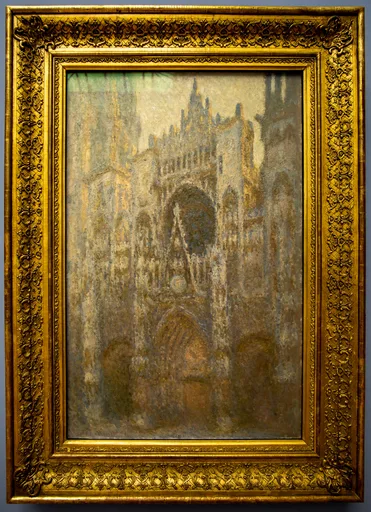
Rouen Cathedral, Portal
From $109 -
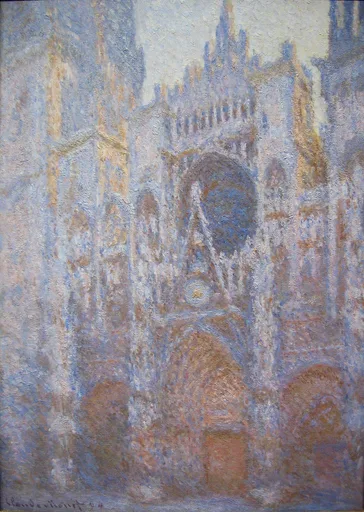
Rouen Cathedral, Portal
From $109 -
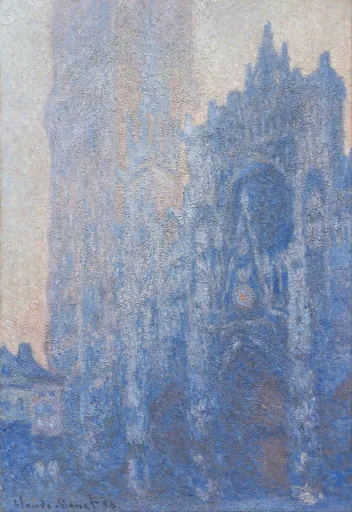
Rouen Cathedral, Portal and Tower d’Albane, Dawn
From $109 -
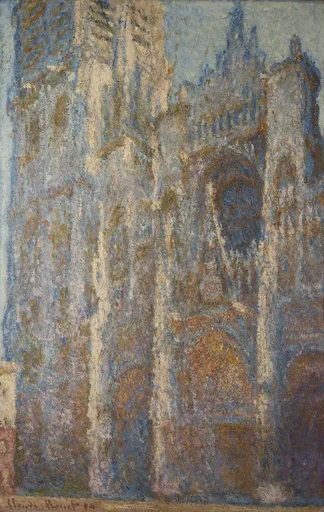
Rouen Cathedral, Portal and Tower d’Albane, Midday
From $109 -
Rouen Cathedral, Portal and Tower Saint-Romain in the Sun
From $109 -
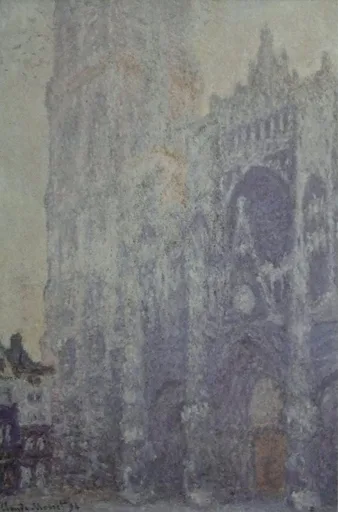
Rouen Cathedral, Portal and Tower Saint-Romain, Morning Light
From $109
Twenty-seven canvases of a single subject: the west front of Rouen Cathedral, painted again and again as the light moved across it. What unites this group is not the building but the hour; grey morning, full midday, the blaze of late sun on worn stone. Monet set out to record not the cathedral itself but the air between himself and it.
A facade painted by the hour
Between February 1892 and the spring of 1893 Monet worked from rented rooms on the square opposite the cathedral, moving between several canvases as the light shifted and returning to each when its particular conditions came round again. He complained in his letters of the difficulty; the effects changed faster than he could follow them, and the stone that had been blue at nine was gold by noon.
The paintings were finished in the studio at Giverny through 1894 and a group of them was exhibited in Paris in 1895 at the gallery of Paul Durand-Ruel. Seen together they make the argument that the series form exists to make: the motif is constant, so everything that changes belongs to the light. The surfaces are unusually thick, built up in crusted layers that answer the pitted Gothic stonework, and the architecture dissolves into colour at the very moment it should be most solid.
Hand-painted oil reproductions, made to order
Every work in this collection is available two ways. As a hand-painted oil reproduction, brushed in real oils on artist-grade cotton canvas by a senior studio painter, never printed; or as a lower-priced archival canvas print. You choose the size and the orientation, and finish it rolled, stretched on a bar, or set into a thin or thick frame. Each piece is made to order and hand inspected before it leaves us, with free worldwide shipping and 30-day returns.
Frequently asked questions
What is the difference between a hand-painted oil and an archival print?
The hand-painted oil is an original painting made by a studio artist in oils on canvas; it carries real brushwork and a raised, tactile surface. The archival canvas print reproduces the image photographically on canvas at a lower price, and reads flat under raking light. For the Rouen canvases, where the paint is famously thick, the hand-painted version conveys far more of the original character.
Do these work well as a pair or a set?
They do, and the series was conceived to be seen that way. Two or three cathedrals at different hours, hung in a row at equal spacing, restate Monet's own argument better than any single canvas. If you are hanging a set, order them in matching sizes and finishes.
Which rooms suit them?
The cathedrals have real weight and reward a wall with distance in front of it: a dining room, a hall, a stairwell landing. Warm artificial light flatters the gold and rose variants; the grey and blue mornings hold up better in a cool north-facing room.
What sizes can I order?
A full range from modest wall pieces to substantial statement sizes, in portrait or landscape orientation. The cathedral compositions are strongly vertical, so portrait proportions are the truer choice; we would suggest a larger format than you first have in mind, as the subject loses its architectural presence when made small.