
Argenteuil Collection: Claude Monet Oil Painting Reproductions
Monet lived in Argenteuil, a riverside town northwest of Paris, from 1871 to 1878, and the paintings from these years are often treated as the high point of classic Impressionism: sailboats on the Seine, the railway bridge, his own garden, and family scenes with his wife Camille and son Jean. The town was popular with weekend visitors from Paris for sailing and boating, and Monet painted that leisure directly, regattas, striped awnings, figures under parasols, alongside quieter views of the riverbank and his own house. He worked closely with Renoir and other painters who visited or lived nearby during these years, a period of relative stability before the financial pressure that followed. On a wall, these paintings bring light, sails, and reflected color into a room, an easy, sociable brightness rather than solitude or drama. A visitor comes to this collection for Impressionism close to its founding image: bright color, visible brushwork, and everyday middle-class leisure by the water.
Showing 1–16 of 62 results
-
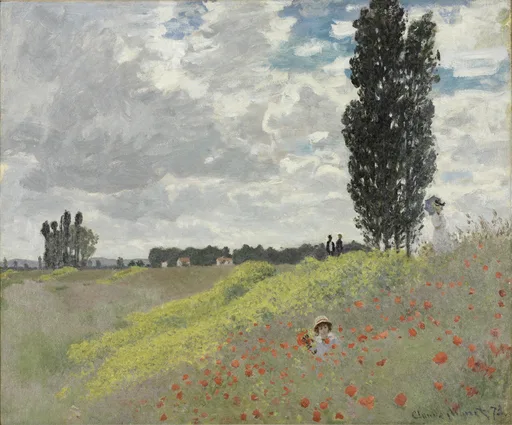
A Walk in the Meadows at Argenteuil
From $109 -
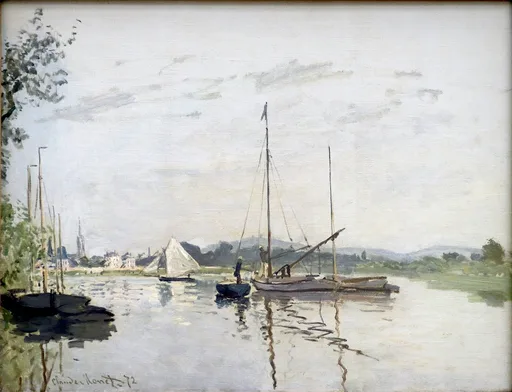
Argenteuil
From $109 -
Argenteuil
From $109 -
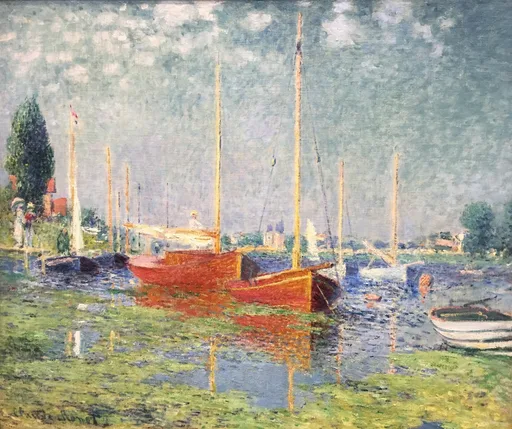
Argenteuil
From $109 -
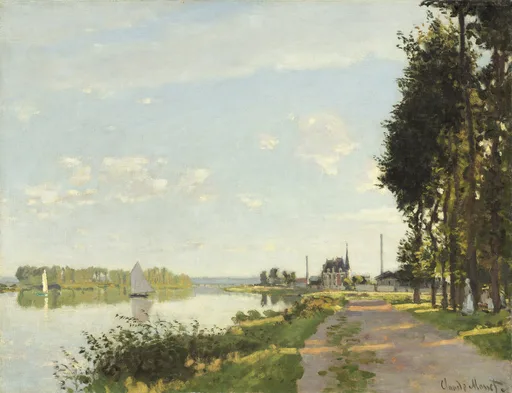
Argenteuil
From $109 -
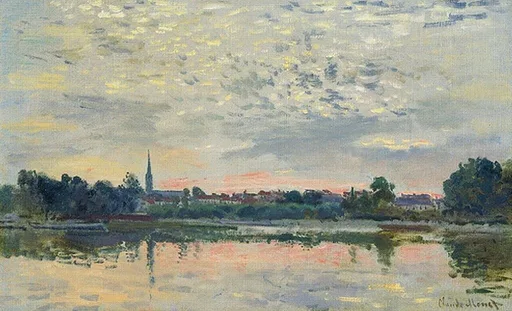
Argenteuil
From $109 -
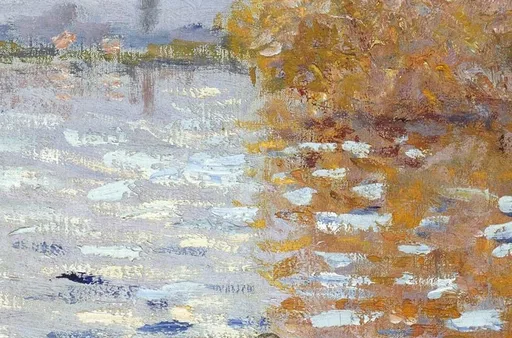
Argenteuil Basin with a Single Sailboat
From $109 -
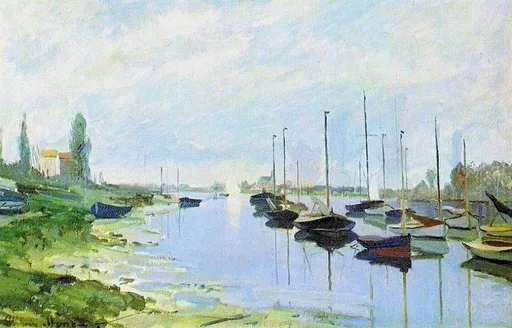
Argenteuil, Boats along the Riverbank
From $109 -
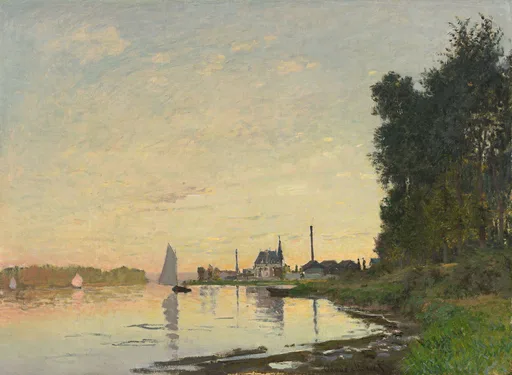
Argenteuil, Late Afternoon
From $109 -
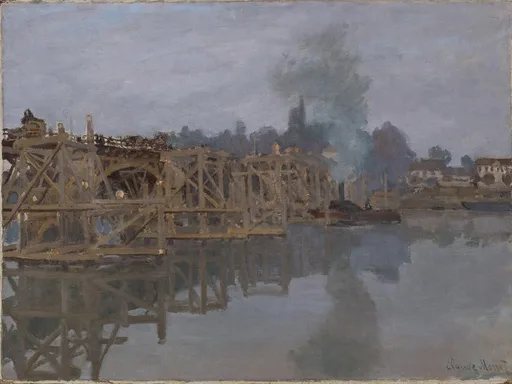
Argenteuil, the Bridge under Repair
From $109 -
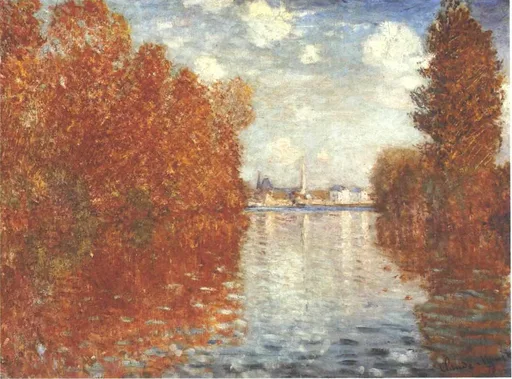
Autumn Effect at Argenteuil
From $109 -
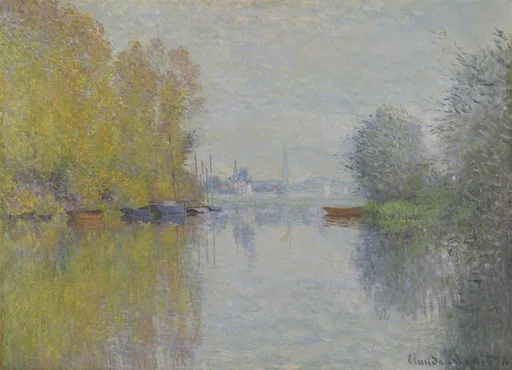
Autumn on the Seine, Argenteuil
From $109 -
Boulevard Héloise, Argenteuil
From $109 -
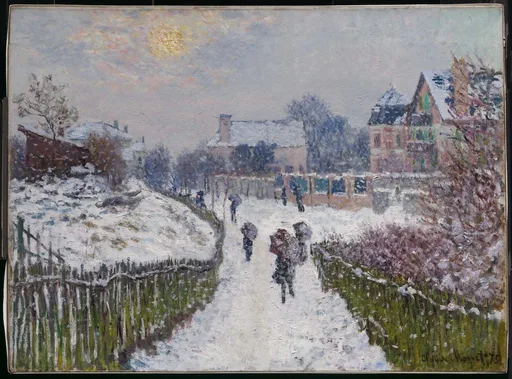
Boulevard Saint-Denis, Argenteuil, in Winter
From $109 -
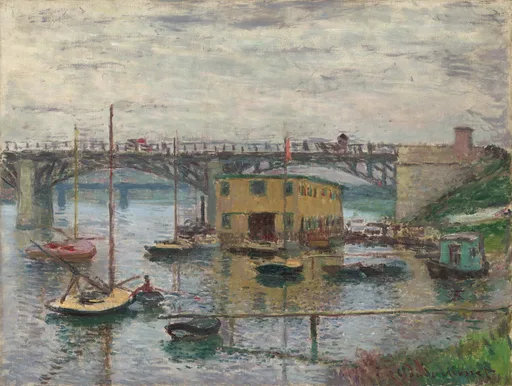
Bridge at Argenteuil on a Gray Day
From $109 -
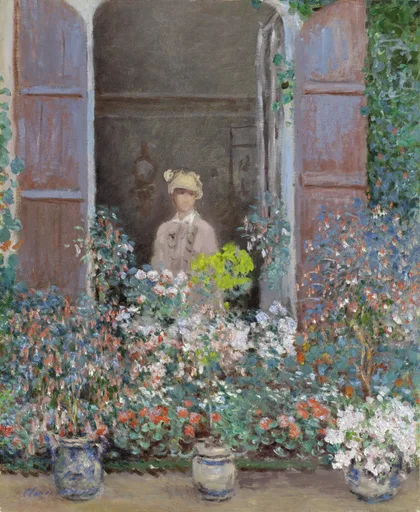
Camille at the Window, Argenteuil
From $109
Argenteuil is where Impressionism found its shape. Between 1871 and 1878 Monet lived on this stretch of the Seine just downstream from Paris and produced some of the most confident, sunlit painting of his career; these fifty-four works cover the bridges, the regattas, the gardens and the winters.
Seven years on a working river
Monet settled at Argenteuil in 1871 after the Franco-Prussian war, and the war is visible in the subjects. Both the road bridge and the railway bridge had been damaged and were rebuilt, and he painted their new spans repeatedly: clean, engineered, emphatically modern, with pleasure boats passing beneath. Argenteuil was a weekend sailing town for Parisians, and the basin full of masts gave him verticals, reflections and moving colour in a single view.
He also fitted out a small boat as a floating studio, so he could work from the middle of the river and paint the banks at water level. Friends came out to work beside him, and the paintings of these years, the gardens with figures, the poppy fields, the snow on the Boulevard, are the clearest statement of what the group was after: ordinary contemporary life, painted outdoors, quickly, in high key.
Hand-painted oil reproductions, made to order
Any work in this collection can be commissioned as a hand-painted oil reproduction, painted in real oils on artist-grade cotton canvas by a senior studio painter and never printed, or supplied as a lower-priced archival canvas print. You select the size and the orientation, and the finish: rolled, stretched, or framed in a thin or a thick moulding. Each piece is made to order and hand inspected, with free worldwide shipping and a 30-day return guarantee.
Which room this collection suits
These are the cheerful Monets. Clear blues, white sails, green banks, plenty of light in the picture itself, which means they can carry a room that does not get much daylight of its own. They look well in kitchens, family rooms, hallways and home offices, and they are among the few Monet subjects that survive being hung as a pair or a set of three, because the horizon lines are consistent. Mid-tone walls, a soft blue-grey or a warm stone, hold them better than stark white. The snow scenes are the exception: pale and low in contrast, they need a darker wall or a substantial frame to stop them evaporating.
Frequently asked questions
Why are there two different bridges?
Argenteuil had a road bridge and a railway bridge, both damaged in the war of 1870 to 1871 and rebuilt shortly afterwards. Monet painted each of them many times, sometimes with the scaffolding of reconstruction still in place.
What was the studio boat?
A small craft Monet adapted with a cabin so that he could paint on the water. It let him work from the middle of the Seine, which is why so many of these views sit unusually low, right at the level of the reflections.
Which subject suits a large open-plan wall?
The regatta and basin views. They have a long horizontal structure and repeated masts that carry across a wide format without emptying out. Browse the full Monet collection if you want to compare proportions.
Hand-painted oil or archival print for these?
The oil suits them particularly well, because Monet's brushwork here is short, loaded and visible, and a hand-painted surface reproduces that quality of touch. The print remains a good option at larger sizes or a tighter budget.