
Vetheuil Collection: Claude Monet Oil Painting Reproductions
Monet lived in the small Seine village of Vetheuil from 1878 to 1881, a difficult period marked by financial strain and the illness and death of his first wife, Camille, in 1879. The paintings from these years show the village and its church from across the river, the ice floes that broke up on the Seine in the hard winter of 1880, and the surrounding hills and orchards, often painted from a small boat he used as a floating studio. The palette is generally cooler and the compositions quieter than the sociable riverside scenes of his earlier years at Argenteuil, reflecting a period when Monet worked in relative isolation with fewer sales and fewer visitors. What draws someone to this collection is that particular register, a rural, watery landscape without figures or leisure, closer to solitude than spectacle. In a room, these paintings read as calm rather than cheerful, muted river light and village rooftops, quieter and deeper than a bright focal point would allow.
Showing 1–16 of 67 results
-
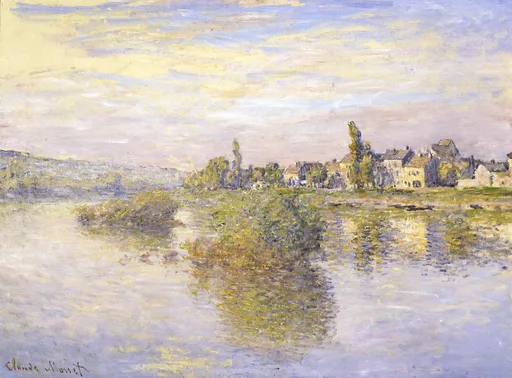
Banks of the Seine at Lavacourt
From $109 -
Banks of the Seine River near Vétheuil
From $109 -
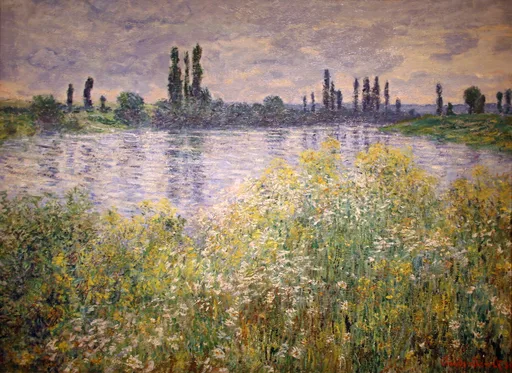
Banks of the Seine, Vétheuil
From $109 -
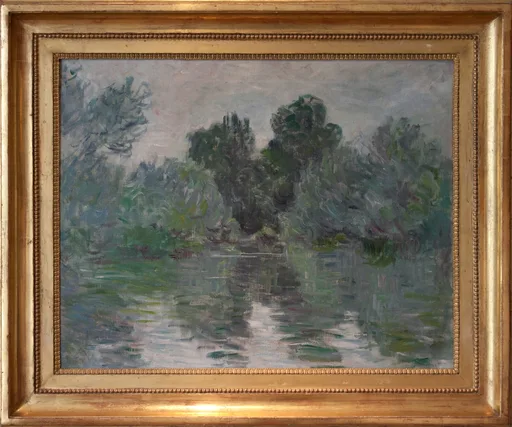
Branch of the Seine near Vétheuil
From $109 -
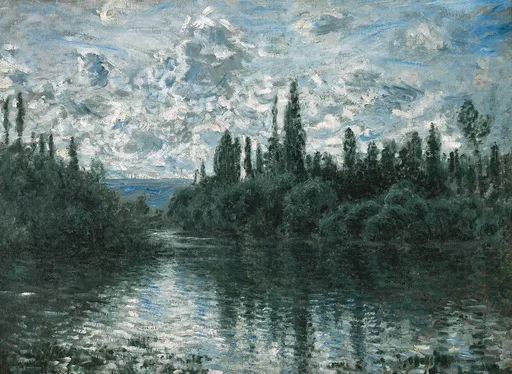
Branch of the Seine near Vétheuil
From $109 -
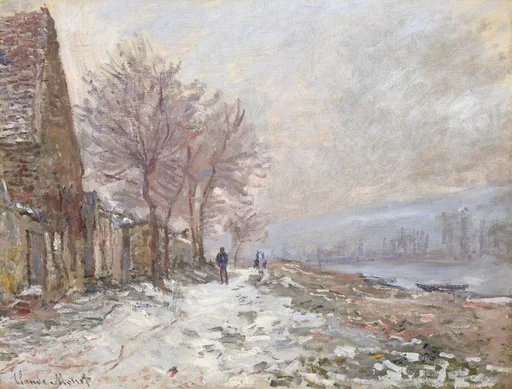
Claude monet lavacourt lhiver024754)
From $109 -
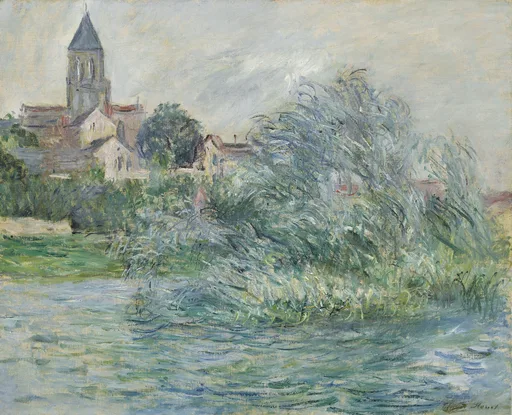
Claude monet leglise a vetheuil)
From $109 -
Debacle at Vétheuil, View of Lavacourt
From $109 -
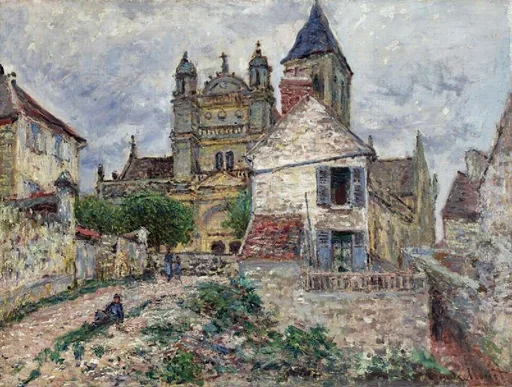
Église de Vetheuil
From $109 -
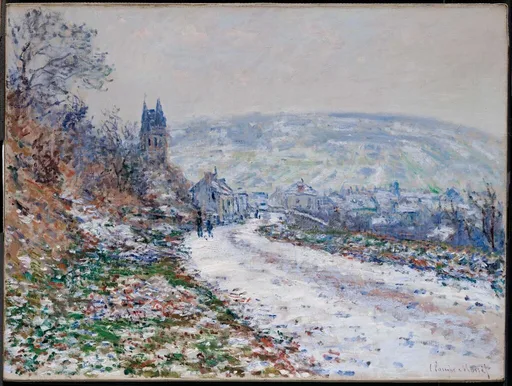
Entrance to the Village of Vétheuil in Winter
From $109 -
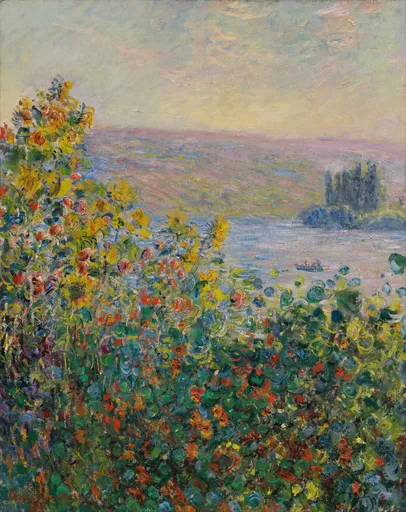
Flower Beds at Vétheuil
From $109 -
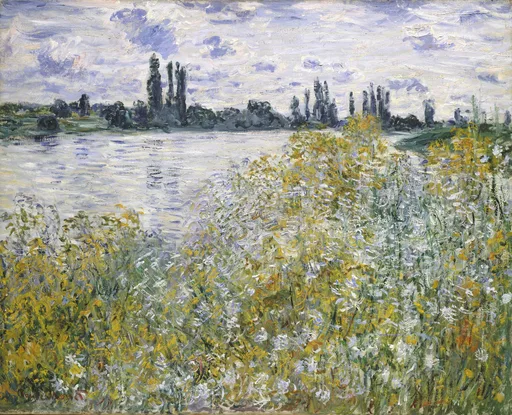
Ile aux Fleurs near Vétheuil
From $109 -
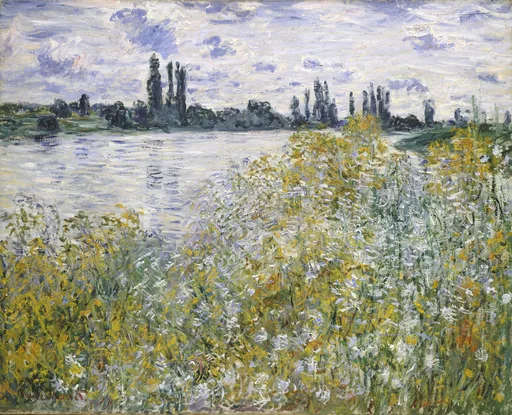
Île aux Fleurs near Vétheuil
From $109 -
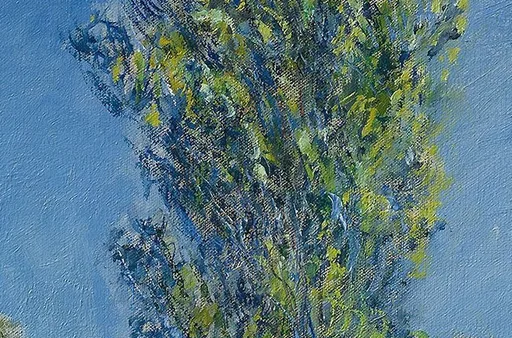
Landscape in Ile Saint-Martin
From $109 -
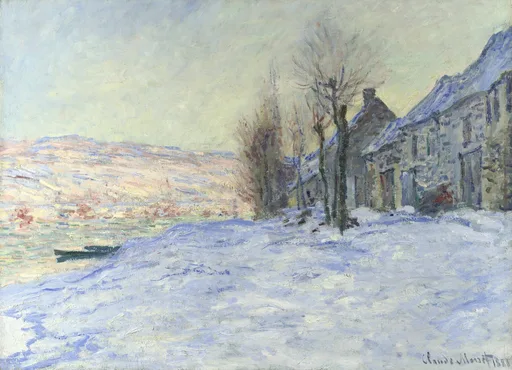
Lavacourt under Snow
From $109 -
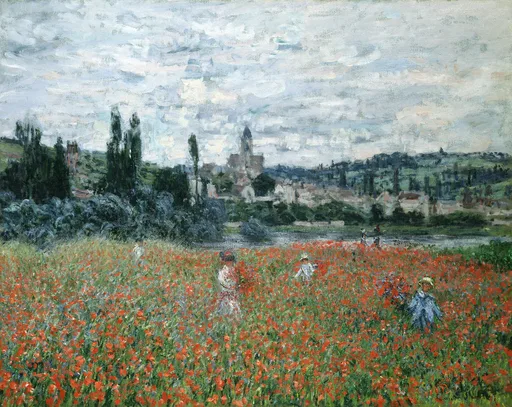
Poppy Field near Vétheuil
From $109
Vetheuil is a small collection about a hard chapter. Monet lived in this village on a bend of the Seine from 1878 to 1881, in poverty, and it was here that his first wife Camille died in 1879. The five works gathered here include the view of the village across the water and the extraordinary winter when the river froze solid and then broke apart.
Three years on a bend in the river
Monet left Argenteuil for Vetheuil in 1878, further from Paris and considerably harder to reach. The village sits below a chalk hill with its church rising above the roofs, and the standard view is from the opposite bank at Lavacourt, the whole settlement laid along the water and doubled in it. He painted it in every season, sometimes several canvases at once.
The winter of 1879 to 1880 was severe. The Seine froze, and when the thaw came the ice broke up and moved downstream in great plates, which Monet went out and painted: pale, almost colourless canvases of floes drifting past bare poplars under a low sun. They are the coldest pictures he ever made, and they come from the months immediately after Camille's death. Nothing in them is sentimental, and that restraint is why they still hold.
Hand-painted oil reproductions, made to order
Each Vetheuil subject can be ordered as a hand-painted oil reproduction, brushed in real oils on artist-grade cotton canvas by a senior studio painter and never printed, or as a lower-priced archival canvas print. Select the size and orientation you need, and the finish: rolled, stretched, or set into a thin or thick frame. Every piece is produced to order and hand inspected, shipped free worldwide, with a 30-day return guarantee if it is not right for the room.
Which room this collection suits
These are pale, cool, quiet pictures, mostly white, grey-blue and dun. On a white wall in a bright room they can vanish. Give them a mid-tone or dark background, a deep grey-green, a charcoal, a smoky blue, or frame them in a thick dark moulding, and they gain enormously in presence. They suit rooms used in the evening: a study, a snug, a dining room with lamplight, or a landing with a picture light. Because the tonal range is narrow, scale helps; a larger canvas gives the eye enough surface to read the subtle shifts of grey.
Frequently asked questions
Why are there only a few works in this collection?
The Vetheuil period was short, roughly 1878 to 1881, and we have curated a small, representative selection rather than padding it. The neighbouring collections on the Seine and on winter subjects extend the theme.
What is the ice-floe subject?
In the winter of 1879 to 1880 the Seine froze and then broke up, sending sheets of ice down the river. Monet painted the frozen river and the thaw in a small group of exceptionally spare canvases.
What frame suits these best?
A thick, darker moulding. It supplies the contrast the palette lacks and stops a pale winter canvas dissolving into a light wall. The framing guide shows how the same picture reads in each option.
Would a hand-painted oil show the difference here?
Very much so. Almost all the interest in these works is in the handling of near-white paint, and a hand-painted surface carries that texture in a way a flat print cannot. If budget is the deciding factor the archival print is still a good picture, but this is a collection where the oil earns its place.