
Pourville & Varengeville Collection: Claude Monet Oil Painting Reproductions
Monet spent stretches of 1882 painting along the Normandy coast near Dieppe, working from the clifftop villages of Pourville and Varengeville, where he found a stretch of chalk cliffs, a customs officer’s cabin, and open sea that became recurring subjects for several months. The paintings from this campaign are notably windswept, grass bent sideways on the clifftops, waves breaking well below the vantage point, and a high horizon line that leaves most of the canvas to sky and grass rather than water. Monet worked here in relative isolation, often battling weather to paint outdoors, and the resulting canvases have a rawer, more physical quality than his calmer river work from the same decade. This is a specific stretch of Normandy coast, wild and elevated rather than the busy harbor views of Le Havre or the placid beaches further along the shore, and these paintings suit a room that wants texture and movement, grass and cliff edge under open sky, rather than a still or symmetrical composition.
Showing 1–16 of 42 results
-
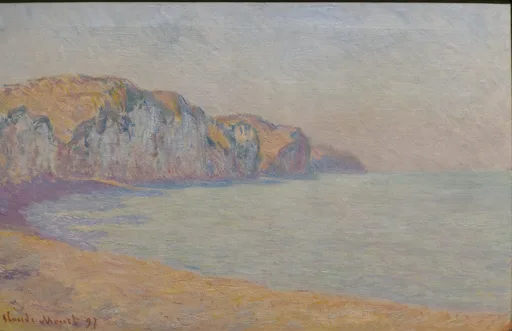
A Cliff at Pourville in the Morning
From $109 -
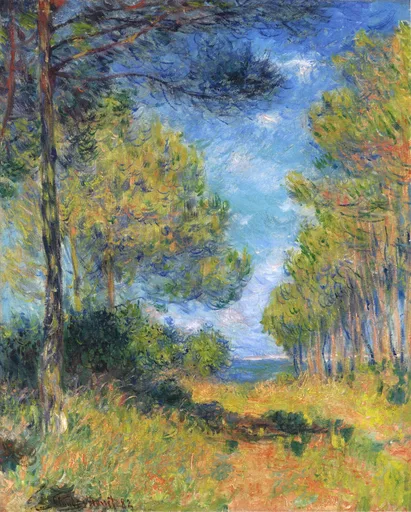
Allée de sapins à Varengeville
From $109 -
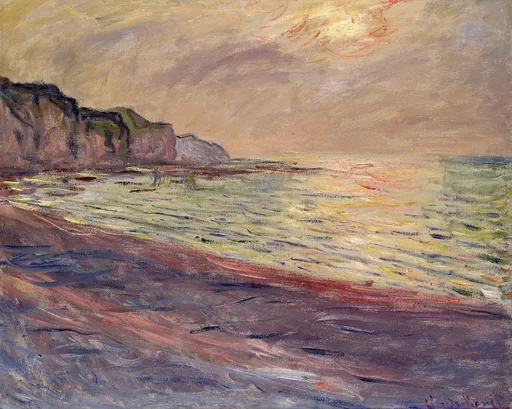
Beach in Pourville, setting sun.
From $109 -
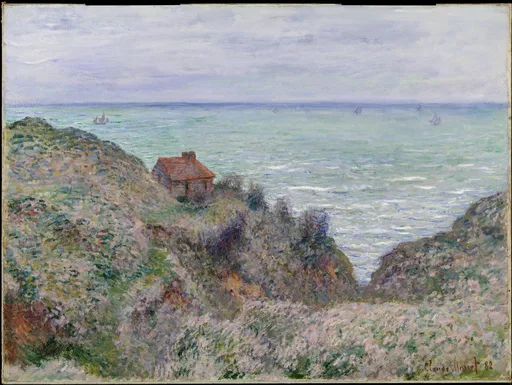
Cabin of the Customs Watch
From $109 -
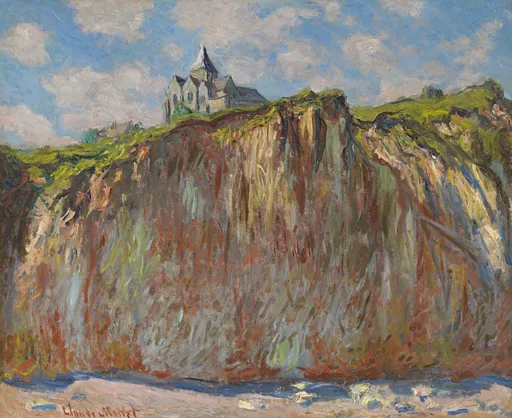
Church at Varengeville, Morning Effect
From $109 -
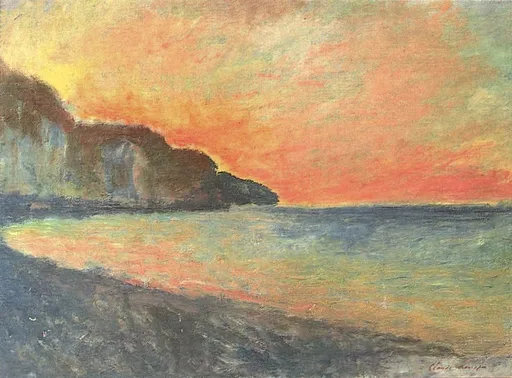
Cliff in Pourville, Sunset
From $109 -
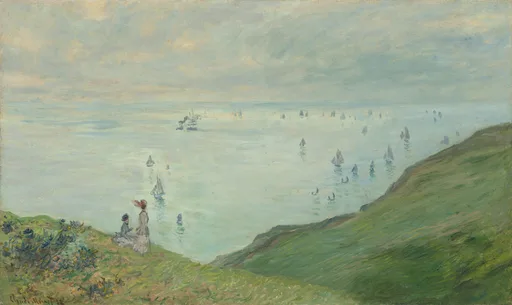
Cliffs at Pourville
From $109 -
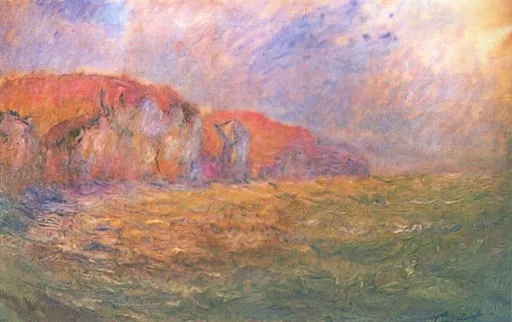
Cliffs at Pourville, Rough Sea
From $109 -
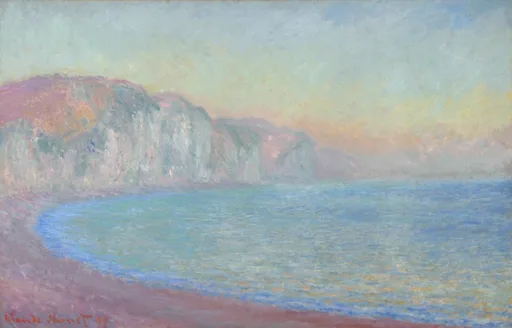
Cliffs at Pourville, Sunrise
From $109 -
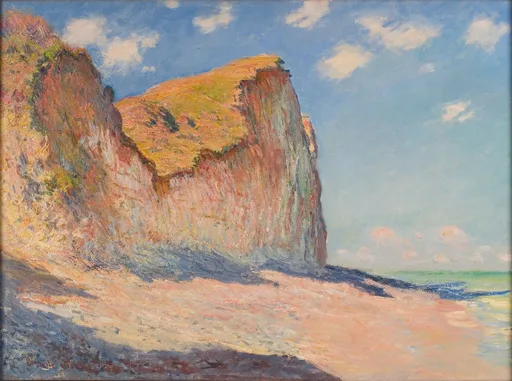
Cliffs near Pourville
From $109 -
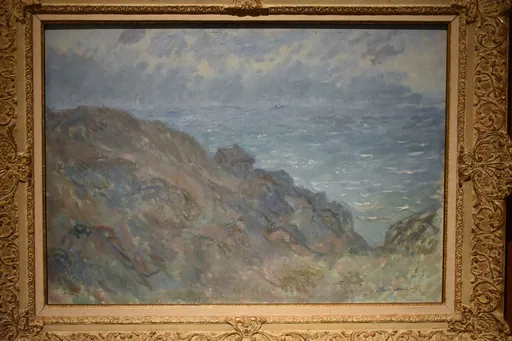
Cottage on the Cliffs near Varengeville
From $109 -
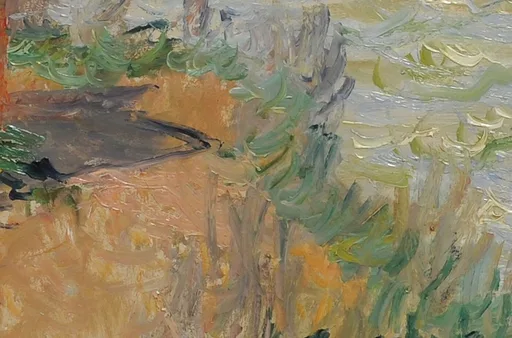
Customs House. Afternoon Effect
From $109 -
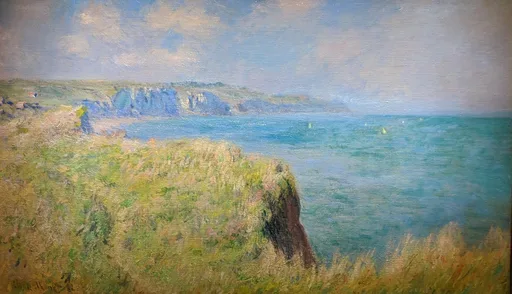
Edge of the Cliffs at Pourville
From $109 -
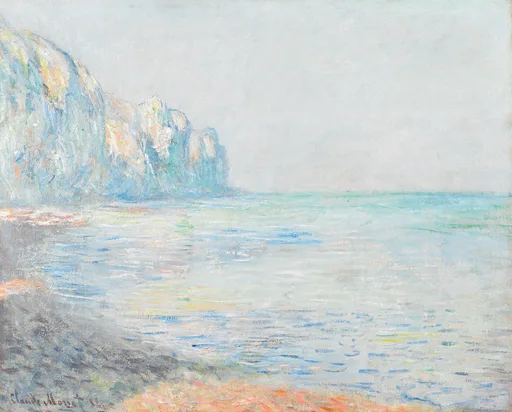
Foggy Morning at Pourville
From $109 -
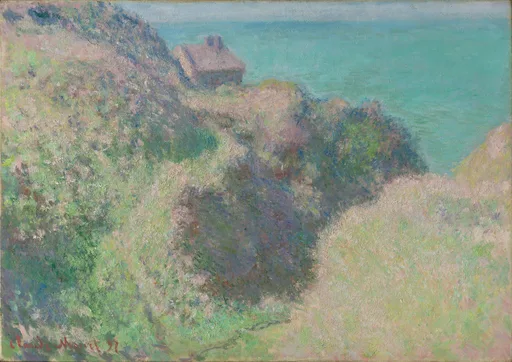
Gorge of the Petit Ailly, Varengeville
From $109 -
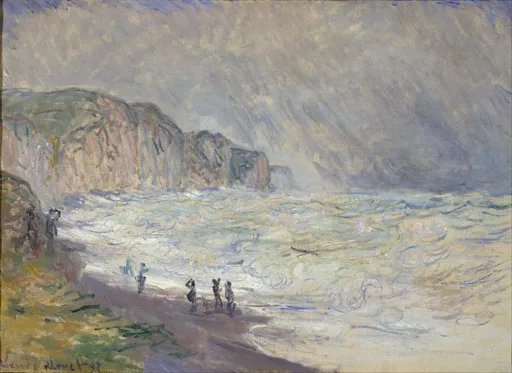
Heavy Sea at Pourville
From $109
In 1882 Monet spent much of the year on the cliffs west of Dieppe, first at Pourville in the early spring and then through the summer and autumn. These thirty-four works are the harvest of that campaign: green headlands, the small customs officer's cabin on its ledge, wide beaches at low tide and the church at Varengeville on its crumbling cliff.
The year on the cliff path
The stretch of coast between Pourville and Varengeville is high, grassy and exposed, cut by narrow valleys running down to the shingle. Monet worked it like a circuit, walking the clifftop and returning to the same handful of viewpoints. The little cabin, built for customs officers watching for smugglers, appears again and again: a single hard-edged shape set against grass, sea and sky, which let him vary everything else while keeping one fixed element to measure the light against.
The compositions from this campaign are among his boldest. He tilts the picture plane so the cliff edge rises steeply and the sea becomes a flat band at the top, or crops the headland hard against the frame. The palette is particular to the place: acid spring green, chalk, and a mauve-grey sea. He came back to Pourville again in the mid-1890s, but it is the 1882 canvases that define the collection.
Hand-painted oil reproductions, made to order
Each of these subjects can be commissioned as a hand-painted oil reproduction, brushed in real oils on artist-grade cotton canvas by a senior studio painter, never printed, or ordered as a lower-priced archival canvas print. Choose the size and the orientation, then the finish: rolled in a tube, stretched and ready to hang, or framed in a thin or thick moulding. Every piece is made to order, hand inspected, dispatched with free worldwide shipping and covered by a 30-day return guarantee.
Which room this collection suits
Green and grey dominate, with a lot of open sky, so these are calm pictures with a clear structure; easier to live with than the Etretat storms, more architectural than the garden subjects. They look particularly good in rooms with natural materials, oak, linen, stone, and against warm white, putty, or a soft green wall. Several of the cliff subjects are strongly vertical, which makes them one of the few Monet groups that genuinely suits a narrow wall or a portrait format between windows. In a room that already has a sea view, keep the scale modest so the painting does not compete with the window.
Frequently asked questions
What is the little hut that keeps appearing?
A cabin built on the cliff for customs officers keeping watch on the coast. By Monet's time it was a landmark on the walk, and he used it as a fixed point in dozens of canvases.
How does this collection differ from Etretat?
Etretat is about monumental chalk arches and heavy sea. Pourville and Varengeville are about grass, height and distance; softer, greener, and generally quieter in mood.
Which orientation should I choose?
The clifftop and cabin subjects work in both. If the wall is taller than it is wide, ask for the portrait crop; the size guide sets out the standard dimensions in each orientation.
Is the oil reproduction worth it for these?
The 1882 canvases are painted with a dry, dragged stroke that a hand-painted oil catches well, so yes if you will see it close to. For a corridor or a guest room, the archival canvas print is entirely respectable and costs a good deal less.