
The Seine & Its Banks Collection: Claude Monet Oil Painting Reproductions
The Seine runs through nearly every period of Monet’s career, from the boating scenes at Argenteuil in the 1870s to the misty river mornings he painted near Giverny and Vetheuil decades later, making it the single thread connecting his early and late work more than any other subject. This collection focuses on the river itself and its banks rather than a single town, poplars and willows along the water, small islands, morning haze rising off the surface, and the reflections that Monet used to double every shape he painted. He kept a studio boat for much of his life specifically to paint the river from the water rather than the shore, a working method that shaped how flattened and reflective these compositions became. The draw here is the Seine as Monet’s constant subject rather than any one place along it, paintings that bring a moving, reflective calm into a room, water and bank folded together, well matched to soft verticals and quiet color.
Showing 1–16 of 57 results
-
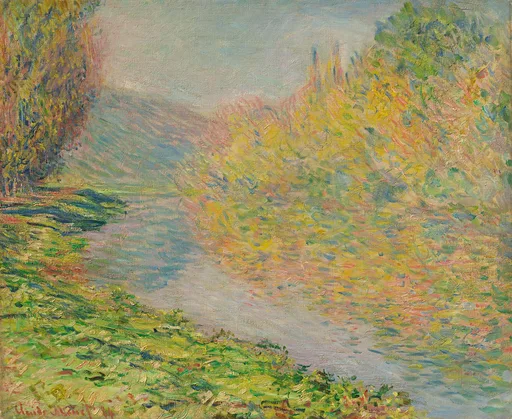
Autumn at Jeufosse
From $109 -
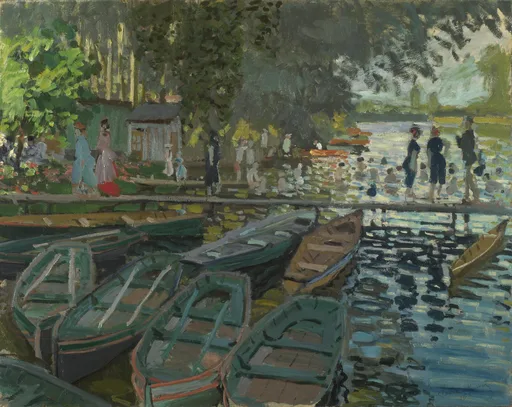
Bathers at La Grenouillère
From $109 -
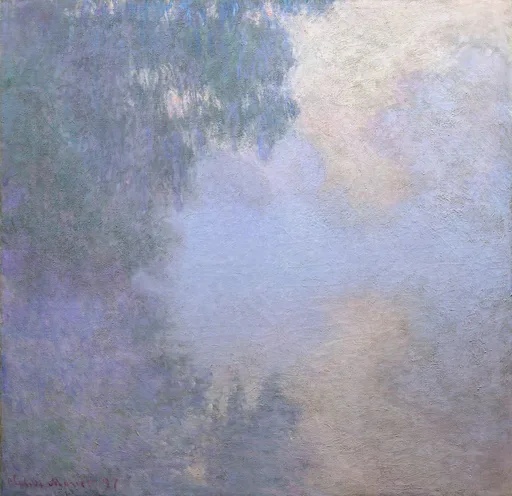
Branch of the Seine near Giverny (Mist), from the series “Mornings on the Seine”
From $109 -
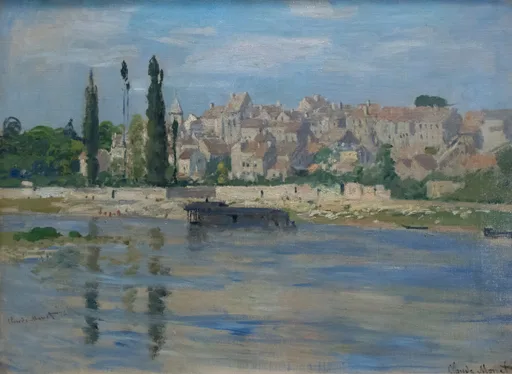
Carrières-Saint-Denis
From $109 -
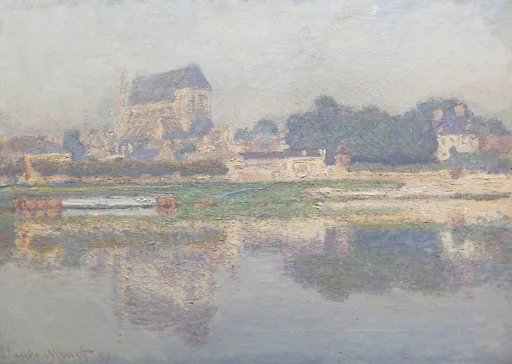
Church at Vernon, Sunlight
From $109 -
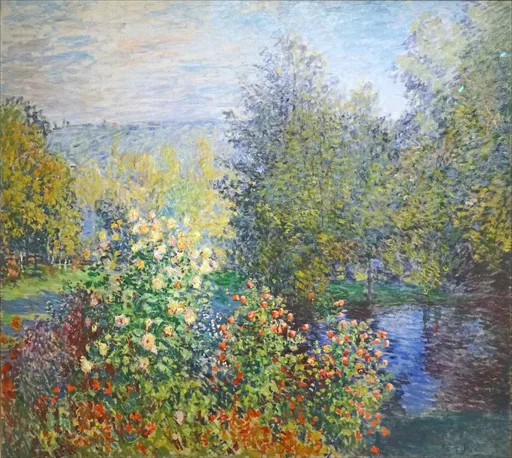
Corner of the Garden at Montgeron
From $109 -
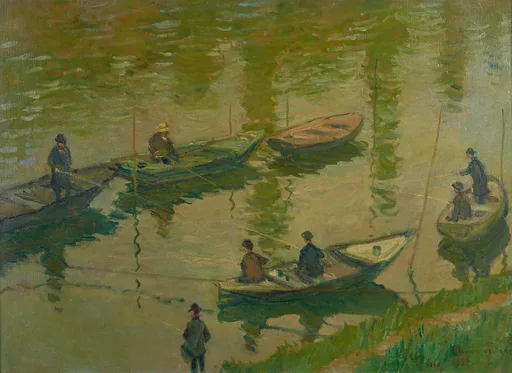
Fishermen in Poissy
From $109 -
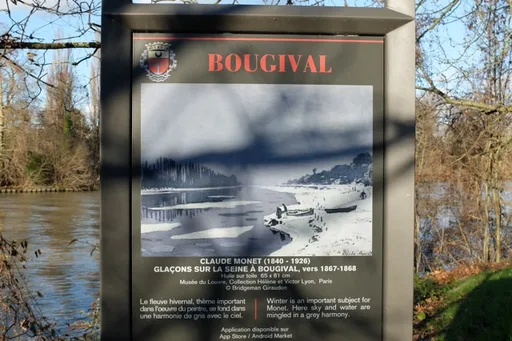
Glaçons à Bougival
From $109 -
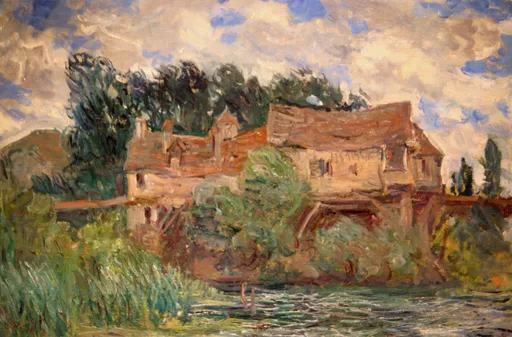
Houses on the Old Bridge at Vernon
From $109 -
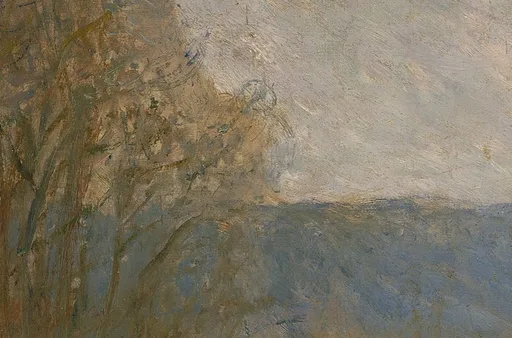
Ice breaking up on the Seine near Bennecourt
From $109 -
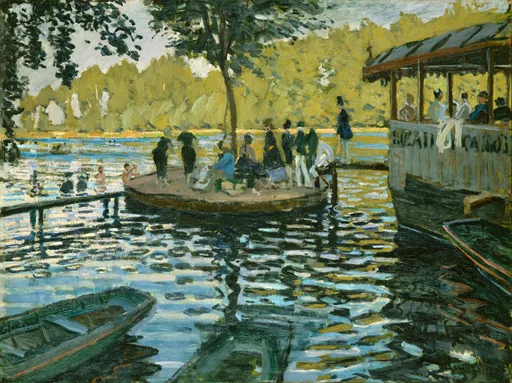
La Grenouillère
From $109 -
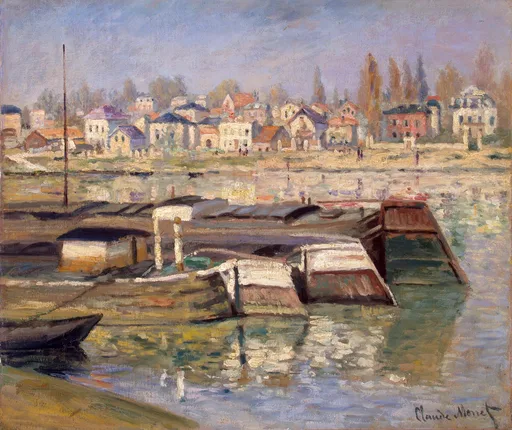
Landscape. Seine at Asnieres
From $109 -
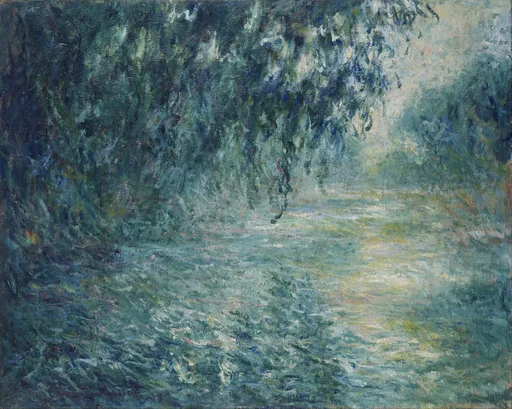
Morning on the Seine
From $109 -
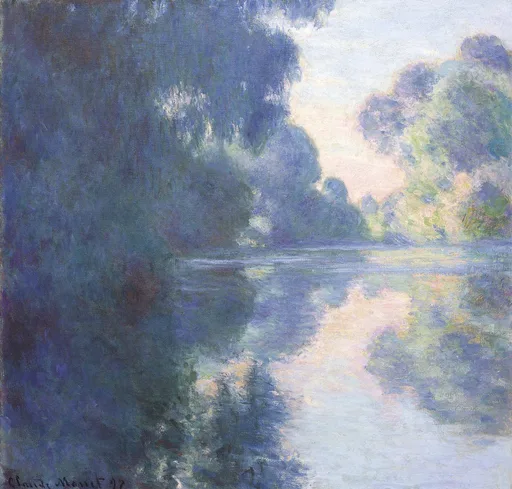
Morning on the Seine
From $109 -
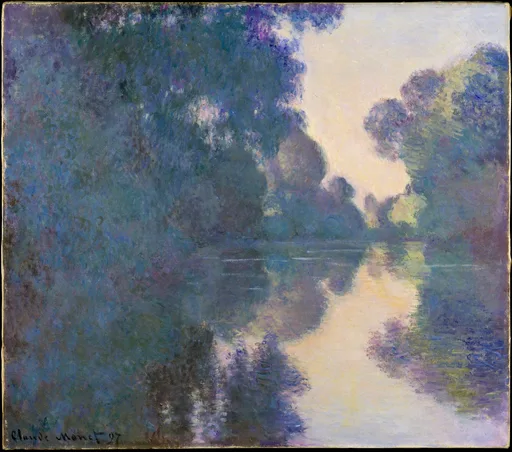
Morning on the Seine near Giverny
From $109 -
Morning on the Seine, Good Weather
From $109
Monet painted the Seine for nearly sixty years, from his twenties to his old age, and never exhausted it. These forty works follow the river through its moods and its reaches: the early bank scenes at Bennecourt and Bougival, the poplars and islands near Giverny, floods, mist, and the same patient method carried inland to the valley of the Creuse.
A river as a lifelong laboratory
The river gave Monet two things no other motif could: a moving, reflective surface that changes minute by minute, and a bank he could return to at the same hour on consecutive days. The late 1860s canvases at Bennecourt and Bougival are already about reflection more than about place, the water broken into flat, decisive strokes. Later, working from a boat on the arms of the Seine near Giverny, he began the mornings on the river in which mist, poplars and their reflections fuse into a single soft screen of colour.
The floods gave him the opposite: familiar meadows turned to open water with trees standing in it, painted with the horizon pushed high. And when he took the same discipline to the Creuse valley in 1889, working through a difficult spring on rocky, un-picturesque terrain, he proved that the method was not dependent on pretty subject matter. Weather, hour and repetition were the real subject all along.
Hand-painted oil reproductions, made to order
Every river subject here is available as a hand-painted oil reproduction, worked in genuine oils on artist-grade cotton canvas by a senior studio painter rather than printed, or as a lower-priced archival canvas print. Choose your size and orientation, then a finish: rolled, stretched and ready to hang, or framed in a thin or a thick profile. All work is made to order and hand inspected, and every order ships free worldwide with a 30-day return guarantee.
Which room this collection suits
This is the quietest group in Monet's output. Soft greens, mauves, greys and silver, low contrast, no drama. That makes it ideal for bedrooms, reading corners, studies and long hallways where you want the eye to rest rather than to stop. The same quality is a risk on a bright white wall in strong sun, where these pictures can look washed out; a mid-tone wall, warm grey, olive, muted blue, gives them the depth they need. A moderate size is often right here. These are not statement pictures, and a very large format can make a subtle canvas feel thin.
Frequently asked questions
Which stretches of the Seine are represented?
A wide span: Bennecourt and Bougival from the late 1860s, the reaches around Giverny including Port-Villez and the small islands, flood subjects, and related river and valley work such as the 1889 Creuse campaign.
What makes the morning river paintings special?
Monet worked from a moored boat before the mist lifted, moving from canvas to canvas as the light changed, so the group reads as a single motif recorded across a narrow band of time. They are among the most restrained things he painted.
How do I choose a size for a soft, low-contrast picture?
Measure the wall, then aim for the picture to fill roughly half to two thirds of the usable width, and hang it with the centre at eye level. Our size guide gives typical dimensions above beds, sofas and consoles.
Oil or print for this collection?
Both work. The hand-painted oil adds a physical surface that gives these gentle images presence at close range; the archival canvas print keeps the cost down and is well suited to a guest room or a corridor.