
Etretat & the Cliffs Collection: Claude Monet Oil Painting Reproductions
The chalk cliffs and natural rock arches at Etretat, on the Normandy coast, drew Monet back repeatedly through the 1880s, and he painted the Manneporte arch and the Aval and Amont cliffs from the beach, from boats, and from the clifftops in changing weather and tide. The formations were already a well-known subject for painters and photographers before Monet arrived, and his versions push past picturesque description toward the same interest in shifting light and atmosphere he applied to his river and garden series. Some of the roughest, most physically dramatic paintings of his career come from this stretch of coast, waves striking rock at close range, storm light, and the sheer scale of the arches against small fishing boats. On a wall, these paintings bring weight and drama, rock and turbulent water, suited to a space that can hold a bold focal point rather than a quiet background. They are Monet at his most dramatic, closer to the sublime than to the calm domestic scenes of Giverny, which is usually what draws a visitor here.
Showing 1–16 of 35 results
-
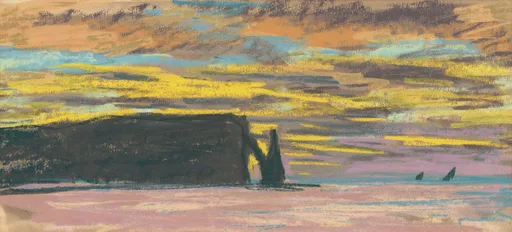
Aiguille and Porte d’Aval, Étretat, Sunset
From $109 -
Boats on the Beach at Étretat
From $109 -
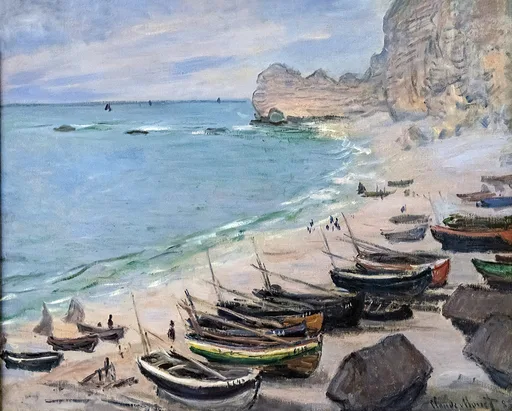
Boats on the beach at Etretat
From $109 -
Boats on the Beach at Étretat
From $109 -
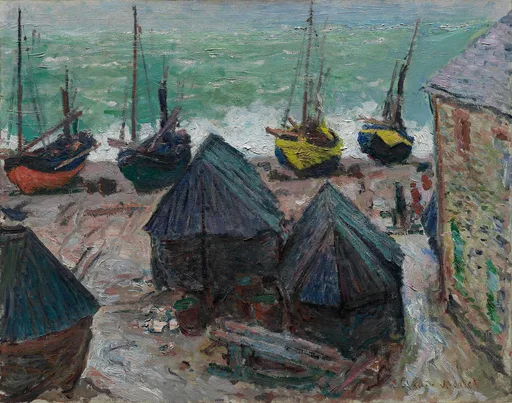
Boats on the Beach at Étretat
From $109 -
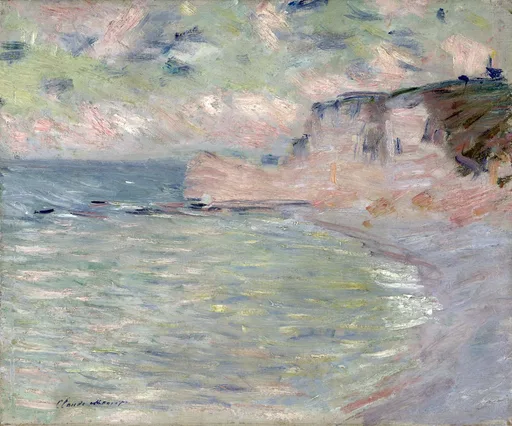
Cliff and Porte d’Amont, Morning Effect
From $109 -
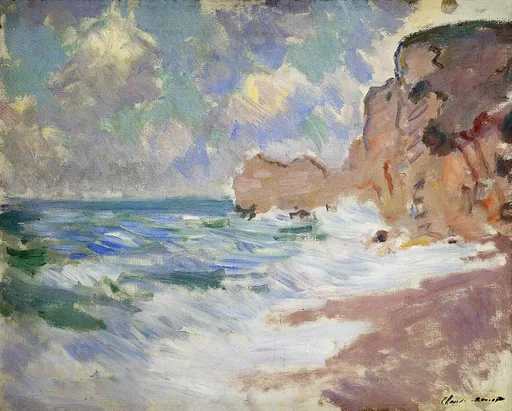
Effect of Waves at Etretat
From $109 -
Étretat
From $109 -
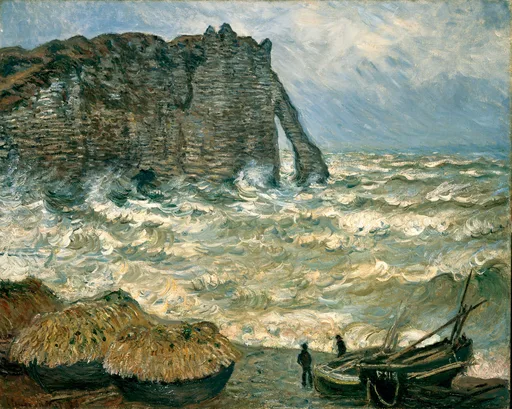
Etretat, Rough Seas
From $109 -
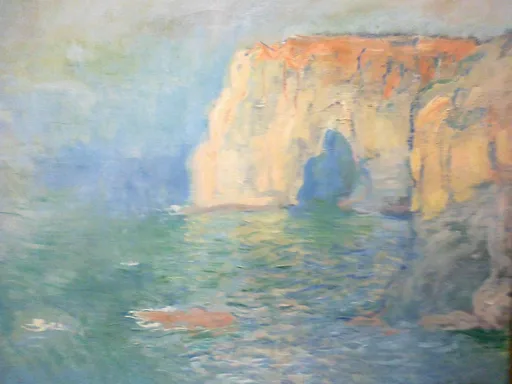
Étretat, the Manneporte, Reflection on Water
From $109 -
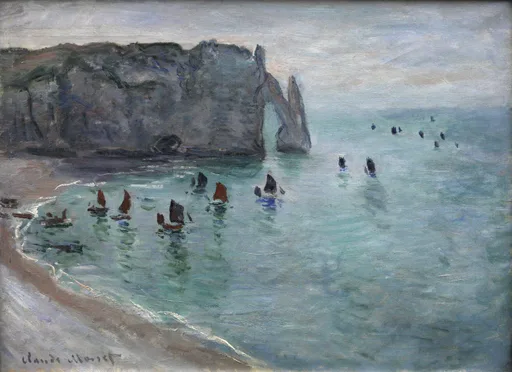
Étretat, the Porte d’Aval: Fishing Boats Leaving the Harbor
From $109 -
Étretat: The Beach and the Falaise d’Amont
From $109 -
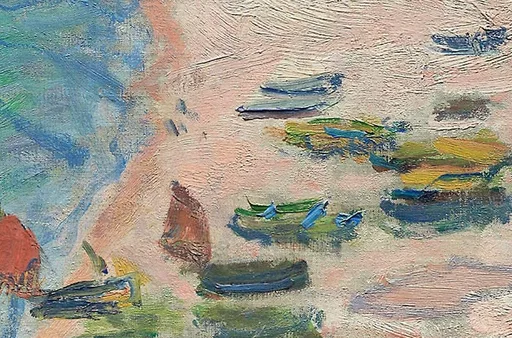
Étretat: The Beach and the Falaise d’Amont
From $109 -
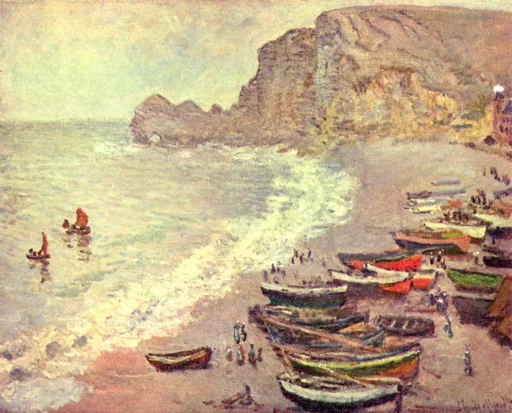
Étretat: The Beach and the Porte d’Amont
From $109 -
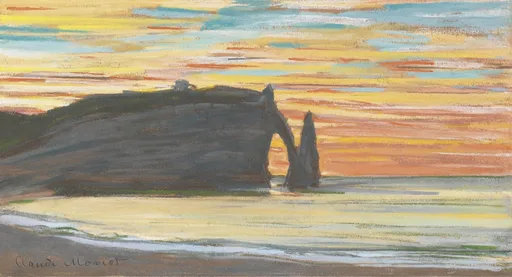
Étretat: The Needle and the Porte d’Aval
From $109 -
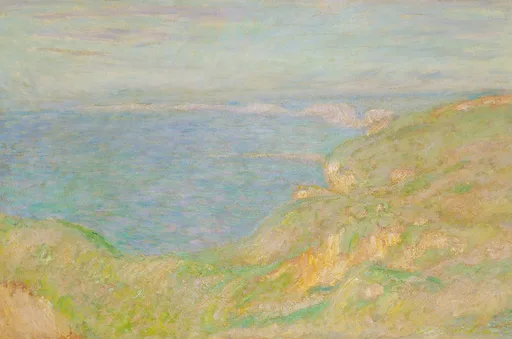
Fécamp Cliff
From $109
The chalk cliffs at Etretat, pierced by three natural arches and guarded by a free-standing needle of rock, gave Monet the most sculptural subject he ever painted. These twenty-three works were made from the shingle beach and from the clifftops, in calm weather and in heavy sea.
Three arches and a needle
Etretat had been drawing painters for decades before Monet arrived; Courbet had worked there in the 1860s, and the site was already famous. Monet's campaigns fall mainly in the 1880s, and what he brought to it was an eye for structure. The Porte d'Amont to the north, the Porte d'Aval with the Aiguille standing off it, and the great Manneporte further along each present a different geometry, and he moved his easel until the arch cut the sea at exactly the angle he wanted.
Working there was awkward and sometimes dangerous. The best positions were only reachable at low tide or by scrambling down the cliff, the weather changed fast, and a rising sea could cut off the return. The results split into two temperaments: the calm views where the chalk glows pink and gold above still water, and the rough-sea canvases where the whole picture is spray and green swell. Both are about mass, which is unusual in Monet and is why these paintings appeal to people who find the garden subjects too soft.
Hand-painted oil reproductions, made to order
Every Etretat subject is offered as a hand-painted oil reproduction, painted in real oils on artist-grade cotton canvas by a senior studio painter and never printed, or as a lower-priced archival canvas print. You choose the size and the orientation, then how it is finished: rolled, stretched over a bar and ready to hang, or framed in a thin or a thick moulding. All work is made to order and hand inspected, with free worldwide shipping and a 30-day return guarantee.
Which room this collection suits
These have the strongest drawing and the highest contrast of any Monet group: white chalk against dark green water, with a decisive arch shape. They hold a big wall on their own and they survive being seen from a distance, so they work in hallways, stairwells, open-plan living spaces and above a long sideboard. Cool walls suit them, white, pale grey, or a deep navy or forest green for a more dramatic effect. Because the horizon usually sits low, a wide landscape format is the natural choice; hung too small, the arch loses its authority and the picture reads as a postcard.
Frequently asked questions
What are the different rock formations called?
The Porte d'Amont is the arch to the north of the beach; the Porte d'Aval is the arch to the south, with the tall detached needle, the Aiguille, beside it; and the Manneporte is the largest arch, further along the coast. Monet painted all three.
Are these seascapes or landscapes?
Both, and that is their appeal. The cliff gives solid architecture, the sea gives movement, and the two meet in the same frame, which is why these canvases feel more structured than most Impressionist marine painting.
What size should I order for a hallway?
Wide rather than tall, and larger than you would choose for a living room, because you view a hallway picture obliquely and from close range. Around 120cm wide is a good starting point on a long wall.
Hand-painted oil or archival canvas print?
The oil gives the chalk real body; the paint stands off the surface where the light strikes the rock, which is very effective in these subjects. The archival print is the value option and reproduces the drawing and colour faithfully. Details of both are on our reproductions page.