
Winter & Snow Collection: Claude Monet Oil Painting Reproductions
Monet painted snow scenes across several winters of his career, most notably during the harsh winter of 1879 to 1880 at Vetheuil, when the frozen Seine broke apart in a dramatic thaw that he recorded in a series of paintings showing ice floes drifting downriver past the village. An earlier canvas, from the winter of 1868 to 1869, shows a magpie perched on a gate against unbroken snow, one of his most reproduced early works, already using white not as an absence of color but as a surface that holds blue, violet, and pink depending on the light, an approach he carried into the Argenteuil snow scenes of the following decade. These paintings differ sharply in mood from his sunlit garden and coastal work: quieter palettes, flatter light, and a stillness closer to his more solitary Vetheuil period. This is the collection for that colder, quieter register rather than Monet’s more familiar bright outdoor scenes, paintings that bring a muted, restful pale palette into a room, well suited to a space that wants calm rather than a strong color statement.
Showing 1–16 of 21 results
-
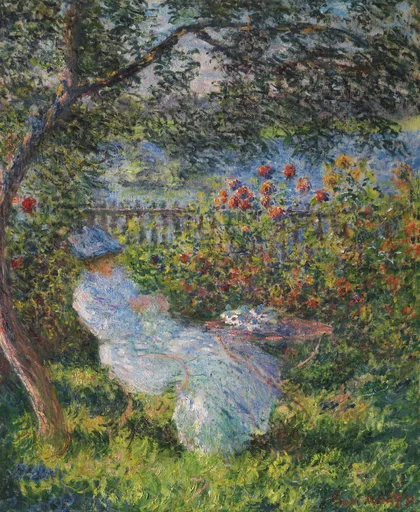
Alice Hoschedé in the Garden
From $109 -
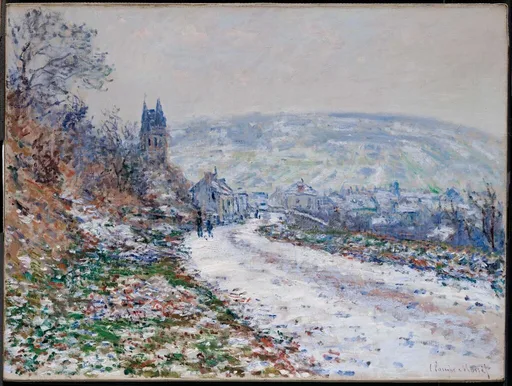
Entrance to the Village of Vétheuil in Winter
From $109 -
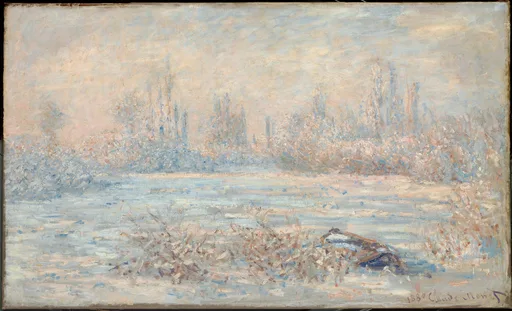
Frost
From $109 -
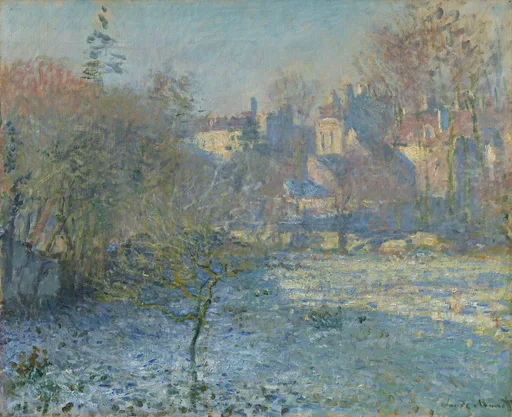
Frost
From $109 -
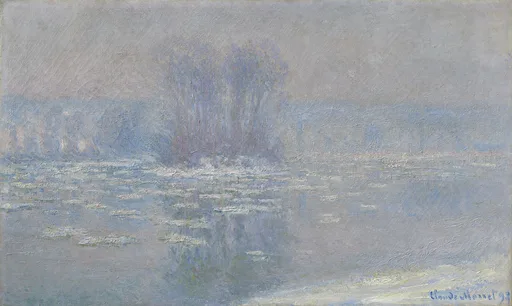
Glaçons à Bennecourt
From $109 -
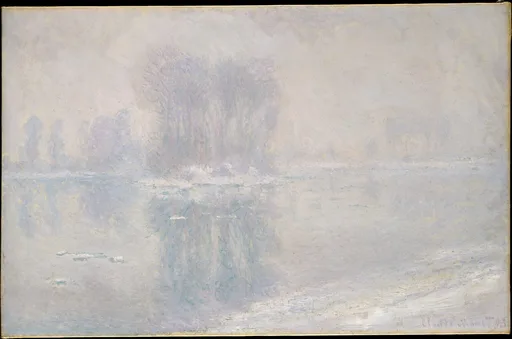
Ice Floes
From $109 -
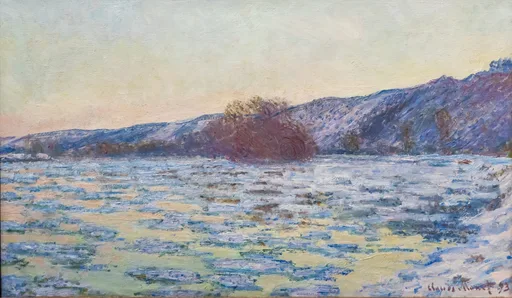
Ice Floes at Twilight
From $109 -
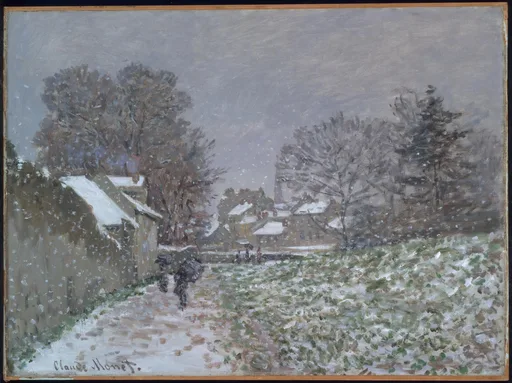
Snow at Argenteuil
From $109 -
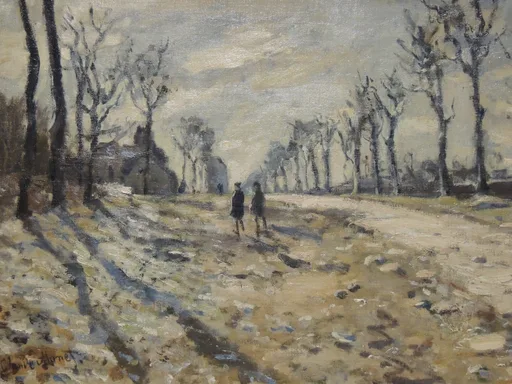
Snow at Sunset
From $109 -
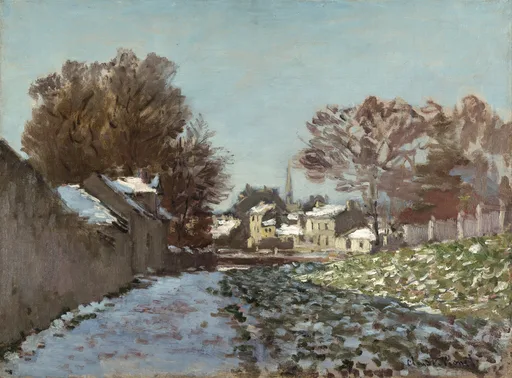
Snow Effect at Argenteuil
From $109 -
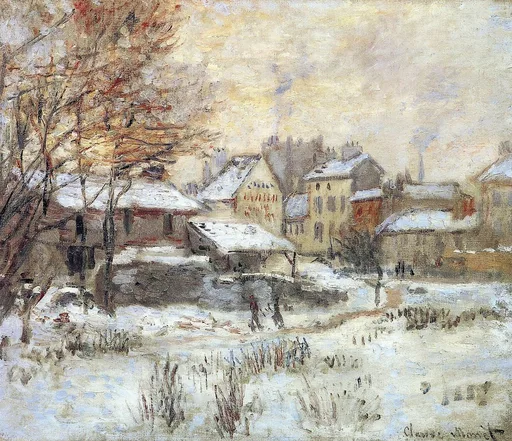
Snow Effect, Sunset
From $109 -
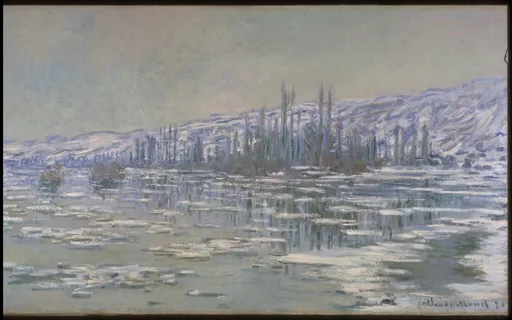
The Break-up of the Ice
From $109 -
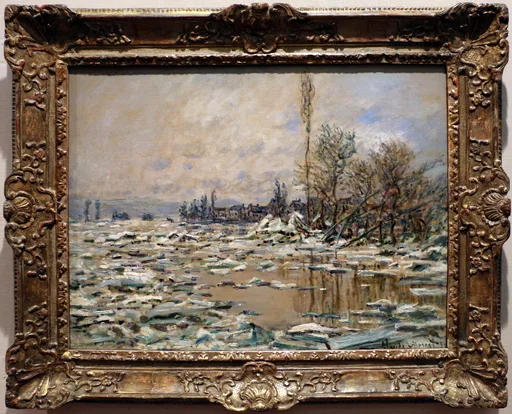
The Break-Up of the Ice
From $109 -
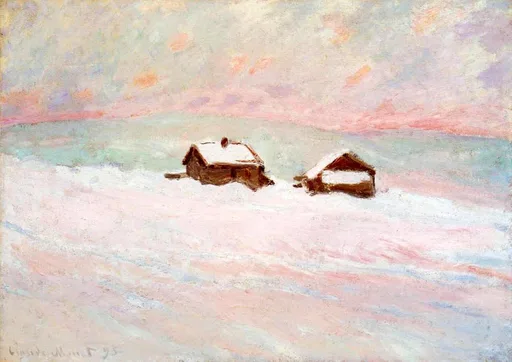
The Houses in the Snow, Norway
From $109 -
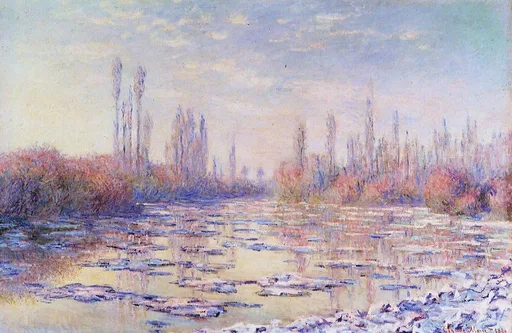
The Ice Floes
From $109 -
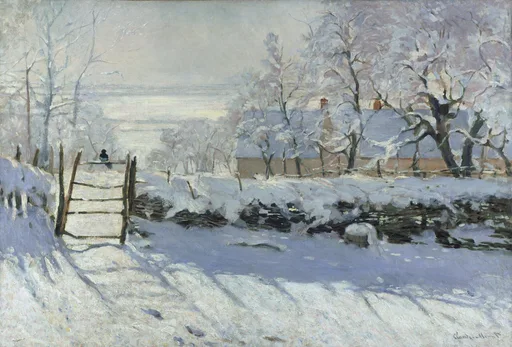
The Magpie
From $109
Twenty-eight canvases painted in the cold: snowbound roads, frost on the fields, and the Seine freezing over and breaking up. Monet worked outdoors through winters that would have kept most painters inside, and these pictures are the proof. What holds them together is a discovery that snow is never white.
The winter of 1879-80 and the effets de neige
Monet painted snow from the mid 1860s onward; the celebrated The Magpie of 1868-69, with its single dark bird on a gate against a field of pale blue and cream shadow, is one of the earliest and most radical. But the great winter campaign came at Vetheuil. The winter of 1879-80 was exceptionally severe, the Seine froze solid, and when the thaw came the ice broke up and moved downriver in slabs. Monet painted the freeze and the debacle repeatedly in the weeks that followed.
These are cold-weather paintings in the literal sense; contemporaries described him working in the open with his hands wrapped, snow settling on his hat and his canvas. The technical interest is the shadow. Rather than mixing grey, he laid blue, violet and rose into the snow directly, so the white of the ground reads as light and the coloured strokes read as shade. It is the clearest demonstration in his whole output of what the Impressionists meant by painting what the eye actually receives.
Hand-painted oil reproductions, made to order
Every work in this collection is available two ways. As a hand-painted oil reproduction, brushed in real oils on artist-grade cotton canvas by a senior studio painter, never printed; or as a lower-priced archival canvas print. You choose the size and the orientation, and finish it rolled, stretched on a bar, or set into a thin or thick frame. Each piece is made to order and hand inspected before it leaves us, with free worldwide shipping and 30-day returns.
Frequently asked questions
Which rooms suit a snow scene?
They are quiet, cool paintings and they excel where warmth surrounds them: a room with wood, warm textiles or a fireplace, where the cold palette becomes a relief rather than a chill. They also do very well in bright, north-facing rooms whose daylight matches the light in the picture.
Do the colours really read as blue?
Yes. The shadows are painted in blue, lilac and pink rather than grey, and in a well-lit room that is exactly how they read. If you expect a monochrome winter picture these will surprise you, which is generally the point.
Is a hand-painted oil better for snow subjects?
It makes a marked difference. Snow in these works is built from short, dry, broken strokes sitting on top of one another; a hand-painted oil reproduces that in real paint, so the surface catches light in the same way the original does. An archival canvas print gives you the image faithfully at a lower price but with a flat surface.
What size and frame would you recommend?
Medium to large landscape formats suit the open, horizontal compositions. A thin frame in a dark or neutral tone tends to work better than a heavy one, which can weigh down the pale palette; unframed stretched canvas also looks well with these.