
The Japanese Bridge Collection: Claude Monet Oil Painting Reproductions
The green, arched footbridge Monet built over his water lily pond at Giverny around 1895, modeled on the bridges in Japanese prints he collected, became one of his most repeated single subjects, painted first as a clear structural element crossing the water and later, in his final years, as a barely legible shape dissolving into thick, almost sculptural paint. Comparing the earlier and later versions side by side shows the clearest record of how his eyesight and style changed together: crisp green ironwork and lily pads in the 1890s canvases give way, by the 1920s, to a bridge rendered mostly in red and orange strokes that read as feeling as much as form. A buyer here is usually interested in that transformation, or simply wants the bridge itself as Monet’s most recognizable built structure. On a wall, the earlier versions bring structure and calm greenery into a room, while the later ones bring dense, almost abstract warmth.
Showing 1–16 of 17 results
-
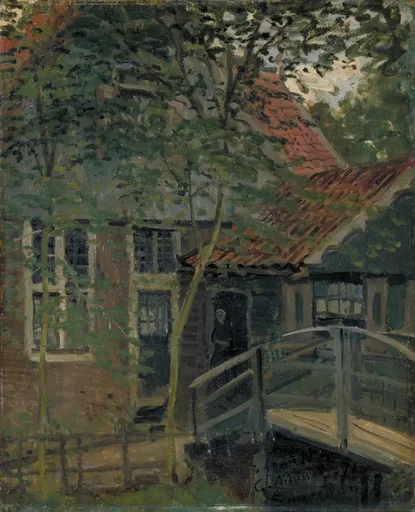
Footbridge at Zaandam
From $109 -
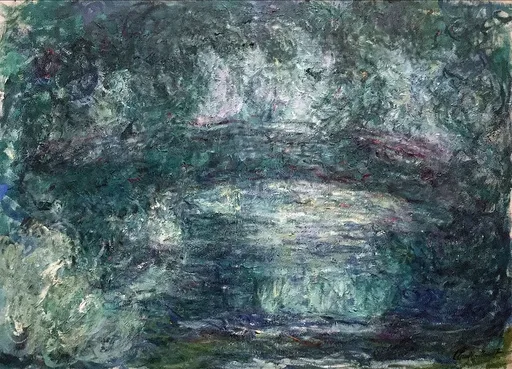
Japanese Bridge
From $109 -
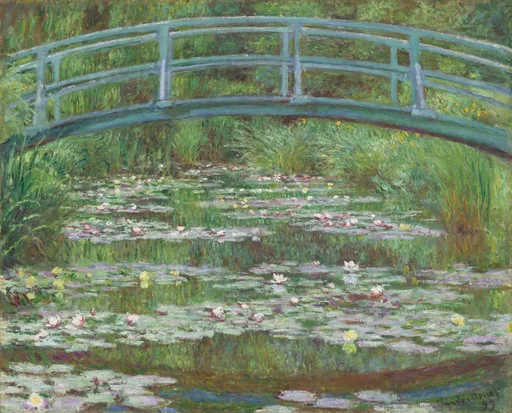
Japanese Footbridge
From $109 -
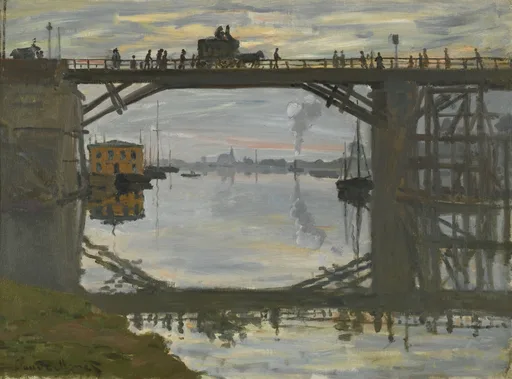
The Highway Bridge under repair
From $109 -
The Japanese Bridge
From $109 -
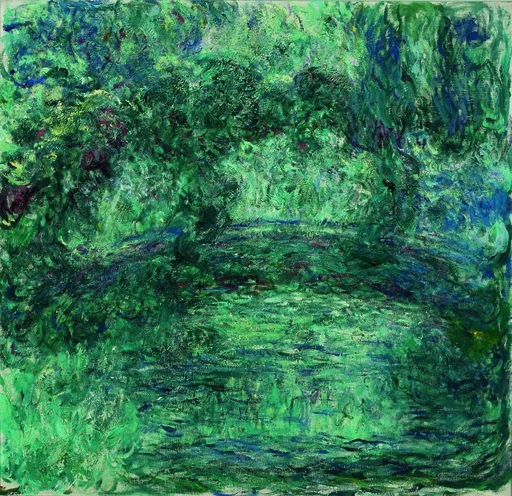
The Japanese Bridge
From $109 -
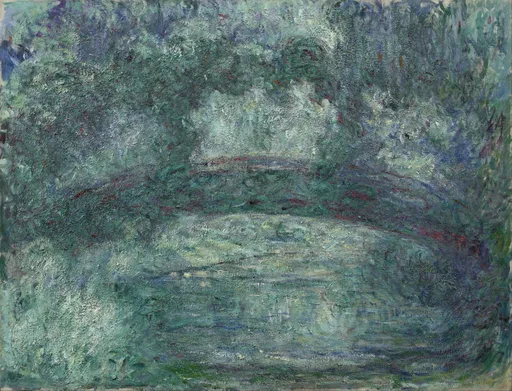
The Japanese bridge
From $109 -
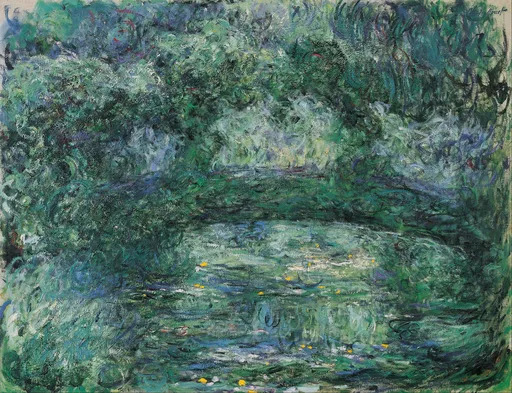
The Japanese Bridge
From $109 -
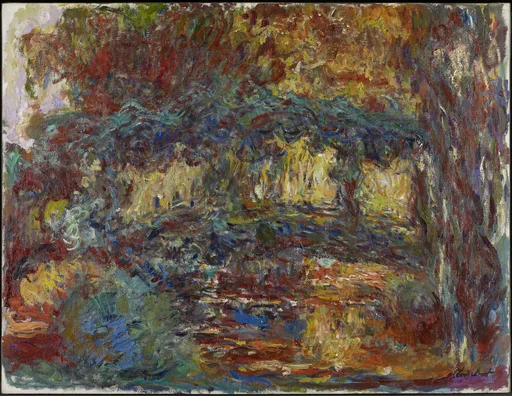
The Japanese Bridge
From $109 -
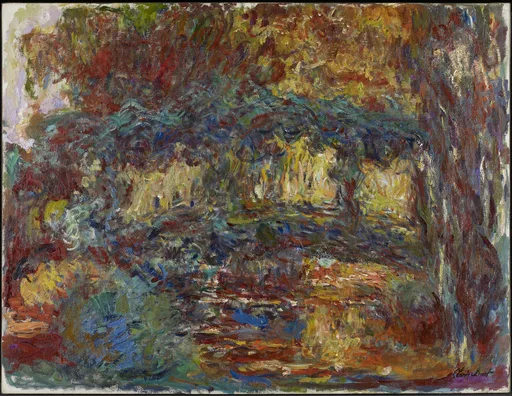
The Japanese Bridge
From $109 -
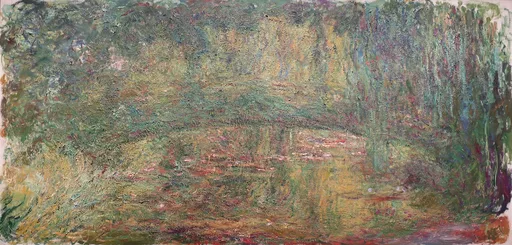
The Japanese Bridge
From $109 -
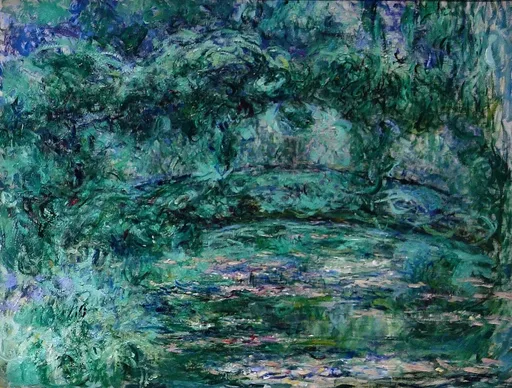
The Japanese Bridge
From $109 -
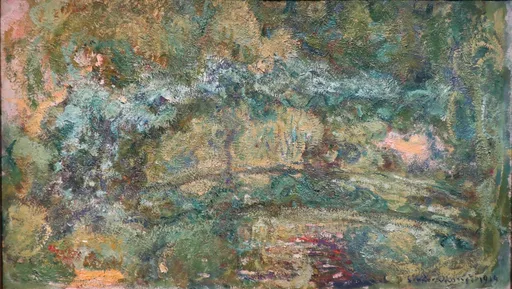
The Japanese Bridge by Claude Monet, 1919, Kunstmuseum Basel
From $109 -
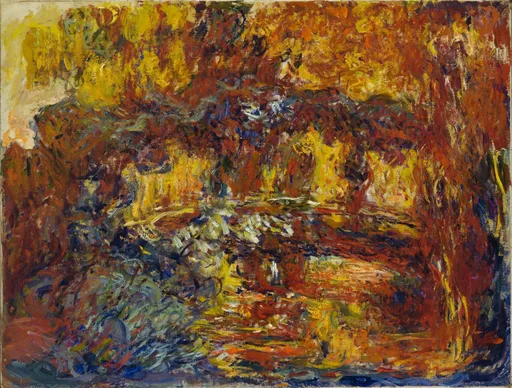
The Japanese Footbridge
From $109 -
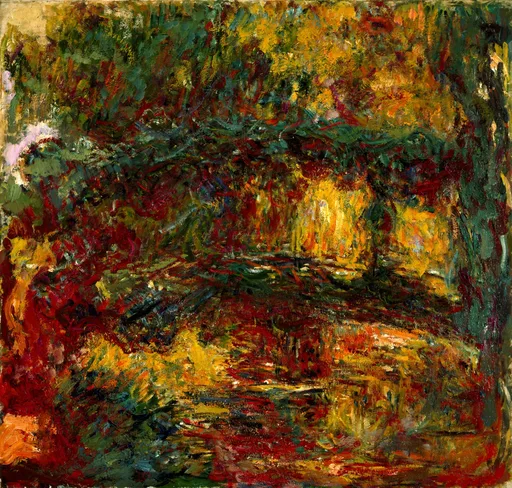
The Japanese Footbridge
From $109 -
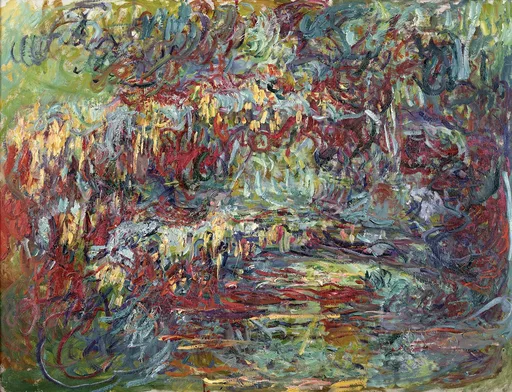
The Japanese Footbridge
From $109
The little arched footbridge Monet had built over his lily pond in 1895 became the most recognisable structure in French painting. These twelve works follow it from the clear, descriptive views of the 1890s through to the late canvases in which the arch survives only as a burning red curve in a field of colour.
One structure, thirty years of looking
The bridge was built to cross the new water garden, its shape drawn from the Japanese woodblock prints Monet collected and hung throughout the house. In the series painted around 1899 and 1900 it does a specific job: the arch closes the top of the picture, the banks close the sides, and the eye is pushed down into the reflections. It is a device for framing water, and he used it dozens of times with the light and the season varied and the viewpoint barely moved.
The later versions are a different proposition. After the pond was enlarged, wisteria was trained over a trellis above the bridge, thickening the top of the composition. In the canvases of Monet's last decade, painted while his sight was compromised by cataracts from around 1912 until the operation in 1923, structure dissolves into hot reds, oranges and greens laid on in slabs. Some viewers find these the most modern paintings he ever made.
Hand-painted oil reproductions, made to order
Each bridge subject is offered as a hand-painted oil reproduction, brushed in real oils onto artist-grade cotton canvas by a senior studio painter and never printed, or as a lower-priced archival canvas print. Pick the size and the orientation that suit your wall, then the finish: rolled for your own framer, stretched and ready to hang, or mounted in a thin or a thick frame. Everything is made to order, hand inspected before dispatch, sent with free worldwide shipping and backed by a 30-day return guarantee.
Which room this collection suits
The arch gives these canvases something most Monets lack: a strong, symmetrical shape that holds a wall on its own. That makes them unusually good above a fireplace, a console table or a bed, where the centre line matters. They also crop well to a squarer or taller format, so they suit a stairwell or a narrow chimney breast. On colour: the 1890s versions are green and cool, and sit well on white, pale grey or soft blue. The late red versions are the opposite and want a restrained, mid-tone background; against a warm terracotta or a strong yellow they will simply argue.
Frequently asked questions
When was the bridge actually built?
In 1895, over the pond Monet had begun creating two years earlier. The wisteria-covered trellis above it came later, which is one quick way to date a given canvas.
Why do some versions look almost abstract?
They are from the final decade, when Monet worked at speed on a motif he knew by heart and when his eyesight had been altered by cataracts. He was not attempting abstraction as a programme, but the results anticipated it.
Which one should I choose for a traditional interior?
The green and blue versions of around 1899 to 1900. They are legible at a glance, they suit period frames, and a thick moulding flatters them; our framing guide shows the profiles side by side.
Is the hand-painted oil worth the difference over the print?
If the picture will hang somewhere you pass close to, yes: the raised paint and visible brushwork are the point, and they are what a print cannot give. For a high wall viewed from across a room, an archival canvas print is perfectly convincing.