
London & the Thames Collection: Claude Monet Oil Painting Reproductions
Monet painted in London across several visits, most intensively during an extended stay from 1899 to 1901, when he worked from a hotel room overlooking the Thames and returned to the same three motifs, the Houses of Parliament, Charing Cross Bridge, and Waterloo Bridge, dozens of times each. He was chasing the city’s fog, which he considered essential to its character, painting the same view in violet, orange, and grey depending on how the light broke through the smoke and mist off the river. The series pushed his method to an extreme: working on many canvases in a single sitting, swapping them as the light changed minute to minute, then finishing many from memory back in his Giverny studio. This is Monet’s most atmospheric, least literal work, buildings dissolved into color and haze rather than drawn as architecture, and it suits a room after mood and depth over a clear, sunny scene, a hazy grandeur that reads well from a distance.
Showing 1–16 of 67 results
-
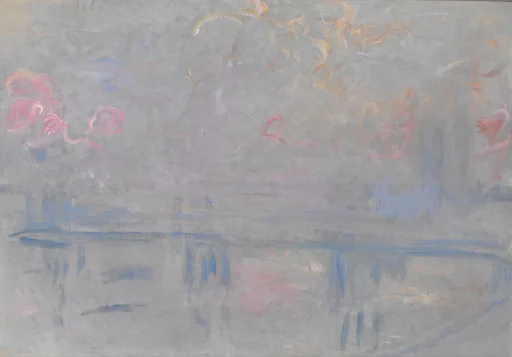
Charing Cross Bridge
From $109 -
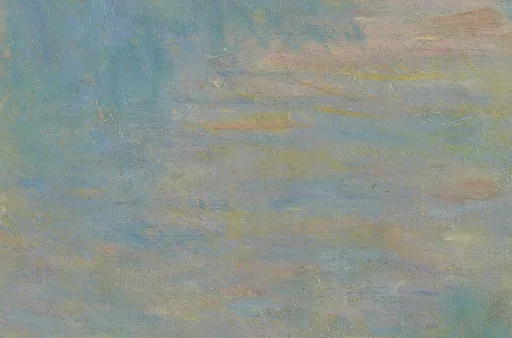
Charing Cross Bridge
From $109 -
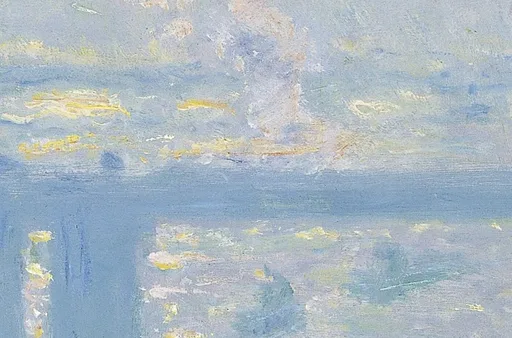
Charing Cross Bridge
From $109 -
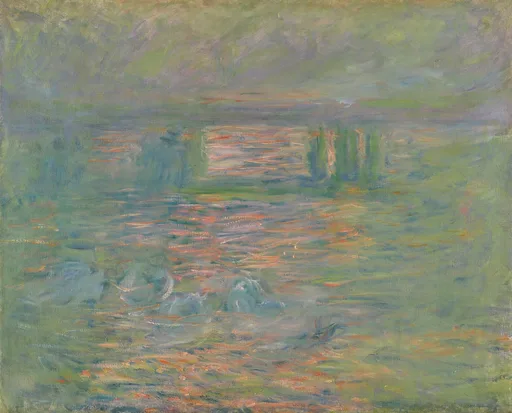
Charing Cross Bridge
From $109 -
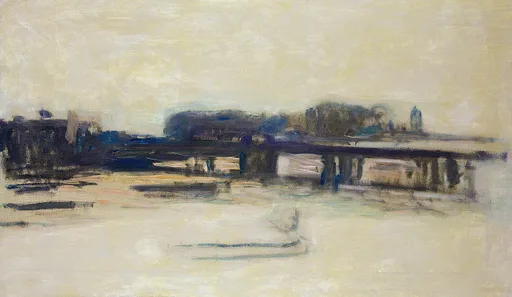
Charing Cross Bridge
From $109 -
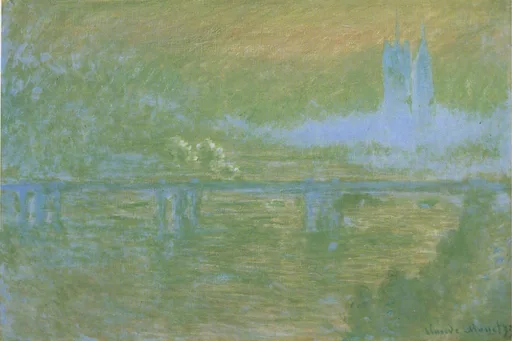
Charing Cross Bridge
From $109 -
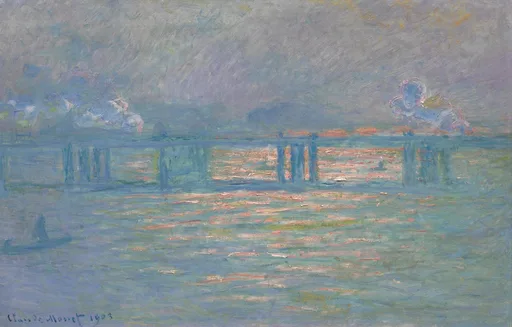
Charing Cross Bridge
From $109 -
Charing Cross Bridge
From $109 -
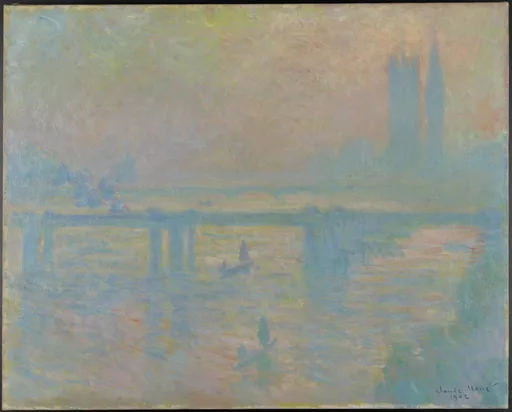
Charing Cross Bridge
From $109 -
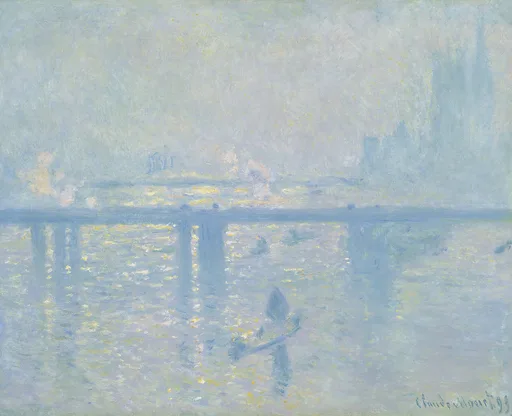
Charing Cross Bridge
From $109 -
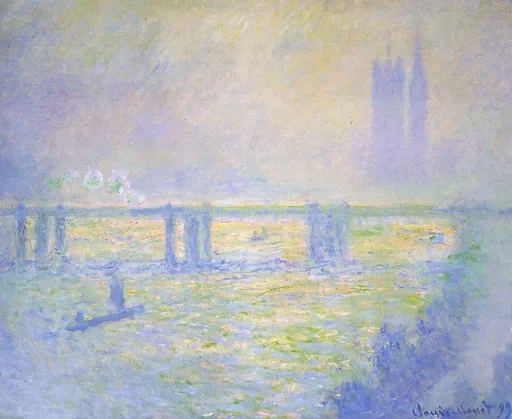
Charing Cross Bridge
From $109 -
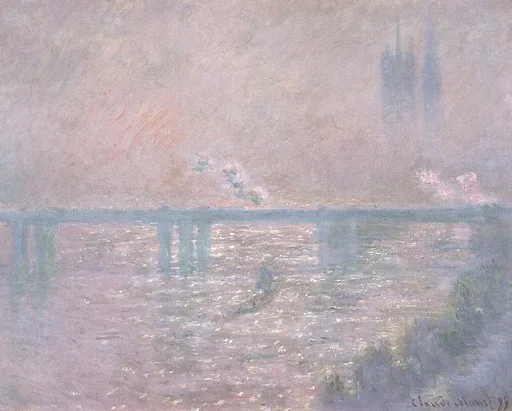
Charing Cross Bridge
From $109 -
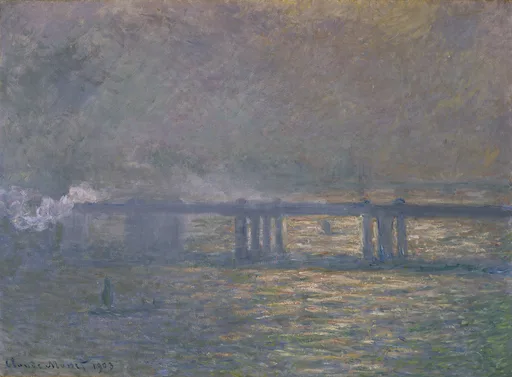
Charing Cross Bridge
From $109 -
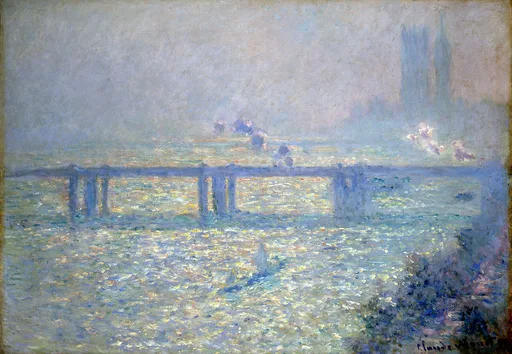
Charing Cross Bridge – Shelburne
From $109 -
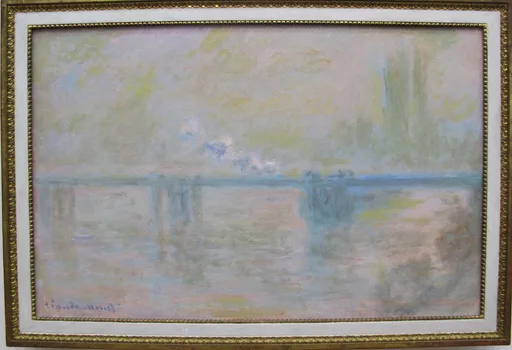
Charing Cross Bridge (overcast day), 1900
From $109 -
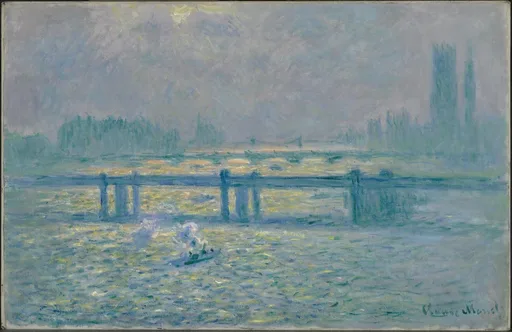
Charing Cross Bridge, Reflections on the Thames
From $109
Monet came to London for three winters between 1899 and 1901 to paint one thing: the fog. These forty-nine canvases show Waterloo Bridge, Charing Cross Bridge and the Houses of Parliament dissolved in coal smoke and river mist, the same three motifs recorded through every colour the London air could produce.
Three motifs, three winters
He worked from two fixed positions. From a room high in the Savoy Hotel he could look downstream to Waterloo Bridge, with the chimneys and cranes of the south bank behind it, and upstream to Charing Cross Bridge with its trains crossing. In the afternoons he moved to a terrace at St Thomas' Hospital across the water, where the Houses of Parliament stand against the sunset. Each motif therefore has its own light and its own hour, and he ran dozens of canvases simultaneously, swapping them as conditions shifted.
Monet already knew the city; he had spent months there in 1870 and 1871 during the Franco-Prussian war, and had looked hard at Turner. What he wanted on his return was the specific London atmosphere of the period, thick with domestic and industrial smoke, which turned solid Victorian engineering into silhouette and made the sun a coloured disc. The canvases were begun on the spot and finished later at Giverny, working from studies and from memory, which is why the series has such unity of key.
Hand-painted oil reproductions, made to order
Each London subject is available as a hand-painted oil reproduction, painted in real oils on artist-grade cotton canvas by a senior studio painter and never printed, or as a lower-priced archival canvas print. Select the size and the orientation, then the finish: rolled for your own framer, stretched and ready to hang, or in a thin or a thick frame. Every piece is made to order, hand inspected, sent with free worldwide shipping and covered by a 30-day return guarantee.
Which room this collection suits
These are tonal rather than colourful: violet, rose, sulphur yellow and grey, with everything held close together. They can look magnificent or muddy depending entirely on the light they hang in, so put them where there is decent daylight or fit a picture light above. They are superb against deep colour, ink blue, bottle green, charcoal, and equally good on a warm grey. Avoid a cold white wall in a dark room. The Parliament subjects are the most dramatic and suit a dining room or a study; the bridge subjects, being wide and horizontal, are natural above a sofa or a long console.
Frequently asked questions
Why did Monet paint London in winter?
Because that is when the fog was reliable. The atmosphere was the subject, and the winter months gave him the low sun, the smoke and the mist that turned the bridges into coloured shapes.
Where did he paint from?
From an upper room at the Savoy Hotel for the two bridges, and from a terrace at St Thomas' Hospital for the Houses of Parliament. The viewpoints barely move across the whole series.
Which one should I choose?
If you want warmth and drama, take a Parliament sunset. If you want something calmer that sits behind furniture, take a Waterloo Bridge. The framing guide is worth a look here, as frame colour changes these pictures more than most.
Hand-painted oil or archival print?
The oil is the stronger choice for this series, because the effects depend on thin veils of colour laid over one another and a hand-painted surface keeps that depth. The archival canvas print is a good, faithful alternative at lower cost.