
The Riviera & the South Collection: Claude Monet Oil Painting Reproductions
Monet traveled to the Mediterranean coast several times in the 1880s, painting in Bordighera on the Italian Riviera in 1884 and around Antibes in the south of France in 1888, drawn by light and vegetation he found strikingly different from Normandy: sharper shadows, pine and olive trees against intensely blue water, and a saturation of color he initially found difficult to translate into paint. He wrote to friends during these trips about the challenge of the region’s blues and pinks, colors he felt his usual palette could not fully match, and the resulting canvases are notably brighter and more saturated than his northern French work. This collection gathers that southern material, coastal towns, palm and olive trees, and the Mediterranean itself under a harder, more direct light than the Seine or the Normandy coast. A visitor to this collection is usually after Monet’s warmest, most saturated palette. In a room, they bring strong color and heat rather than the softer greys of his northern landscapes.
Showing 1–16 of 24 results
-
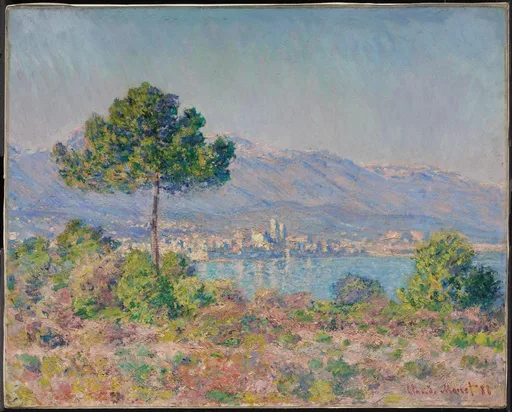
Antibes Seen from the Plateau Notre-Dame
From $109 -
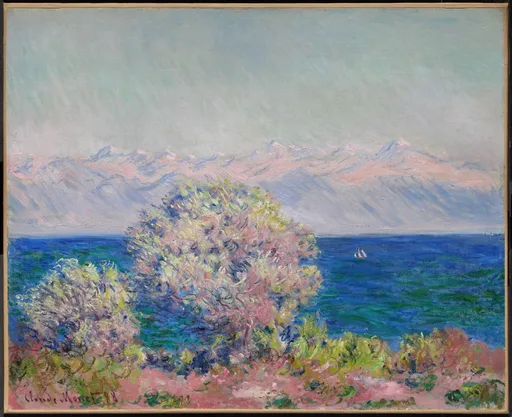
At Cap d’Antibes, Mistral wind
From $109 -
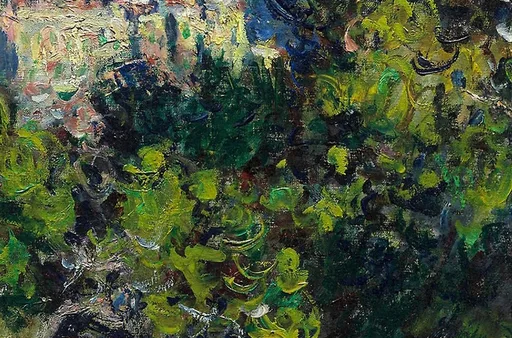
Bordighera
From $109 -
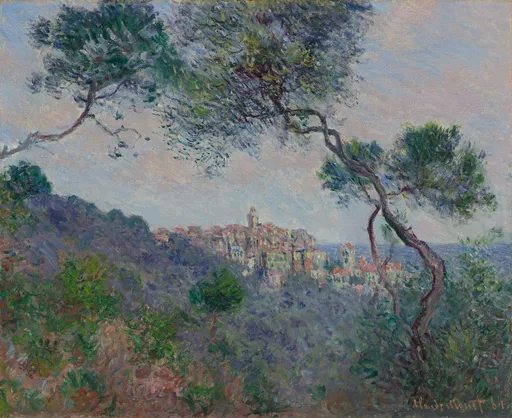
Bordighera, Italy
From $109 -
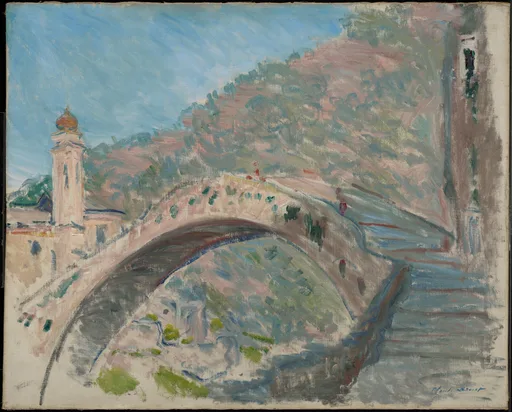
Bridge at Dolceacqua
From $109 -
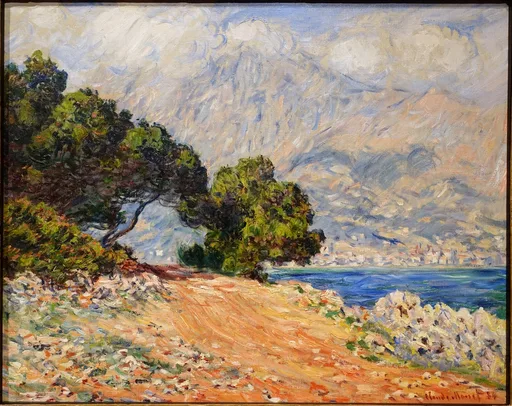
Cap Martin, near Menton
From $109 -
Castle of Dolceacqua
From $109 -
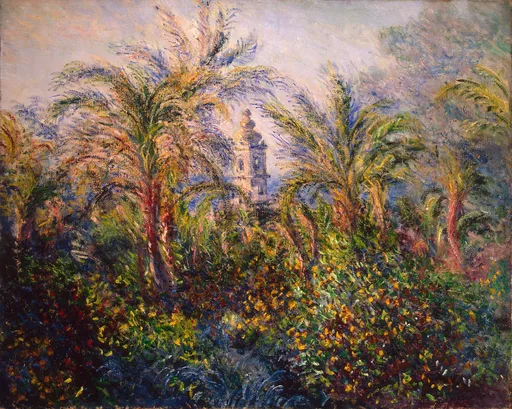
Garden at Bordighera, Impression of Morning
From $109 -
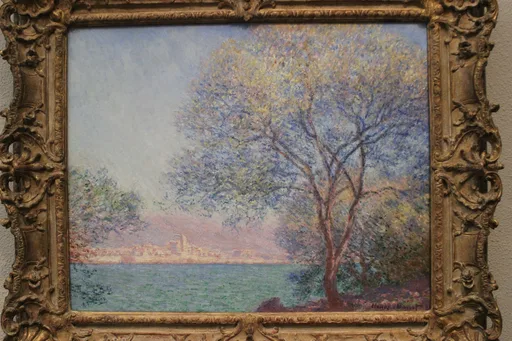
Morning at Antibes
From $109 -
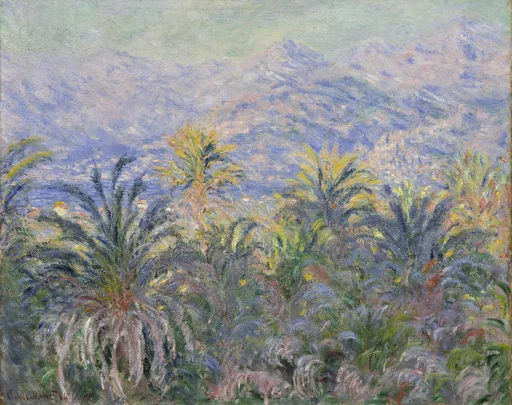
Palm Trees at Bordighera
From $109 -
Palm Trees at Bordighera
From $109 -
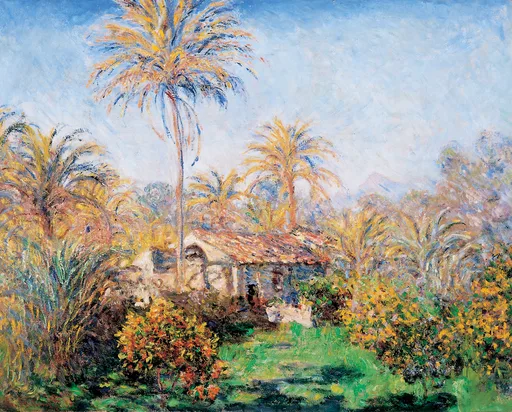
Small Country Farm at Bordighera
From $109 -
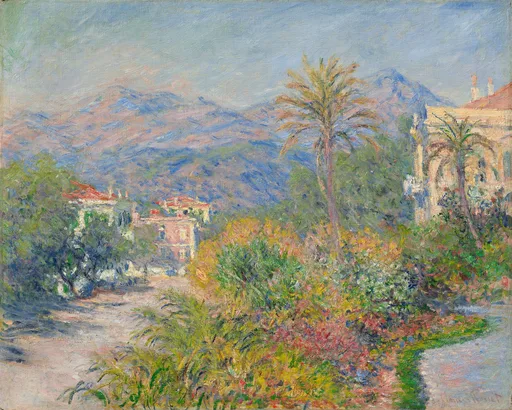
Strada Romana in Bordighera
From $109 -
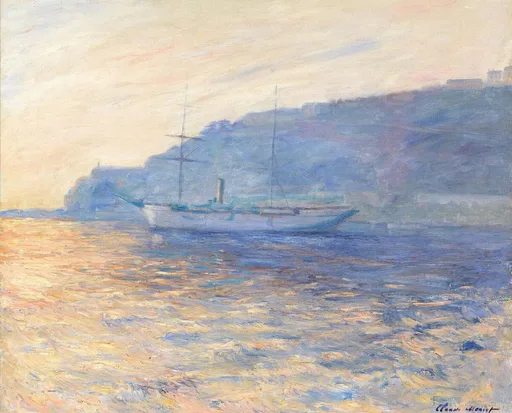
The Bay of Monaco
From $109 -
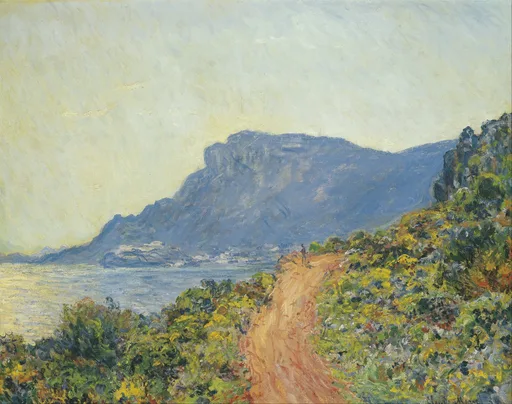
The Corniche near Monaco
From $109 -
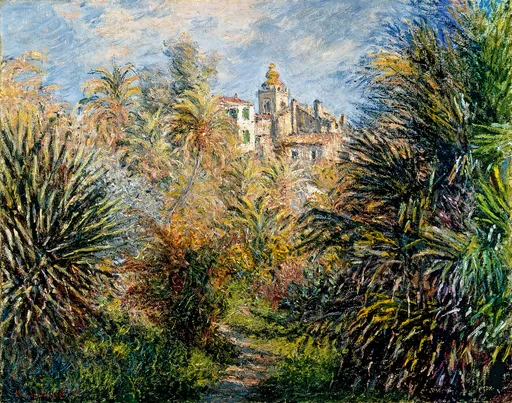
The Moreno Garden at Bordighera
From $109
Twenty-two paintings from Monet's southern campaigns: palms, olives, pines and old hill towns under a Mediterranean light that behaved nothing like the light of Normandy. This is Monet at his brightest and least earthbound, working with pink, turquoise and pale gold.
Bordighera, Dolceacqua, Antibes
Monet travelled along the coast with Renoir in December 1883, then went back alone the following month and stayed at Bordighera from January to April 1884, deliberately working without company. The subjects were the exotic gardens of the town, the twisted olives, the dense screens of palm, and inland the village of Dolceacqua with its high arched bridge and ruined castle. In 1888 he worked at Antibes and Cap Martin, painting umbrella pines leaning over the water with the fortified town and the snow on the Alps beyond.
He found the place genuinely difficult, and said so in his letters home. The colour of the south is intense but the tonal contrasts are weak: everything is bright, the shadows are full of reflected blue, and the palette he had built for grey northern weather was no use. The pictures that came out of these months are among the most brilliantly coloured of his career, and they were an important step towards the freedom of the series paintings that followed at the end of the decade.
Hand-painted oil reproductions, made to order
Each work is available as a hand-painted oil reproduction, painted in real oils on artist-grade cotton canvas by a senior studio painter rather than printed, or as a lower-priced archival canvas print. Choose the size and orientation, and finish rolled, stretched, or framed in a thin or a thick moulding. Every piece is made to order and hand inspected, with free worldwide shipping and a 30-day return guarantee.
Which room this collection suits
These are the pictures to reach for when a room needs lifting. The high-key blues, pinks and greens throw light back into a space, which makes them a good answer for a north-facing room or a wall that never catches the sun. They sit well on white, chalk, pale sand and soft terracotta, and they can look thin against very dark walls, where the pale sky loses its meaning. Living rooms, garden rooms and bedrooms suit them; large sizes carry the colour best.
Frequently asked questions
When did Monet paint in the south?
Chiefly on two campaigns: Bordighera and Dolceacqua from January to April 1884, following a short trip along the coast with Renoir in December 1883, and Antibes and Cap Martin in 1888.
Which subjects are in this collection?
Palms and gardens at Bordighera, the bridge and castle at Dolceacqua, the bay and pines at Antibes, and coastal views around Cap Martin. Between them they cover the full southern palette, from olive silver to full Mediterranean blue.
Is the hand-painted oil better for these?
For large sizes, yes. The hand-painted version is brushed in real oils by a studio painter, and the broken strokes of pink and blue that make up the southern light hold together better with real texture behind them. The archival print remains a sound lower-priced choice for smaller canvases.
How large should I go?
Bigger than you think. These are open, airy compositions with few incidents, and they need room; a canvas of a metre or more across a living room wall reads as a window. Check the wall measurements in our size guide first.