
Grainstacks & Haystacks Collection: Claude Monet Oil Painting Reproductions
Between 1890 and 1891, Monet painted around twenty-five canvases of the same two or three grainstacks in a field near his house at Giverny, working through the seasons and hours to record how the same solid, simple form changed under different light, morning frost, summer heat, and the pink and violet of a setting sun. He is known to have worked on several canvases at once, moving between them as the light shifted, a method that became central to how he worked for the rest of his life. When shown together at a Paris gallery in 1891, the series sold quickly and established the idea, still associated with Monet above any other painter, that a single ordinary subject painted repeatedly could carry as much meaning as a rotating cast of views. That foundational serial project is what this collection gathers, paintings that bring warm, solid color and a strong simple shape into a room, effective as a grounded focal point rather than an open view.
Showing 1–16 of 26 results
-
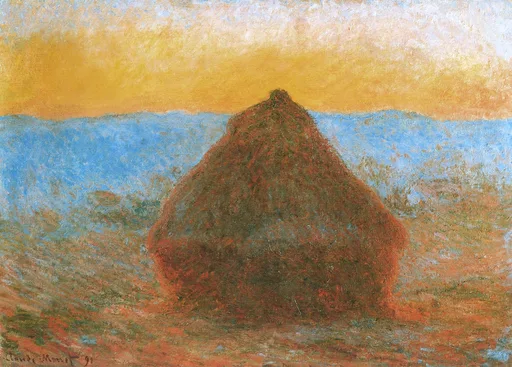
Grainstack
From $109 -
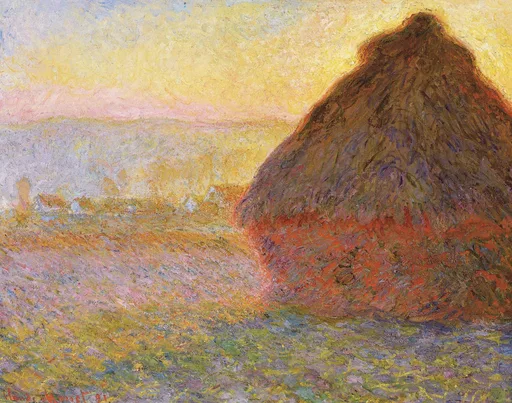
Grainstack (Sunset)
From $109 -
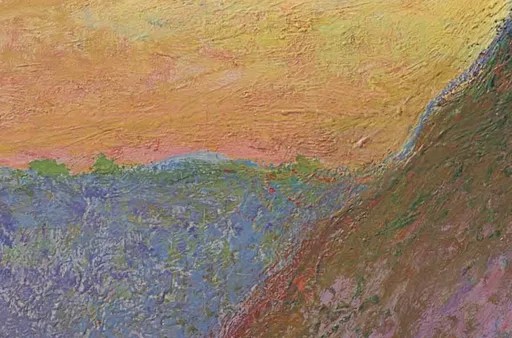
Grainstack in the Sunlight
From $109 -
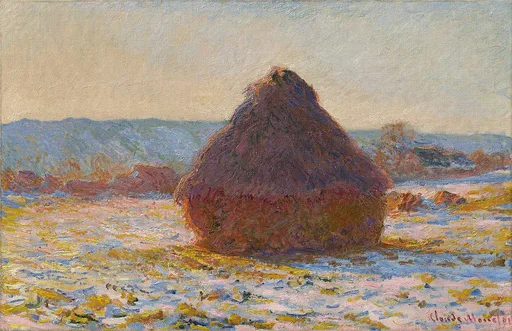
Grainstack in the Sunlight, Snow Effect
From $109 -
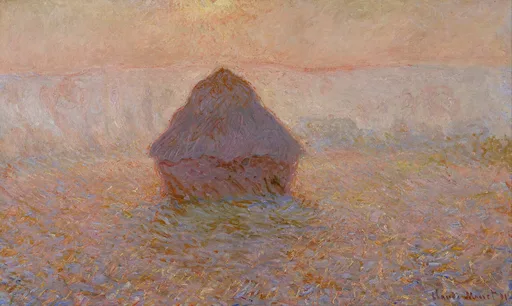
Grainstack, Sun in the Mist
From $109 -
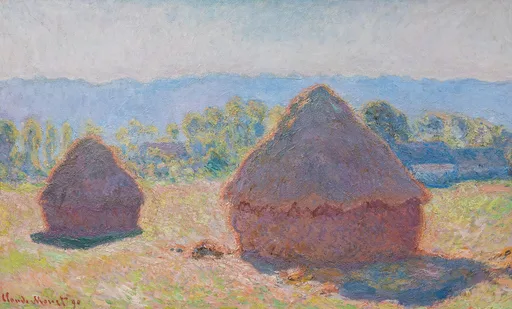
Grainstacks, in Bright Sunlight
From $109 -
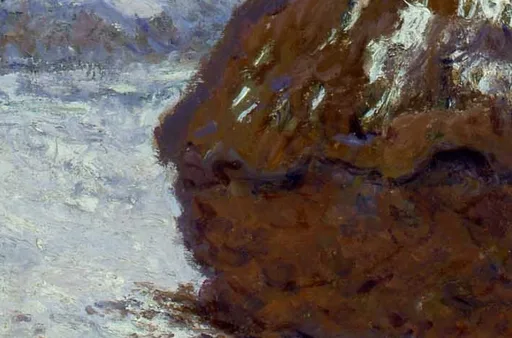
Grainstacks, Snow Effect
From $109 -
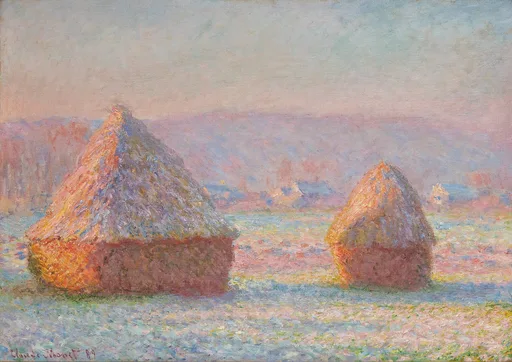
Grainstacks, White Frost Effect
From $109 -
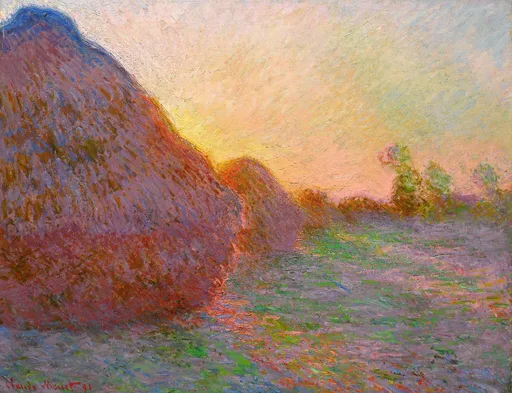
Graynsta
From $109 -
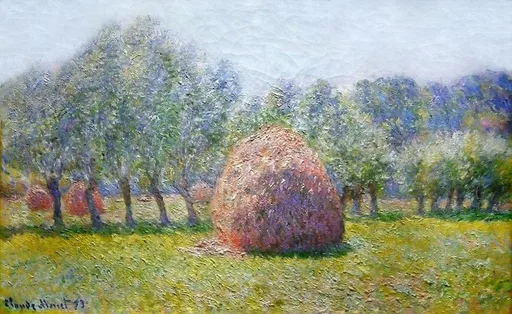
Haystack
From $109 -
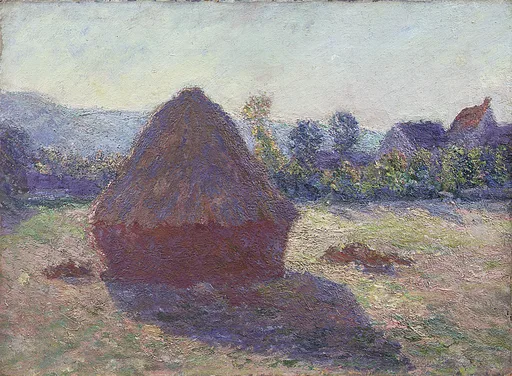
Haystack in the Evening Sun
From $109 -
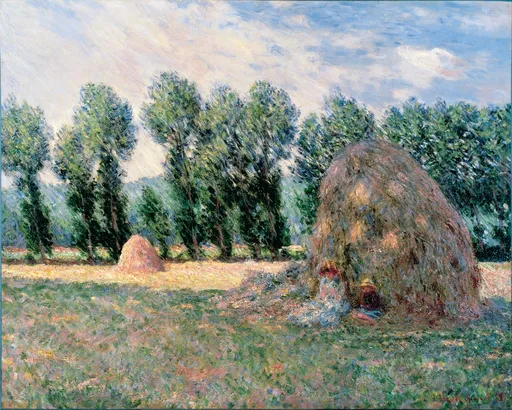
Haystacks
From $109 -
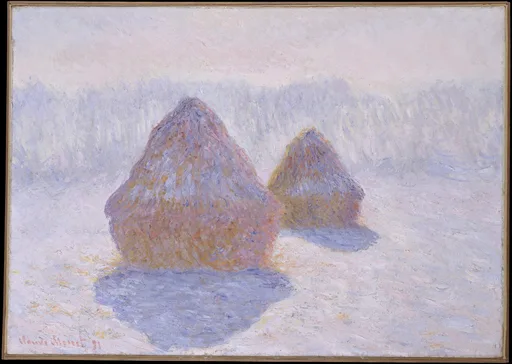
Haystacks (Effect of Snow and Sun)
From $109 -
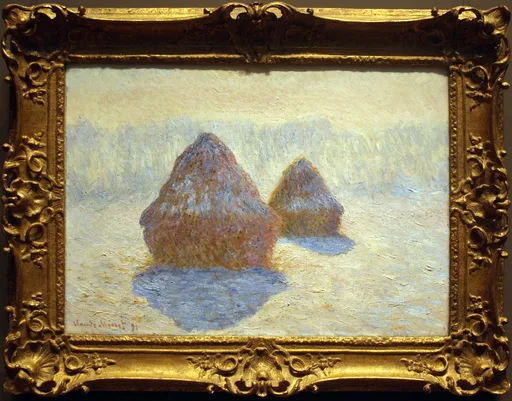
Haystacks (Effect of Snow and Sun)
From $109 -
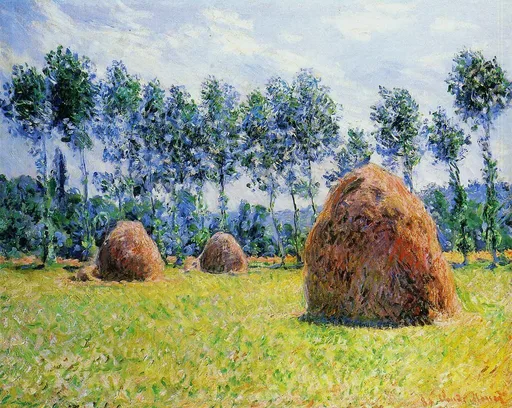
Haystacks at Giverny
From $109 -
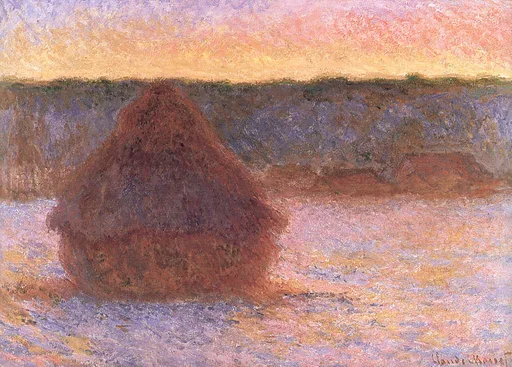
Haystacks at sunset, frosty weather
From $109
Twenty-four paintings of the stacks that stood in a field a few minutes' walk from Monet's house at Giverny. The subject is almost nothing: bundled wheat, drying under a cone of thatch. Everything that happens in these pictures happens in the light falling on it, which is precisely what Monet wanted to prove.
The series that changed how he worked
Monet painted the stacks through the autumn and winter of 1890 and into 1891. He is understood to have begun with two canvases, one for overcast weather and one for sun, and quickly found that two were nowhere near enough. He ended up carrying a stack of canvases into the field and moving from one to the next as the light shifted, returning day after day to the same half hour of the same conditions. The stacks themselves barely change; the field around them turns from green to gold to violet snow, and the shadows swing from blue to rose.
The group was sold through his dealer Paul Durand-Ruel and was an immediate commercial success, which mattered: it confirmed that a painter could take one modest motif and make a whole exhibition of it. Everything that follows in Monet's career, the poplars, the cathedrals, the water lilies, grows out of what he learned in that field. In English these pictures are usually called haystacks, though the French title, meules, means stacks of harvested grain.
Hand-painted oil reproductions, made to order
Every work in this collection can be ordered as a hand-painted oil reproduction, brushed in real oils on artist-grade cotton canvas by a senior studio painter and never printed, or as a lower-priced archival canvas print. You choose the size and the orientation, and finish it rolled, stretched over a bar, or framed in a thin or a thick moulding. Each piece is made to order and hand inspected before it ships, with free worldwide shipping and a 30-day return guarantee. You can see how the oils are built up on our reproductions page.
Which room this collection suits
The grainstacks run warm: ochre, straw gold, rose, with blue and lilac in the shadows. They sit beautifully on clay, warm white, putty and muted olive walls, and they can look a little stranded on a cold blue-grey. Because the compositions are simple and horizontal, they carry well at size above a sideboard, a bed or a long sofa. They are also the one Monet group that rewards hanging as a pair or a trio: two versions of the same stack in different weather, side by side, tell the story of the series better than any single canvas.
Frequently asked questions
Why are there so many versions of the same stacks?
Because the stacks were never the subject. Monet was painting the light and the air of a particular hour, and each canvas records a different one. Collectors often choose by season and time of day rather than by composition: a snow-lit version reads cool and quiet, a late sun version reads warm and full.
What is the difference between the hand-painted oil and the canvas print?
The hand-painted oil is an original painting of the same image, made in oils on cotton canvas by a studio painter, with real brush marks and a raised surface you can see across a room. The archival canvas print reproduces the image photographically on canvas at a lower price. The oil is the better choice at large sizes and in rooms with strong side light, where texture does most of the work.
What size should I choose?
For a stack picture above a sofa or sideboard, aim for a canvas roughly two thirds the width of the furniture below it. In a hallway or a smaller alcove, a compact size read at close range works well, since the paint handling is a large part of the pleasure. Our size guide gives measured examples for each wall type.
Do they work in a modern interior?
They do, better than most nineteenth-century landscapes. The near-abstract shapes and flat colour fields sit very comfortably with plain plaster, pale timber and simple joinery.