
Still Life Collection: Claude Monet Oil Painting Reproductions
Still life makes up a small but consistent part of Monet’s output, mostly from the 1860s and 1870s before landscape came to dominate his career entirely, and this collection gathers those paintings of fruit, flowers cut and arranged indoors, and occasionally fish or game, subjects closer to the studio tradition he trained in than to the outdoor work he became known for. These paintings show a more controlled, deliberate side of Monet, composed light on a tabletop rather than the changing conditions of an outdoor scene, and they were often more commercially reliable early sales than his landscapes, which dealers found harder to place. The brushwork is still recognizably his, loose and built from color rather than line, but the subject gives it a stillness his river and garden paintings rarely have. This group is Monet indoors, working at a smaller, quieter scale, paintings built for a contained, classic subject, fruit and cut flowers rather than open landscape.
Showing 1–16 of 17 results
-
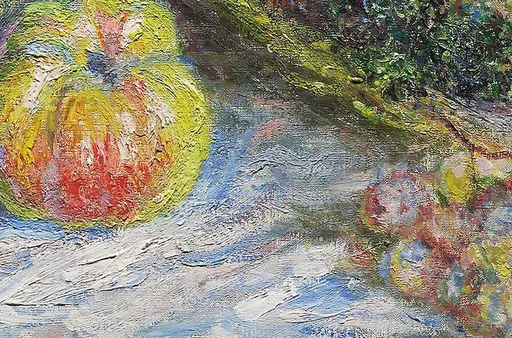
Apples and Grapes
From $109 -
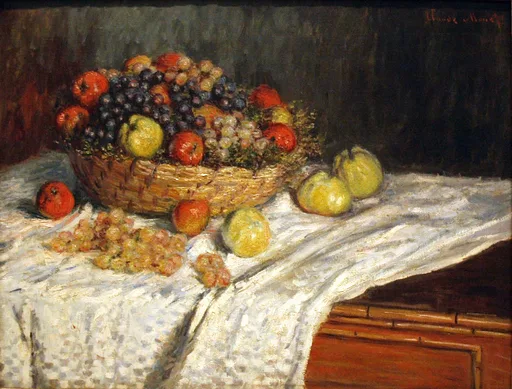
Apples and Grapes
From $109 -
Apples and Grapes
From $109 -
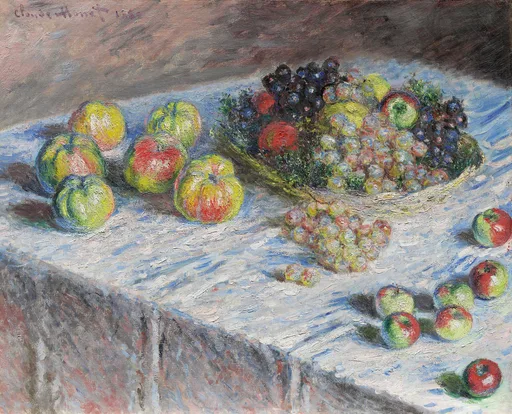
Apples and Grapes
From $109 -
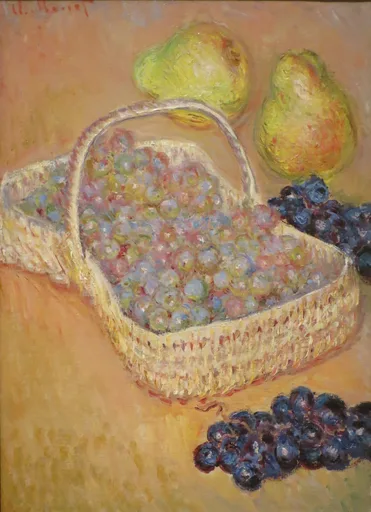
Basket of Grapes
From $109 -
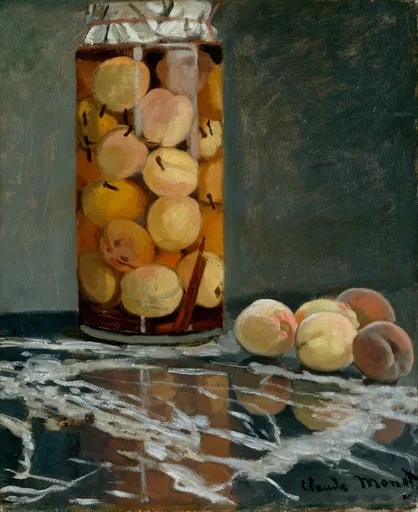
Jar of Peaches
From $109 -
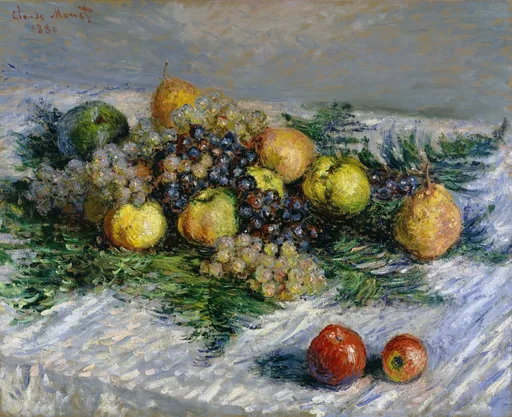
Pears and Grapes
From $109 -
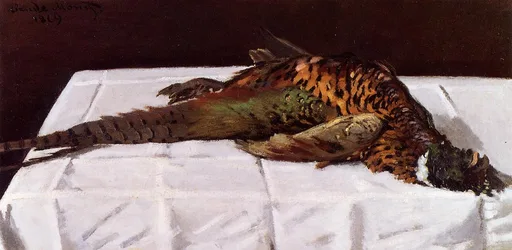
Pheasant
From $109 -
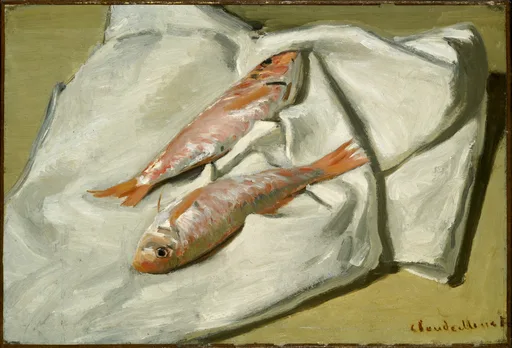
Red Mullets
From $109 -
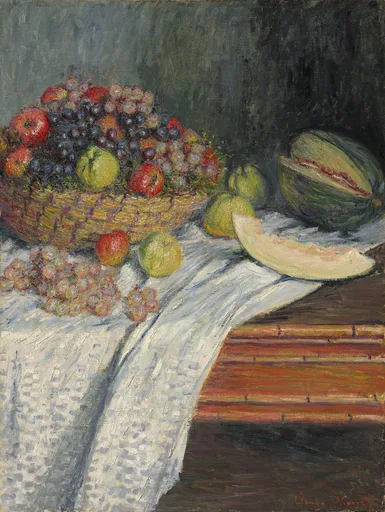
Still Life with a Honeydew Melon
From $109 -
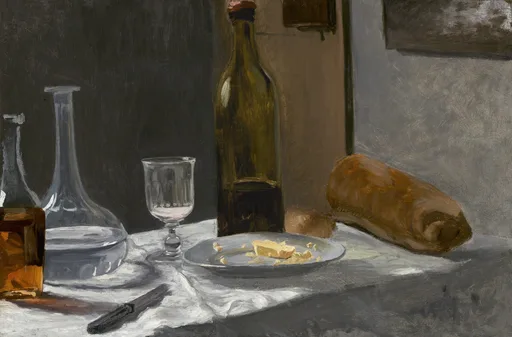
Still Life with Bottle, Carafe, Bread and Wine
From $109 -
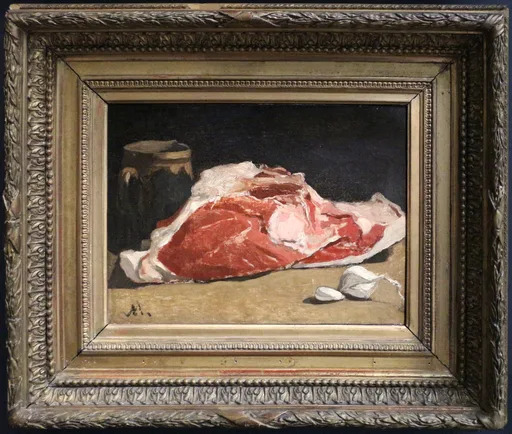
Still life with flesh
From $109 -
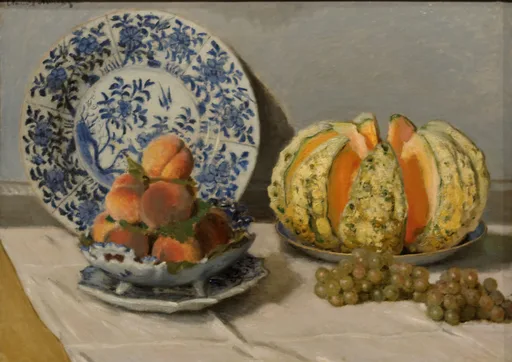
Still Life with Melon
From $109 -
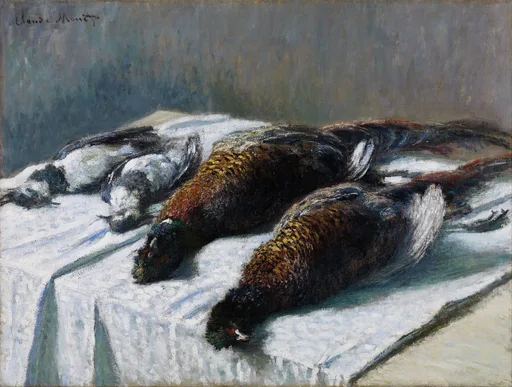
Still Life with Pheasants and Plovers
From $109 -
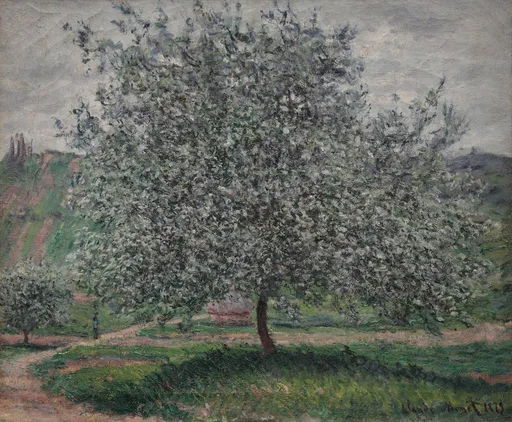
The apple tree
From $109 -
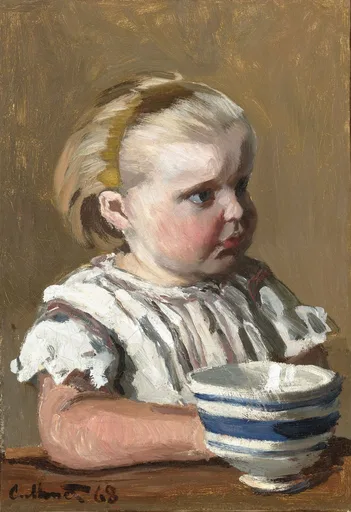
The Child with a Cup
From $109
Fourteen paintings of what was to hand indoors: fruit set out on a cloth, game brought in from a shoot, glazed jars, and flowers cut and put in a vase. Monet is remembered as a painter of weather, and these are the pictures he made when the weather, or illness, or an empty purse kept him in the house.
The indoor painter
Still life had a practical value early in Monet's career. A well-made canvas of fruit or flowers was easier to sell than an experimental landscape, and it demanded exactly the skills a young painter needed to prove: drawing, tonal control, the weight and fall of a fold of cloth. He took the genre seriously and returned to it at intervals throughout his life rather than abandoning it once he was established.
What makes his still lifes his own is that he treats them like outdoor subjects. The peach is not modelled as a solid object first and coloured afterwards; it is built from the light on it, with reflected colour running into the shadow side and the background handled as loosely as a river bank. The results are quieter and more concentrated than his landscapes, and they hold up unusually well at close range, which is the way a still life is almost always seen.
Hand-painted oil reproductions, made to order
Each work is offered as a hand-painted oil reproduction, painted in real oils on artist-grade cotton canvas by a senior studio painter, never printed, or as a lower-priced archival canvas print. Choose the size and the orientation, then finish rolled, stretched on a bar, or framed in a thin or a thick moulding. Everything is made to order and hand inspected before it leaves us, with free worldwide shipping and a 30-day return guarantee.
Which room this collection suits
Still life is the natural picture for a room where people sit close: dining rooms, kitchens, a study, the wall beside a reading chair. The palettes are deeper and more contained than his landscapes, often warm reds, greens and browns against a dark ground, which means they cope well with rooms that do not get much daylight and look rich under a lamp. Modest sizes are usually right; a small still life at eye level in a dining room does more than a large one stranded above a doorway.
Frequently asked questions
Did Monet really paint still life?
He did, across several decades. They are less famous than the series landscapes but they were an important part of his output, particularly in the 1860s and 1870s when they were also the easiest of his pictures to sell.
Is the hand-painted oil worth it for a small canvas?
For still life, arguably more than for anything else. These pictures are looked at from close up, where the difference between real brushed oil and a printed surface is most obvious. The reproductions page explains how each canvas is built up.
What size suits a dining room?
Hang the centre of the picture at seated eye level rather than standing eye level, which usually means lower than instinct suggests. A canvas between forty and seventy centimetres wide reads well on most dining walls; go larger only if the wall is long and otherwise bare.
Can I hang one in a kitchen?
Yes, provided it is away from direct heat, steam and splashes. A stretched canvas or a framed finish on the far side of the room from the hob is fine; directly above a cooker is not.