
Norway Collection: Claude Monet Oil Painting Reproductions
Monet spent about two months in Norway in early 1895, visiting his stepson who lived near Oslo, and painted the surrounding landscape in deep snow: the village of Sandviken, fjord water, timber houses, and most notably Mount Kolsaas, which he painted around a dozen times and compared in his letters to Japanese depictions of Mount Fuji. The trip gave him an unusually cold, blue-white palette distinct from anything in his French work, and the low winter light and snow cover simplified the landscape into broad, flat planes that suited his interest in reducing a view to its essential color relationships. Monet found the Norwegian light difficult at first, writing that the country’s whiteness felt impossible to paint, before adapting his approach to its particular clarity. It is Monet at his most northern and least French, a brief, distinct chapter rather than a long series, and on a wall these paintings read as cool, crisp color against strong flat shapes.
Showing all 9 results
-
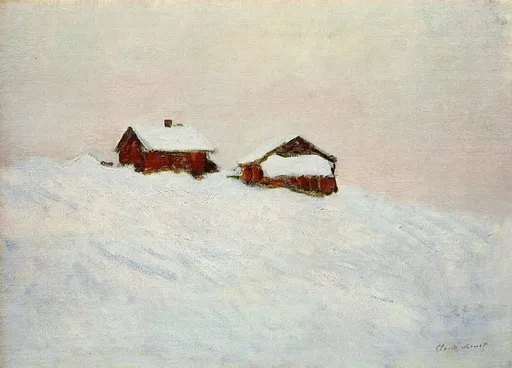
Häuser im Schnee in Norwegen
From $109 -
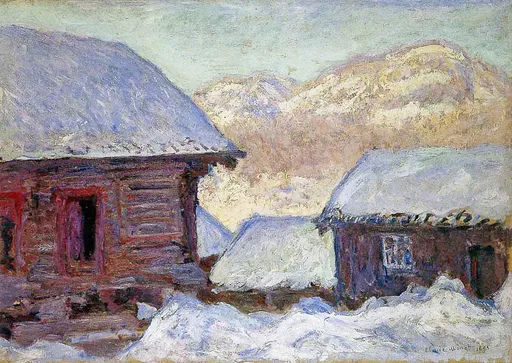
Houses in the Snow and Mount Kolsaas
From $109 -
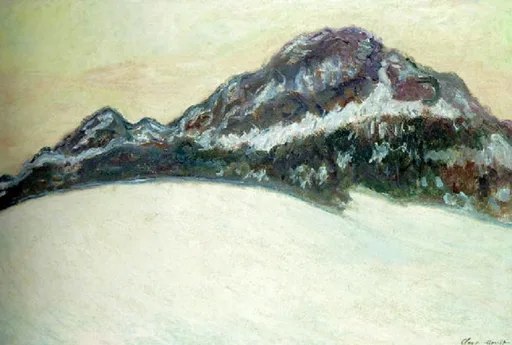
Mount Kolsaas in Norway
From $109 -
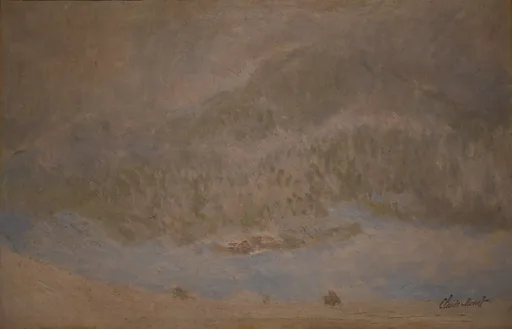
Mount Kolsaas, Norway (Snowstorm)
From $109 -
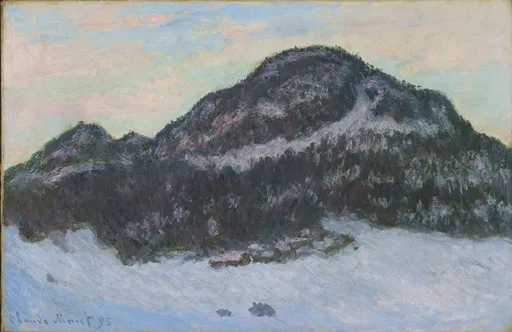
Mount Kolsås
From $109 -
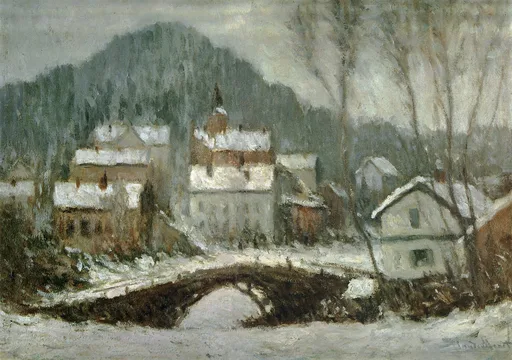
Sandvika Village in the Snow
From $109 -
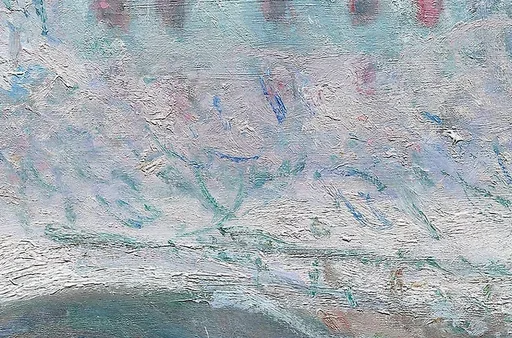
Sandvika, Norway
From $109 -
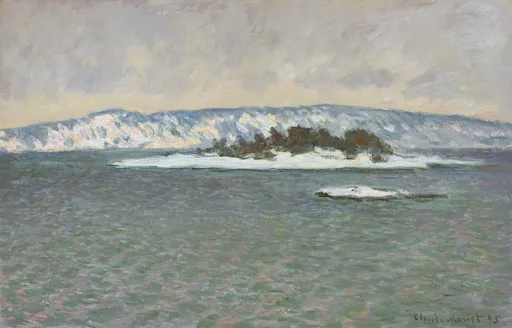
The Christiania Fjord
From $109 -
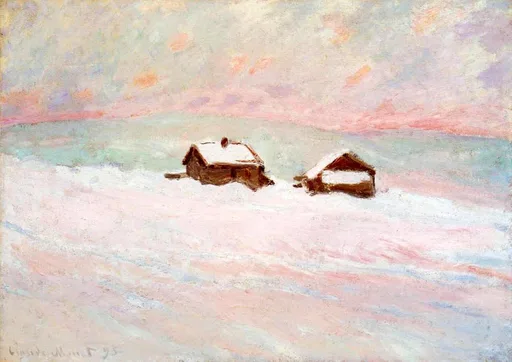
The Houses in the Snow, Norway
From $109
Four paintings from the only campaign Monet ever made in Scandinavia: a winter spent in Norway in early 1895, painting snow-covered houses, a frozen river valley and the long white flank of Mount Kolsaas. It is one of the smallest and least familiar groups in his work, and one of the most austere.
A winter at Sandviken
Monet travelled to Norway at the start of 1895 and based himself at Sandviken, outside the city then called Christiania. Conditions were hard: deep snow, short days, and a cold that made working outdoors a physical problem as much as a painterly one. He stayed roughly two months and painted the village under snow, the timber houses reduced to blocks of pink and blue against white, and above all Mount Kolsaas, which he returned to again and again as its bulk appeared and disappeared in the weather.
Snow is the most demanding subject an Impressionist can take on, because white is never white. In these canvases Monet builds the snowfields out of lilac, rose, pale green and blue, letting the sky lend its colour to the ground; the mountain sometimes dissolves almost entirely into the air in front of it. The Kolsaas paintings sit naturally beside the grainstacks and the poplars as another series built on one motif and many states of light.
Hand-painted oil reproductions, made to order
Each of these works is available as a hand-painted oil reproduction, painted in real oils on artist-grade cotton canvas by a senior studio painter and never printed, or as a lower-priced archival canvas print. Choose the size and orientation, and finish rolled, stretched, or framed in a thin or a thick moulding. Made to order, hand inspected, free worldwide shipping and a 30-day return guarantee. Details of the painting process are on our reproductions page.
Which room this collection suits
These are pale, high-key pictures, and they need a wall with some tone to sit against. On brilliant white the snow simply merges with the paint behind it; on mid-grey, soft blue, muted green or a warm stone colour the subtle lilacs and roses become visible and the picture comes forward. They are quiet by nature, which suits bedrooms, studies and calm sitting rooms, and they benefit from generous scale, since the whole effect depends on the eye reading a large field of nearly-white colour.
Frequently asked questions
How many Norwegian paintings are there here?
Four. Monet made only one Norwegian campaign, in early 1895, so the group is genuinely small; these are among the rarest subjects in his catalogue.
What is Mount Kolsaas?
A long, low mountain near Sandviken outside Oslo, which Monet painted repeatedly during his stay, watching it change through snowfall, haze and clear light in the same way he had watched the grainstacks change through the seasons.
Hand-painted oil or canvas print for a snow scene?
Snow scenes gain a great deal from the hand-painted oil. The surface catches the light in the room and adds a physical texture to what is otherwise a very flat field of pale colour. A print of the same image is a good lower-priced choice at smaller sizes.
Which wall colour should I avoid?
Pure brilliant white, and very cold blue-white. Both flatten the picture. A wall with even a little warmth or depth in it will do far more for these canvases.