
Monet at The Museum of Modern Art (MoMA)
The Museum of Modern Art in New York holds Claude Monet’s late water lily paintings not as a nod to the nineteenth century but as the beginning of its own story. MoMA treats the last Giverny canvases as founding documents of modern painting, and hanging them among twentieth-century abstraction makes an argument that is hard to dispute once you have seen it.
The fire, and what came after
MoMA’s relationship with Monet was shaped by disaster. In April 1958 a fire broke out during building work and destroyed two large Monet water lily paintings in the museum’s collection. The following year MoMA acquired the monumental Water Lilies triptych, three panels together spanning more than twelve metres of wall, painted in the Giverny studio in the last years of Monet’s life. It has been among the most visited works in the museum ever since.
Its impact on American painting was immediate. Artists working in New York in the 1950s and 1960s had begun to look again at the late Monet, and these panels, with no horizon, no bank and no fixed viewpoint, offered a precedent for painting as an all-over field of colour. The museum also holds other late works, including a view of the Japanese footbridge from around 1920. Every painting shown below can be commissioned as a hand-painted oil reproduction, scaled to your wall.
6 Monet works from The Museum of Modern Art (MoMA)
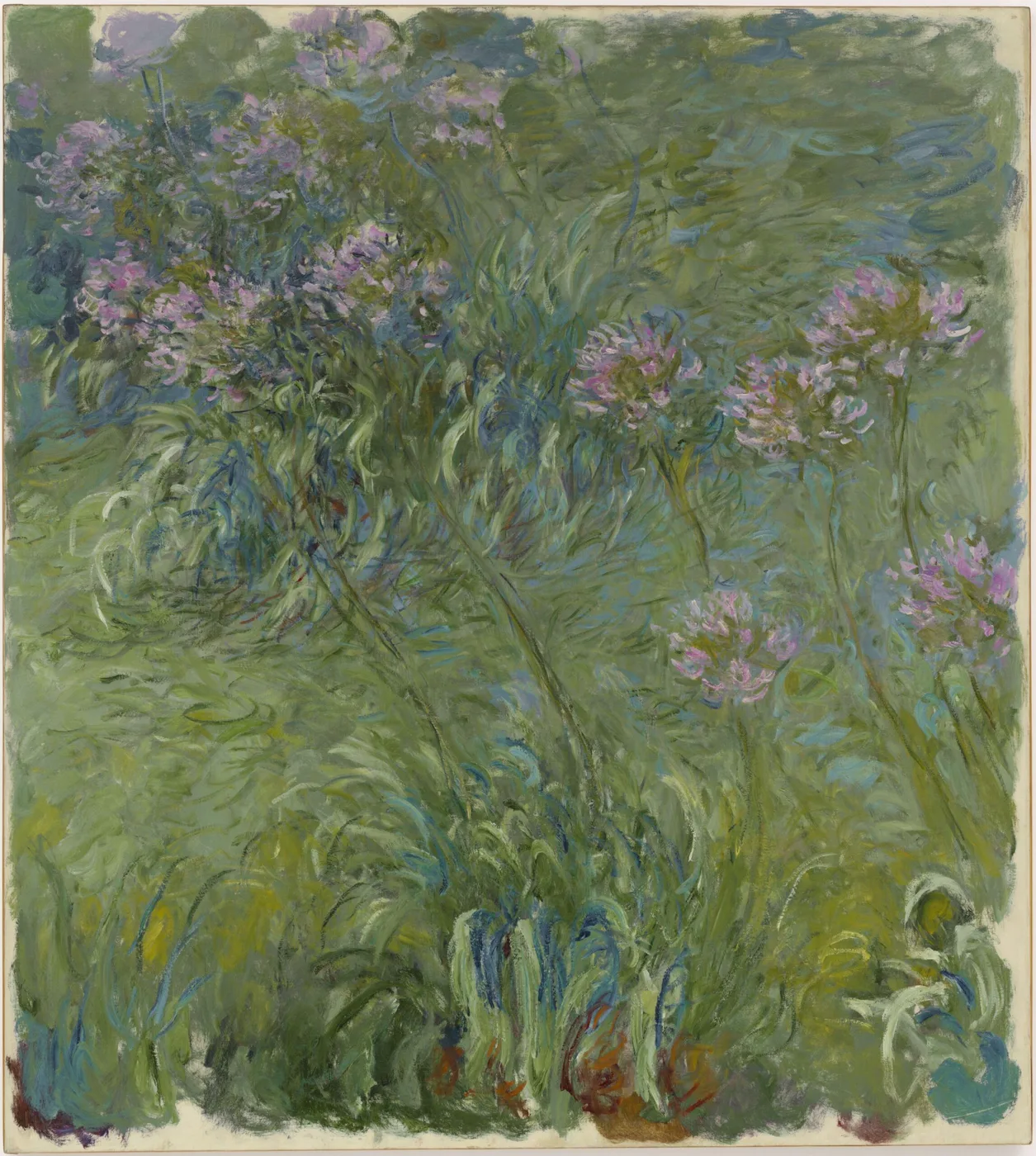
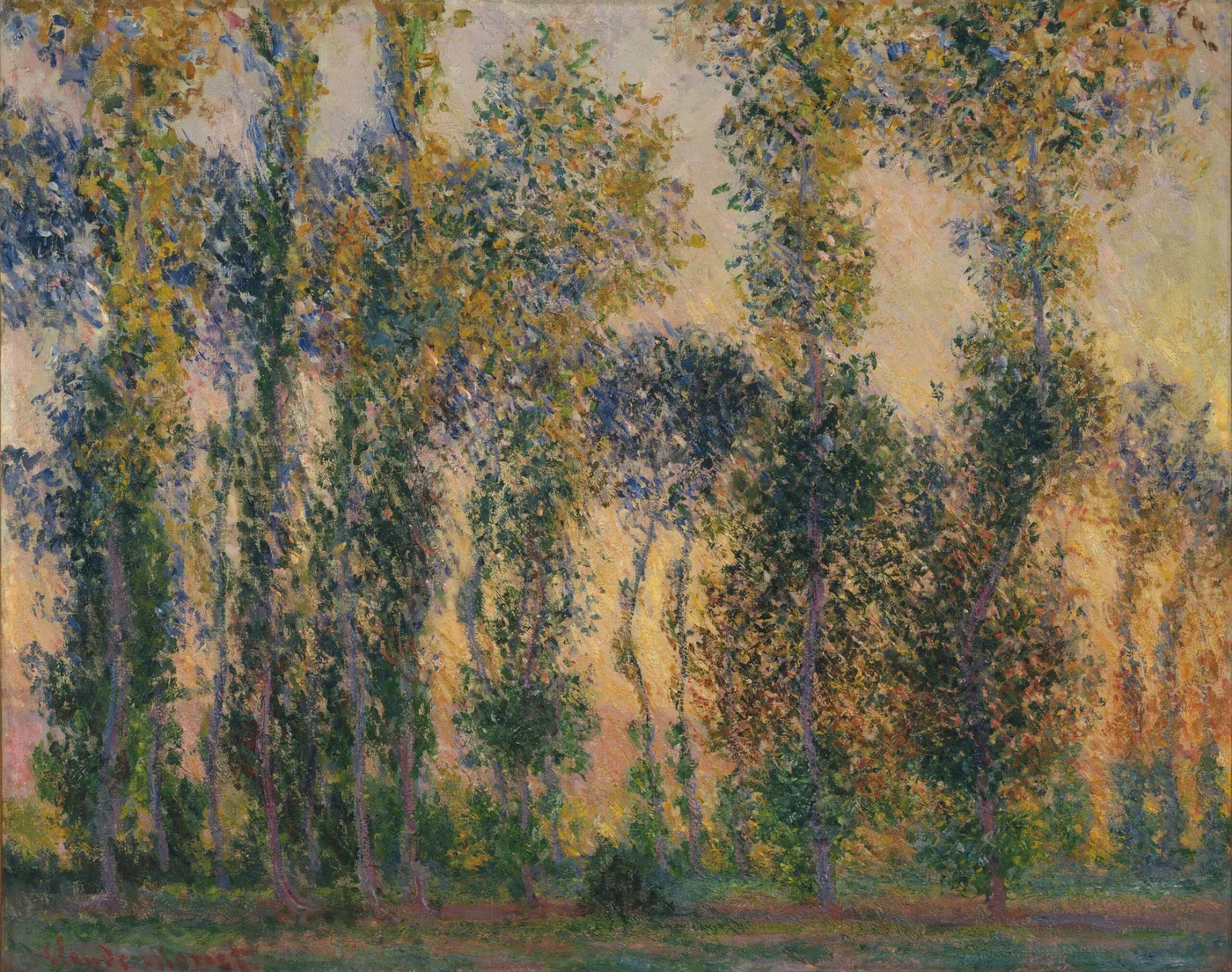
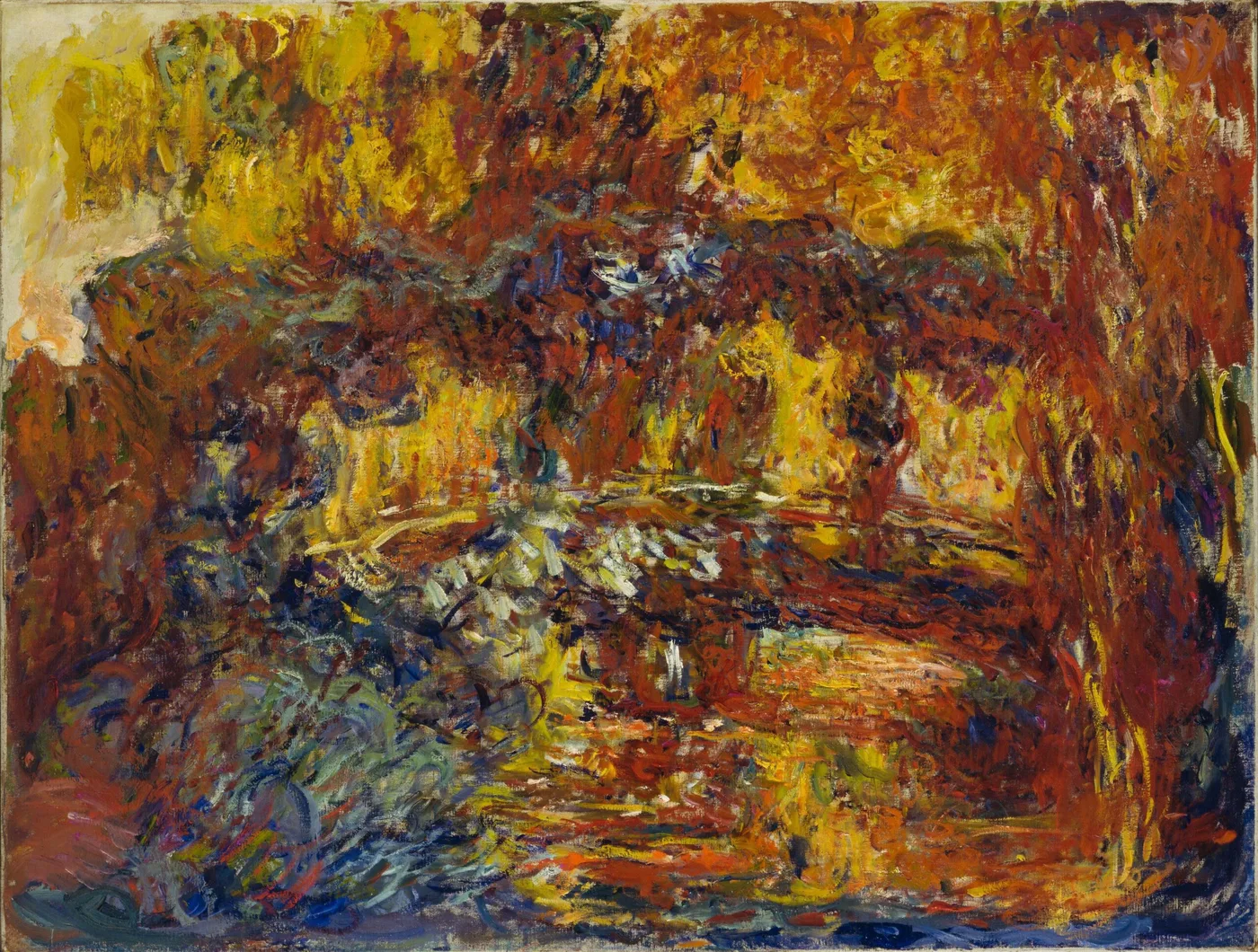

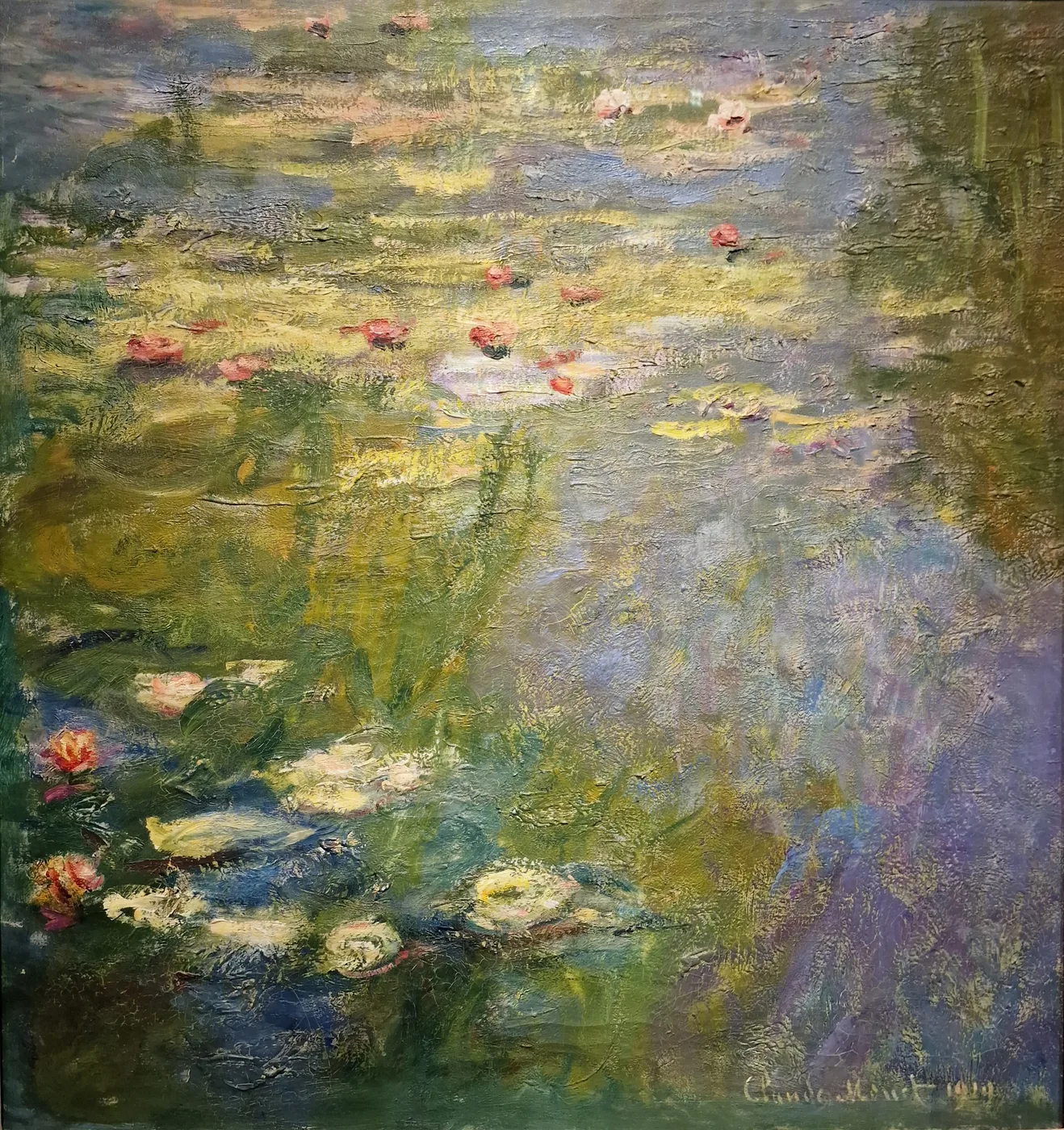
These paintings come from the most radical stretch of Monet's career, and they belong in modern rooms. Without horizons or focal points, they function almost as coloured fields, which is why they hold up so well against plain white walls, concrete, steel and large windows. Go bigger than feels comfortable; the late work loses its power when shrunk. Blues, greens and violets dominate, with flashes of rose and gold. One large canvas on an otherwise empty wall will do far more for a contemporary interior than several smaller ones. See the available sizes.
Official collection: The Museum of Modern Art (MoMA)