
Sainte-Adresse & Le Havre Collection: Claude Monet Oil Painting Reproductions
Showing 17–32 of 45 results
-
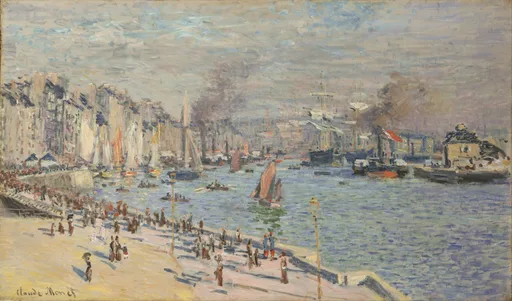
Port of Le Havre
From $109 -
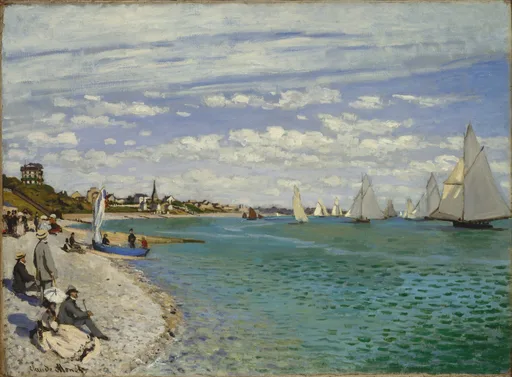
Regatta at Sainte-Adresse
From $109 -
Road toward the Farm Saint-Siméon, Honfleur
From $109 -
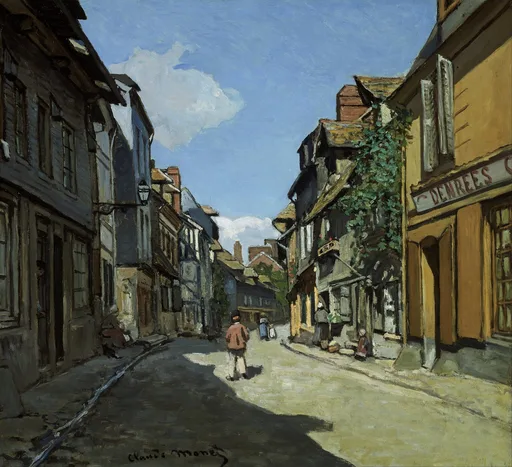
Rue de la Bavole, Honfleur
From $109 -
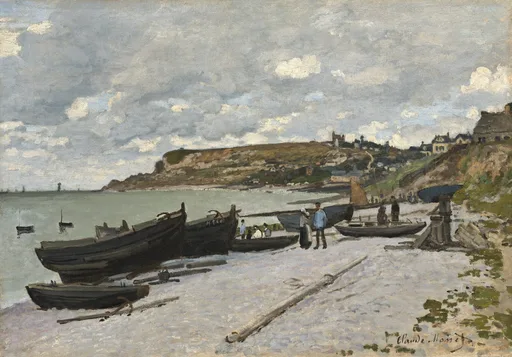
Sainte-Adresse
From $109 -
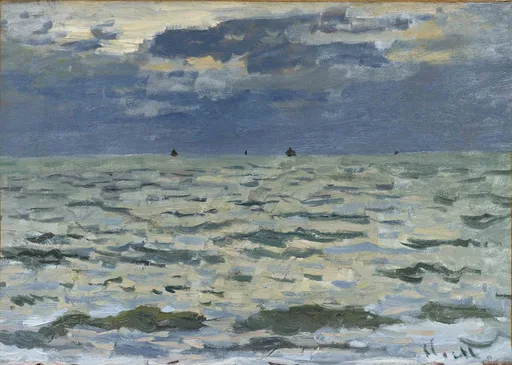
Seascape, Le Havre
From $109 -
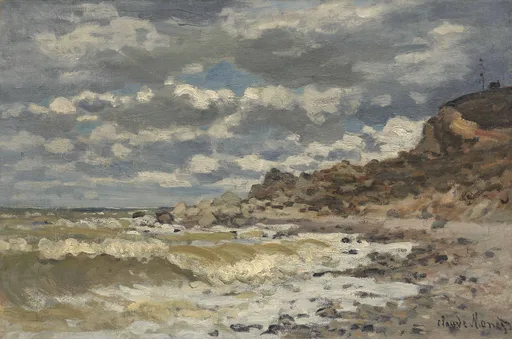
Seashore at Sainte-Adresse
From $109 -
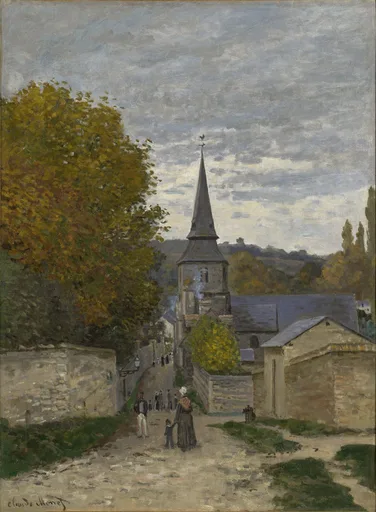
Street in Sainte-Adresse
From $109 -
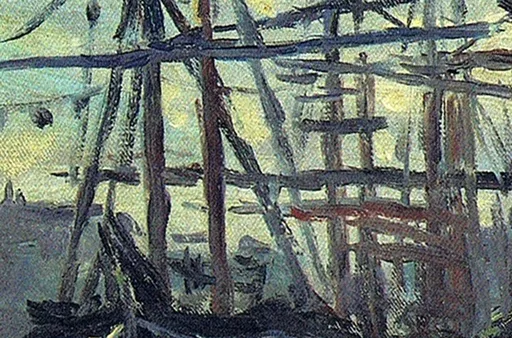
The Bassin du Commerce, Le Havre
From $109 -
The Beach at Honfleur
From $109 -
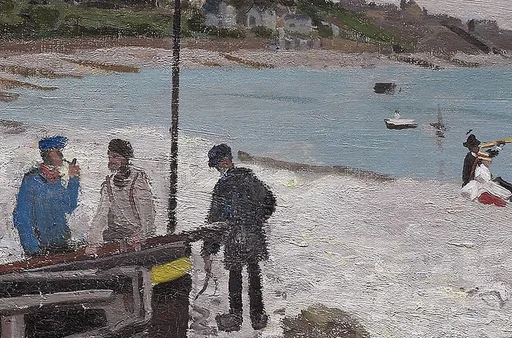
The Beach at Sainte-Adresse
From $109 -
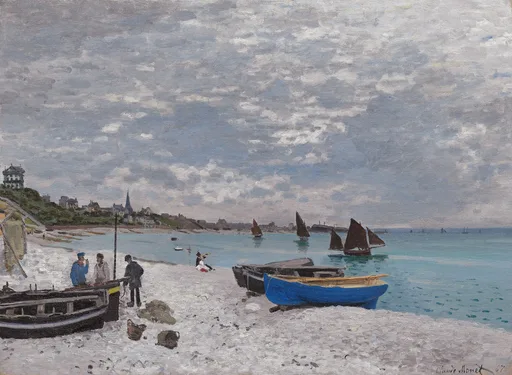
The Beach at Sainte-Adresse
From $109 -
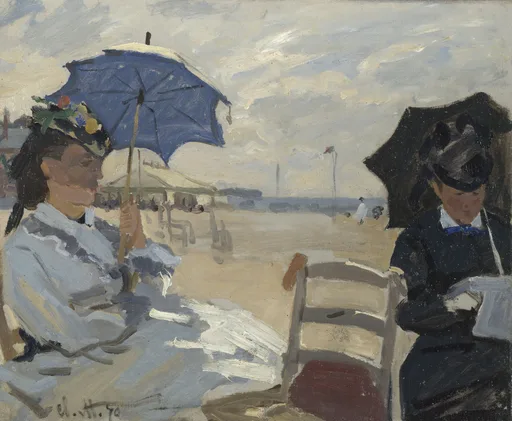
The Beach at Trouville
From $109 -
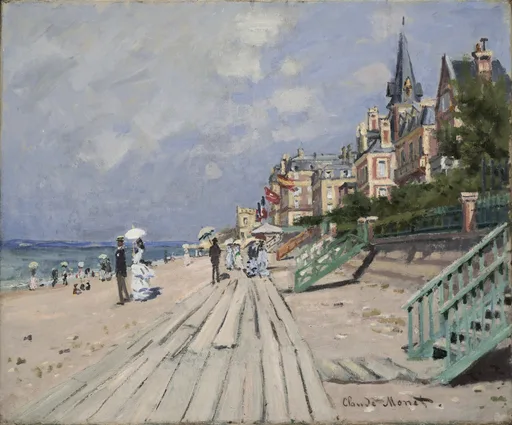
The Beach at Trouville 1948.116
From $109 -
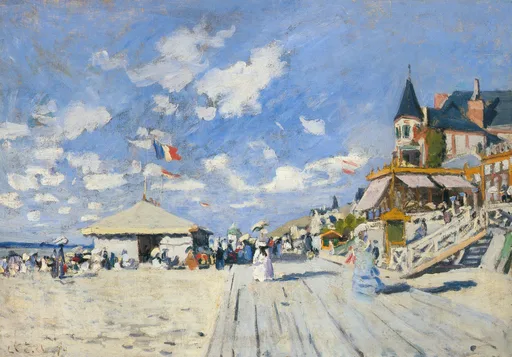
The boardwalk on the beach at Trouville
From $109 -
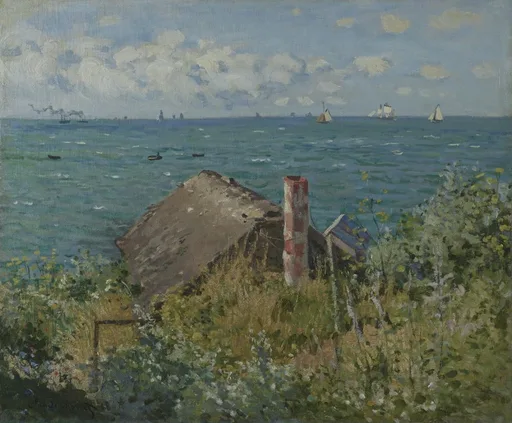
The Cabin at Sainte-Adresse
From $109
Monet grew up in Le Havre, and the Channel coast around it is where he learned to paint outdoors. These thirty-seven works cover the beaches and terraces at Sainte-Adresse, the harbour and shipping of Le Havre, and the neighbouring resorts of Honfleur and Trouville: bright, breezy, and full of the flags and parasols of the 1860s.
Where the whole thing started
It was at Le Havre that the young Monet met Eugene Boudin, who persuaded him to leave the studio and work in front of the sea, and later Johan Barthold Jongkind, whose loose watercolour skies were a second education. The results are visible in the 1867 canvases painted at Sainte-Adresse, where his family had property: the famous terrace with its two flagpoles and beds of gladioli looking out over a sea busy with sails, and the beach with its fishing boats drawn up on the shingle.
The harbour subjects matter for a separate reason. It was at Le Havre that Monet painted the misty port view he titled Impression, Sunrise, and when it was shown in the group's first independent exhibition in 1874 a critic seized on the title; the name Impressionism came from it. The Trouville canvases painted with Camille in 1870 belong to the same coast: sand, hotel fronts, wind, and paint applied so fast that grains of beach sand ended up in it.
Hand-painted oil reproductions, made to order
All of these subjects are available as a hand-painted oil reproduction, worked in real oils on artist-grade cotton canvas by a senior studio painter and never printed, or as a lower-priced archival canvas print. You choose the size and the orientation, and the finish: rolled, stretched, or in a thin or thick frame. Each order is made for you, hand inspected before it leaves us, shipped free worldwide and protected by a 30-day return guarantee.
Which room this collection suits
This is the brightest, most sociable group Monet painted: clear blue, white, red flags, high summer light. They lift a dull room and they suit spaces where people gather, a kitchen, a family room, a hallway, a holiday house. They tolerate strong sunlight and they read well at modest size, because the shapes, boats, figures, parasols, stay legible even small, which makes them a sensible choice for a gallery wall or a stairway sequence. Avoid hanging them against a saturated blue wall; the sea in the picture and the paint on the wall cancel each other out. Warm white, cream or a soft sand tone is better.
Frequently asked questions
Why is this coast important in Monet's career?
He was raised at Le Havre and began painting outdoors there under the guidance of Boudin and Jongkind. The habits formed on this coast, working fast, in front of the subject, in daylight, underpin everything that followed.
Is Impression, Sunrise connected to this collection?
Yes. It is a view of the port of Le Havre, and its title supplied the name of the movement after the first Impressionist exhibition of 1874.
Can I hang several of these together?
They are among the best Monet subjects for a group, because the horizons and the palette are consistent. Three matching sizes in identical thin frames make a clean run along a hallway; see the full collection to pick a set.
Oil or print for a bright, sunny room?
Either. A hand-painted oil has a slight surface sheen that can catch glare in a very sunny room, so consider the wall angle; an archival canvas print is matt and more forgiving in direct light.